
Table of Contents
- How Yoga Reduces Stress and Builds Resilience
- The Neurobiological Mechanisms Behind Yoga and Stress Recovery
- Yoga Breathing Techniques for Nervous System Regulation
- Yoga Poses for Anxiety and Stress Relief
- How Long Should a Yoga Session Be for Stress Relief
- Tailored Sequences for Different Types of Stress
- Integrating Yoga Into Your Daily Life and Workplace
- Self-Compassion and Mindfulness: Changing Your Stress Narrative
Last Updated: August 10, 2026
How Yoga Reduces Stress and Builds Resilience
Yoga activates your parasympathetic nervous system, the physiological brake that counters your stress response. When you move through poses, focus on breath, and meditate, your body shifts from sympathetic activation (fight-or-flight) into a state where healing becomes possible.
At Holistic & Wellness Medicine in San Antonio, we’ve seen how yoga transforms not just how patients feel in the moment, but how they respond to stress over weeks and months. Stress lives in your muscles, breathing patterns, posture, and nervous system. Yoga interrupts this cycle at multiple points simultaneously through neurobiological mechanisms: grounding postures signal stability, extended exhales stimulate the vagus nerve, and self-compassion meditation rewires emotional response pathways.
The most common mistake is treating yoga as cardio or strength training. A single 20-minute restorative session can lower cortisol more effectively than an intense 60-minute flow if your nervous system is already depleted. Match the intensity to your actual stress state, not to what you think you “should” do.
The Neurobiological Mechanisms Behind Yoga and Stress Recovery
Your nervous system operates through two primary branches: the sympathetic (accelerator) and parasympathetic (brake). Most modern life keeps you in sympathetic dominance. Yoga tips that balance back toward parasympathetic tone.
The vagus nerve runs from your brainstem through your chest and abdomen, serving as your direct line to parasympathetic activation. When you practice extended exhale breathing or forward folds, you stimulate this nerve directly. Research shows that vagal tone, how readily your vagus nerve activates, predicts resilience better than most other physiological markers. People with higher vagal tone recover faster from stress and experience greater emotional stability.
Cortisol, the primary stress hormone, follows a natural rhythm. In a healthy pattern, it peaks in the morning and declines throughout the day. Chronic stress flattens this curve, keeping cortisol elevated all day and preventing it from dropping at night, destroying sleep quality. Yoga practices that activate the parasympathetic nervous system help restore this natural rhythm through consistent practice over weeks.
Grounding practices work through proprioception. Your feet and hands contain thousands of sensory receptors that communicate your position in space to your nervous system. When you stand in Mountain Pose or press your hands into the earth during Child’s Pose, these receptors send safety signals to your brain. The polyvagal theory explains how your nervous system reads signals from your body and adjusts your emotional state accordingly. When you slow your breathing, relax your facial muscles, and soften your shoulders, your vagus nerve detects these changes and tells your brain that you’re safe. The body leads; the mind follows.
Yoga for stress and resilience works because it directly addresses the physiological drivers of stress: vagal tone, cortisol rhythms, nervous system balance, and proprioceptive safety signals. It’s not about feeling good in the moment; it’s about rebuilding your nervous system’s baseline capacity to regulate itself.
Yoga Breathing Techniques for Nervous System Regulation
Breathing is the only autonomic function you can consciously control. You can deliberately use breath to change your nervous system state. This is why pranayama, the yogic science of breath, is so powerful for stress management.
Most people under chronic stress develop shallow, rapid breathing patterns, which signals danger to your nervous system and maintains sympathetic activation. Yoga breathing techniques reverse this by deliberately extending your exhale, slowing your overall rate, and deepening your diaphragmatic engagement.
Box Breathing (Sama Vritti)
Box breathing involves inhaling, holding, exhaling, and holding again for equal counts. Sit comfortably with your spine upright. Breathe in through your nose for a count of four, feeling your belly expand. Hold for four counts. Exhale for four counts, feeling your belly draw in. Hold the empty breath for four counts. Repeat for 5-10 rounds. Most people experience noticeable nervous system settling within three rounds. The equal counts create symmetry that your nervous system finds inherently stabilizing.
Extended Exhale Breathing (Visama Vritti)
Extended exhale breathing is more powerful than box breathing for activating the parasympathetic nervous system. Sit with your spine upright. Inhale through your nose for four counts. Exhale for six counts, making the exhale deliberate and complete. Repeat for 8-10 rounds. The longer exhale tells your nervous system that you’re safe. If you’re highly stressed, start with a 4:6 ratio. As your nervous system learns to trust the practice, extend to 4:8 or 4:10. Never force the exhale; it should feel sustainable and calming.
If you feel dizzy, lightheaded, or anxious during breathing practice, stop immediately. These are signs that you’re over-activating. Start with shorter breath counts and slower practice. If symptoms persist, consult a qualified healthcare provider before continuing.
Yoga Poses for Anxiety and Stress Relief
Not all poses are equally effective for stress relief. The poses that most effectively reduce anxiety signal safety to your nervous system: forward folds that turn your gaze inward, supported poses that create a sense of being held, and grounding postures that connect you firmly to the earth.
Grounding Postures for Stability
Grounding postures work by increasing proprioceptive input. When your feet press firmly into the earth and your weight is distributed evenly, your nervous system receives a clear signal: you are stable and supported.
Mountain Pose is the foundation. Stand with your feet hip-width apart, weight evenly distributed. Press all four corners of your feet into the ground. Engage your thighs slightly, lengthen your spine, and let your arms hang at your sides with palms facing forward. Hold for 5-10 breaths, feeling the connection between your feet and the earth.
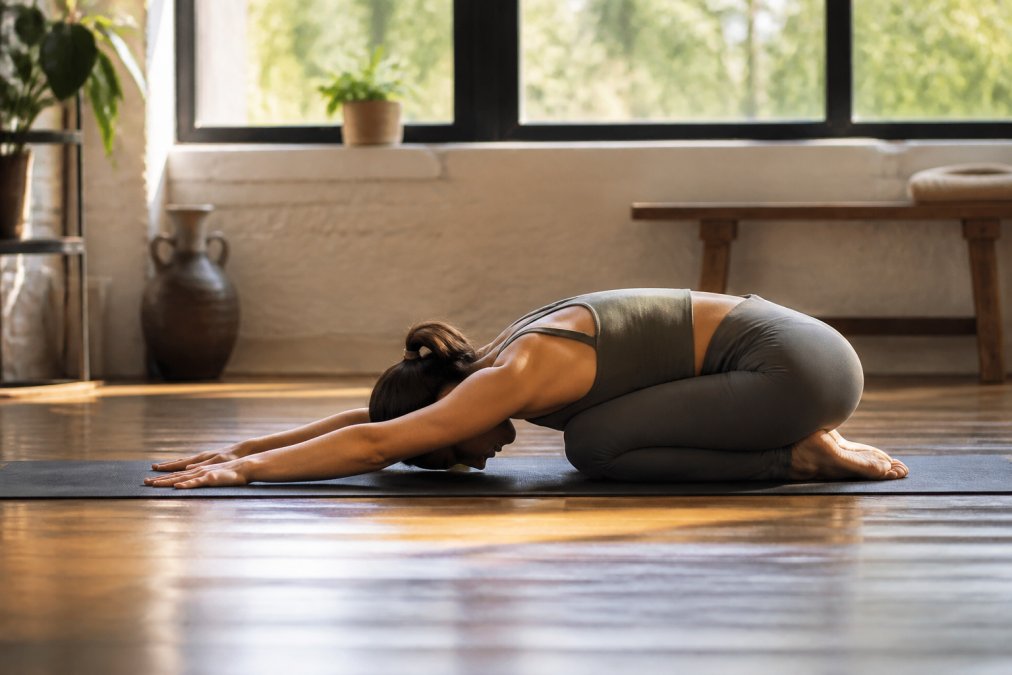
Child’s Pose offers grounding with the added benefit of a forward fold, which naturally calms the nervous system. Kneel on your mat, bring your big toes together, and let your knees fall wide. Fold forward, resting your forehead on the mat or a block. The weight of your forehead on the earth provides deep proprioceptive input. Stay for 1-2 minutes, breathing naturally.
Supported Bridge Pose combines grounding with gentle backbending. Lie on your back with knees bent, feet hip-width apart. Press your feet into the earth and lift your hips. Place a yoga block under your sacrum for support. Stay for 1-3 minutes, feeling the stability this pose creates.
Restorative and Yin Yoga for Recovery
Restorative yoga uses props to fully support your body. You’re not working; you’re being held. This is profoundly calming for an overstressed nervous system. A single restorative session can lower cortisol more effectively than vigorous exercise.
Supported Reclined Butterfly Pose is a classic restorative position. Sit on your mat with a bolster or rolled blanket behind you. Bring the soles of your feet together and let your knees fall wide. Lie back over the bolster so it supports your spine from your mid-back to your head. Your chest is open and your nervous system receives a signal of safety. Stay for 5-10 minutes, breathing naturally.
Yin yoga holds poses for 3-5 minutes, allowing gravity and time to create deep release in connective tissues. This extended holding gives your nervous system time to recognize safety and downshift into parasympathetic dominance. Reclined Twist, Supported Forward Fold, and Legs-Up-the-Wall are classic yin poses that calm anxiety and stress.
How Long Should a Yoga Session Be for Stress Relief
The ideal length for a yoga session designed for stress relief is 30-45 minutes. However, duration matters far less than consistency and intensity appropriateness. A 20-minute restorative session practiced daily will reduce stress more effectively than a 90-minute intense flow practiced once a week. Your nervous system needs regular signals of safety.
Start your wellness journey today! →
For acute stress, even 10-15 minutes of breathing practice and gentle poses can create noticeable relief. For building resilience over time, consistency matters more than length. A daily 20-minute practice will create more measurable changes in your baseline stress response than occasional longer sessions. Your nervous system adapts to what you do regularly.
Tailored Sequences for Different Types of Stress
Not all stress is the same, and yoga requires different approaches depending on your stress type.
Work stress, characterized by mental overwhelm and shallow breathing, responds best to grounding sequences with extended exhale breathing. Start with Box Breathing for five minutes, move through grounding poses like Mountain Pose and Warrior I, then finish with restorative poses held for 3-5 minutes each.
Anxiety and racing thoughts benefit from longer-hold poses that force your attention inward. Supported Bridge Pose held for three minutes, Child’s Pose for two minutes, and Legs-Up-the-Wall for five minutes create a calming sequence.
Relationship stress and emotional tension respond to gentle backbends and heart-opening poses combined with self-compassion meditation. Supported Fish Pose, Supported Bridge Pose, and Camel Pose open the chest and create emotional release.
Physical pain combined with stress requires careful sequencing. Avoid intense stretching that might increase pain. Instead, use gentle movement and restorative poses that address both physical tension and nervous system dysregulation.
Grief and existential stress benefit from grounding combined with gentle movement and meditation. Start with Mountain Pose held for 10 breaths, move slowly through Cat-Cow and Gentle Forward Fold, then finish with Supported Reclined Butterfly and 10 minutes of meditation focused on acceptance.
Integrating Yoga Into Your Daily Life and Workplace
The yoga you practice on the mat matters far less than the yoga you bring into your actual life. Real transformation comes from integrating yoga principles into your daily rhythms.
Start with breath. You don’t need a yoga mat to practice Extended Exhale Breathing. During your commute, in a work meeting, or before a difficult conversation, take two minutes for conscious breathing. Posture is yoga off the mat. When you stand with feet grounded, spine lengthened, and shoulders relaxed, your nervous system receives the same safety signal as in formal practice.
At work, use brief grounding practices. Before a stressful meeting, spend 30 seconds in Mountain Pose or pressing your feet firmly into the ground while seated. During a tense phone call, practice Extended Exhale Breathing. At home, create a simple daily practice: ten minutes of grounding poses, five minutes of breathing practice, and five minutes of meditation create a 20-minute practice that, done daily, will measurably change your stress response.
The most sustainable daily practice is one you do at the same time each day. Morning practice sets your nervous system’s tone for the entire day. Even five minutes of breathing and gentle stretching before checking your phone creates a different baseline than diving directly into stress.
Self-Compassion and Mindfulness: Changing Your Stress Narrative
Yoga for stress and resilience ultimately requires a shift in how you relate to stress itself. Many stressed people add self-judgment to their stress: "I shouldn’t feel this way," "I’m weak for being anxious." This secondary stress often exceeds the original stressor.
Self-compassion is the antidote. It means treating yourself with the same kindness you’d offer a close friend in difficulty. When you notice stress, instead of judging it, acknowledge it: "This is hard right now. Suffering is part of being human." This shift from judgment to acknowledgment immediately reduces nervous system activation.
Mindfulness, the practice of observing your experience without judgment, creates space between stimulus and response. You notice the stressful thought or sensation without automatically believing it or reacting to it. An anxious thought becomes "I’m having the thought that something bad will happen" rather than "Something bad will happen." This distinction returns agency to you.
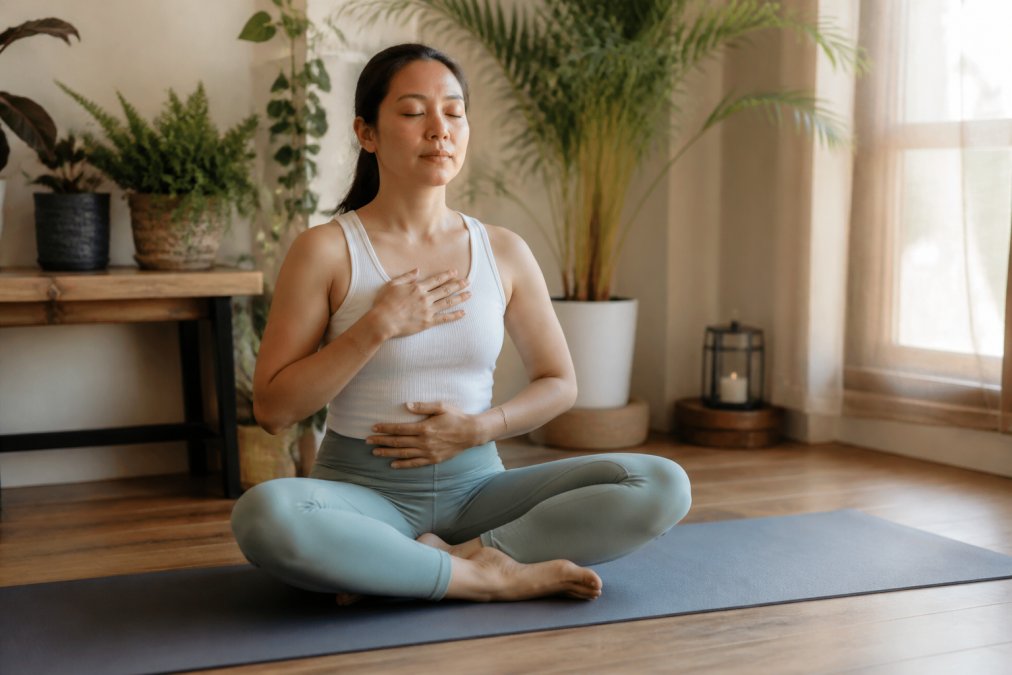
A simple self-compassion practice: when you notice stress, place your hand on your heart. Feel your heartbeat. Say silently: "This is a moment of stress. Stress is part of life. May I be kind to myself in this moment." Stay with this for 30 seconds. This practice directly activates your parasympathetic nervous system while shifting your relationship to difficulty. Research consistently shows that people who practice self-compassion recover faster from stress, experience less anxiety, and show greater emotional resilience.
The journey from chronic stress to genuine resilience requires more than occasional yoga classes. It requires a fundamental shift in how you relate to your body, your breath, and your nervous system. Holistic & Wellness Medicine integrates yoga with chiropractic care, functional medicine, and massage therapy to address stress at every level: structural, physiological, and emotional. When your spine is aligned, your nervous system is regulated, your muscles are released, and your mindset is compassionate, resilience becomes your baseline. Start with one practice today, one conscious breath, one grounded pose, one moment of self-compassion. From there, build consistency, and watch how your entire relationship with stress transforms.
Frequently Asked Questions
How does yoga help build emotional resilience?
Yoga builds emotional resilience by training your nervous system to recover faster from stress. Through breathwork and mindfulness practices, you learn to observe stress without being overwhelmed by it. Regular practice strengthens the parasympathetic nervous system, which activates your body's relaxation response. Over time, this helps you respond to challenges with greater calm and emotional stability rather than reactive anxiety.
Can yoga change the way the brain responds to stress?
Yes. Consistent yoga practice can reshape how your brain processes stress by activating the parasympathetic nervous system and reducing cortisol levels. Mindfulness and breathing techniques create new neural pathways that support emotional regulation. Studies show that regular practitioners develop greater activation in brain regions associated with calm focus and reduced activity in areas tied to fear and worry. This means your brain gradually becomes better at distinguishing between real threats and everyday stressors.
How long should I practice yoga to see benefits for stress relief?
Most people notice calming effects immediately after a single session, but lasting stress resilience develops over weeks and months of consistent practice. Research suggests that 20-30 minutes of yoga, 3-4 times per week, produces measurable reductions in anxiety and improved nervous system regulation. However, even short daily practices of 10-15 minutes can build resilience over time. The key is consistency rather than intensity, regular, moderate practice outperforms sporadic longer sessions.
Which yoga poses are most effective for stress and anxiety?
Grounding poses like Mountain Pose and Child's Pose activate stability and calm the nervous system. Forward folds like Standing Forward Fold encourage introspection and parasympathetic activation. Restorative poses such as Supported Bridge Pose and Legs-Up-the-Wall allow deep relaxation without effort. Avoid intense inversions or vigorous flows when acutely stressed; instead, choose slower, grounded sequences. Combining these poses with conscious breathing amplifies their stress-relieving benefits.
This article was written using GrandRanker


5 Natural Remedies for Anxiety and Stress at Home
Discover 5 natural remedies for anxiety and stress at home, from breathing exercises to herbal supplements. Learn how functional medicine can help. Start.
How to Improve Posture to Reduce Pain: A 2026 Guide
Learn how to improve posture to reduce pain with exercises, stretches, and ergonomic tips. Discover a holistic approach to lasting relief. Start today.

How to Treat Adrenal Fatigue Without Medication
Learn how to treat adrenal fatigue without medication using diet, stress management, and natural supplements. Discover practical steps to restore.