

Table of Contents
- Chiropractic vs Massage: Quick Comparison Table
- What Defines Chiropractic Care
- What Defines Massage Therapy
- Key Differences in Treatment Approach
- Signs You Need a Chiropractic Adjustment
- How Often Should You Get a Massage for Pain
- Is Chiropractic Care Covered by Insurance
- When to Choose Chiropractic Care
Last Updated: August 9, 2026
Chiropractic vs Massage: Quick Comparison Table
Both chiropractic care and massage therapy offer non-invasive approaches to managing discomfort, but they operate on different principles and target different aspects of musculoskeletal health. This comparison table provides a quick reference:
| Aspect | Chiropractic Care | Massage Therapy |
|---|---|---|
| Primary Focus | Spinal alignment and joint mobility | Muscular tension and soft tissue |
| Treatment Method | Adjustments, manipulation, alignment | Hands-on pressure, kneading, myofascial release |
| Best For | Structural misalignment, nerve compression | Muscle knots, tension, blood flow |
| Typical Session Length | 15-30 minutes | 30-90 minutes |
| Frequency for Chronic Pain | 1-3 times per week initially | 1-2 times per month or as needed |
| Insurance Coverage | Often covered (varies by plan) | Rarely covered; may require out-of-pocket |
| Recovery Time | Minimal; some soreness possible | None; immediate relaxation typical |
| Long-term Goal | Restore structural integrity | Release tension, improve circulation |
The best choice often isn’t either/or. Many people find that combining both therapies addresses different pain drivers: chiropractic care restores alignment and joint function while massage therapy releases muscular tension that often accompanies structural issues.
What Defines Chiropractic Care
Chiropractic care is a healthcare discipline focused on diagnosing and treating musculoskeletal disorders through spinal adjustments and manipulations designed to improve spinal alignment and joint mobility.
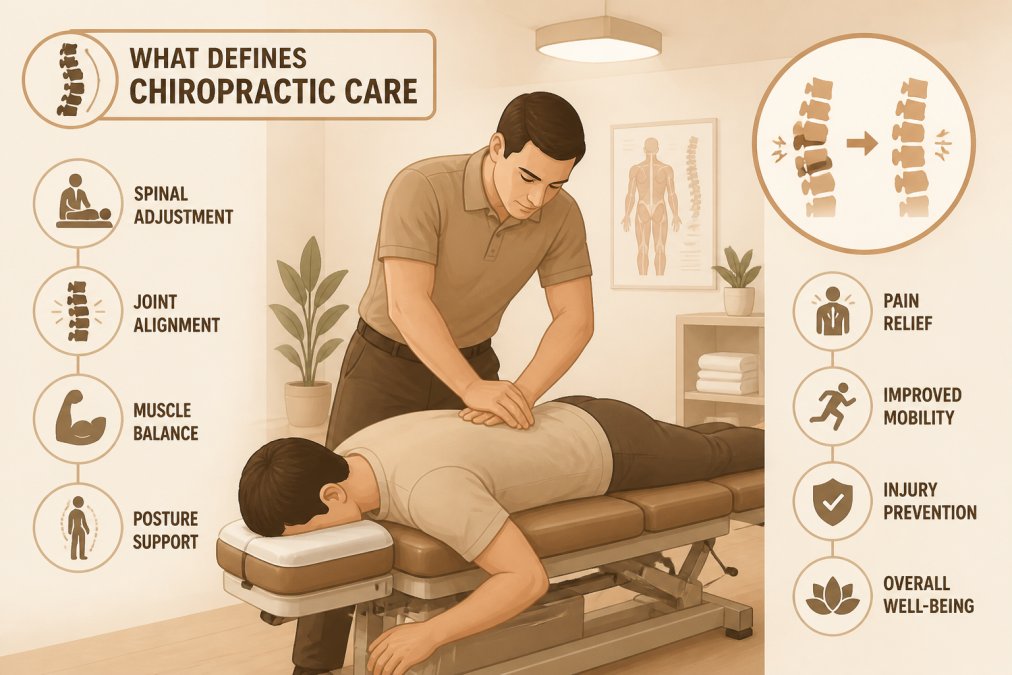
The core of chiropractic treatment involves identifying subluxations, areas where vertebrae have shifted out of proper alignment, and using targeted adjustments to restore structural integrity. These adjustments apply controlled force to joints, particularly in the spine, to improve range of motion and reduce nerve compression that causes pain. Rather than masking pain symptoms, chiropractors assess how spinal misalignment, poor posture, and movement patterns contribute to discomfort, then incorporate complementary therapies like spinal decompression, stretching protocols, and postural education to support long-term healing.
Many people seek chiropractic care for acute injuries like whiplash or sports trauma, but the discipline also addresses chronic conditions. Lower back pain, neck stiffness, sciatica, and migraines can stem from vertebral misalignment and nerve irritation that chiropractic adjustments may help resolve.
What Defines Massage Therapy
Massage therapy applies varying degrees of pressure and movement to muscles, connective tissues, and soft tissue structures to reduce muscular tension, improve blood flow, and promote relaxation.

Massage therapy targets how muscles respond to physical stress, repetitive strain, and emotional tension. When muscles remain tightened over time, they restrict blood flow, accumulate metabolic waste, and develop trigger points, localized areas of intense tenderness that radiate pain elsewhere. Techniques like deep tissue manipulation, myofascial release, and trigger point therapy break these tension patterns and restore normal muscle function.
Different massage modalities serve different purposes: Swedish massage focuses on relaxation and circulation; deep tissue massage applies sustained pressure to reach muscle layers beneath the surface; myofascial release targets the fascia surrounding muscles to release restrictions that limit movement; sports massage emphasizes injury prevention and performance recovery.
Beyond mechanical tension release, massage activates the parasympathetic nervous system, the body’s relaxation response, which reduces cortisol levels, lowers blood pressure, and interrupts pain signaling.
Key Differences in Treatment Approach
Chiropractic care emphasizes skeletal alignment and joint function, viewing pain as a symptom of structural misalignment or nerve compression. A chiropractor’s assessment focuses on spinal positioning, vertebral mobility, and how skeletal structure affects nervous system function. Treatment involves precise adjustments to restore alignment and reduce nerve irritation.
Massage therapy targets muscular tension and soft tissue dysfunction. A massage therapist assesses where muscles hold chronic tension, identifies trigger points, and uses hands-on techniques to release these restrictions.
This difference has practical implications. Chiropractic adjustments typically produce immediate changes in spinal position and joint mobility, though some people experience temporary soreness. Massage therapy’s effects build gradually as tension releases and blood circulation improves.
Treatment frequency differs as well. Chiropractic care for acute or chronic pain often requires frequent initial visits, sometimes 2-3 times per week. Massage therapy frequency varies depending on the condition: some people benefit from weekly sessions for chronic pain, while others find monthly massage sufficient for maintenance.
Chiropractic care typically includes significant patient responsibility: following postural corrections, performing prescribed exercises, and making ergonomic adjustments. Massage therapy requires less active participation from the patient, though many therapists provide stretching or self-massage guidance to extend benefits between sessions.
A common mistake is expecting either therapy alone to permanently resolve chronic pain without addressing underlying lifestyle factors. Both chiropractic care and massage work best when combined with ergonomic improvements, movement habits, and stress management.
Signs You Need a Chiropractic Adjustment
You may benefit from a chiropractic adjustment if you experience sharp pain localized to the spine or radiating pain that follows a nerve pathway. Sciatica, pain radiating down the leg from the lower back, often indicates nerve compression from vertebral misalignment that chiropractic adjustments can address. Similarly, neck pain accompanied by radiating arm pain or numbness suggests cervical spine involvement that warrants chiropractic evaluation.
Postural problems frequently signal the need for chiropractic care. If you spend hours at a desk and notice your head jutting forward, shoulders rounded, or lower back arching excessively, these structural deviations compress joints and irritate nerves. Restricted range of motion, difficulty turning your head fully, bending forward, or rotating your torso, often indicates joint stiffness or vertebral fixation that chiropractic adjustment can improve.
If you’ve experienced a specific injury like whiplash from a car accident or sports-related impact, chiropractic evaluation within the first few days can identify structural damage and prevent chronic problems. Recurring headaches or migraines originating from the neck region frequently respond to chiropractic care, as cervical spine misalignment can trigger tension headaches by irritating nerves and restricting blood flow.
How Often Should You Get a Massage for Pain
For acute pain from recent injury, many therapists recommend weekly or bi-weekly sessions for 4-6 weeks to interrupt the pain cycle and restore normal tissue function. For chronic pain conditions like persistent lower back discomfort or chronic neck tension, many people find that bi-weekly or monthly massage provides meaningful relief.
The relationship between massage frequency and results isn’t always linear. Most therapists recommend committing to a treatment plan of 4-6 sessions before evaluating effectiveness. If you notice significant improvement within that timeframe, you’ve found an effective frequency. If progress plateaus, increasing frequency or combining massage with other therapies like chiropractic care may be necessary.
The most effective frequency is the one you can sustain long-term while seeing measurable improvement. Consistency matters more than intensity; regular monthly massage often produces better long-term outcomes than occasional intensive sessions.
Is Chiropractic Care Covered by Insurance
Insurance coverage for chiropractic care varies significantly by plan, state regulations, and the specific condition being treated. Many major health insurance plans do cover chiropractic adjustments, though typically with limitations on the number of visits per year and requirements for referral or pre-authorization.
Start your wellness journey today! →
To determine whether chiropractic care is covered under your specific plan, contact your insurance provider directly and ask about annual visit limits, pre-authorization requirements, co-pay amounts, referral needs, and coverage for diagnostic imaging.
Medicare Part B covers chiropractic care for acute, short-term musculoskeletal pain, though coverage is limited to spinal manipulation and does not include ancillary services. State Medicaid programs vary widely in their chiropractic coverage. Workers’ compensation typically covers chiropractic care if your pain results from a work-related injury, provided your employer’s insurance plan includes it.
Many chiropractors offer cash-pay discounts for uninsured patients, making chiropractic care often more accessible than massage therapy, which is rarely covered by insurance.
When to Choose Chiropractic Care
Choose chiropractic care when your pain stems from structural misalignment, joint dysfunction, or nerve compression. If you have clear signs of vertebral misalignment confirmed by imaging or physical examination showing restricted joint mobility, chiropractic adjustment directly addresses the root cause.
Chiropractic care is the better choice if your pain radiates along a nerve pathway. Sciatica, radiating arm pain from cervical spine issues, or pain that follows a specific nerve distribution suggests nerve compression from vertebral position. Adjustments that restore proper alignment often relieve this type of pain more effectively than massage alone.
Consider chiropractic care if you spend your day in positions that gradually shift your spine out of alignment. Office workers with forward head posture, people who carry heavy loads on one side, or athletes with repetitive movement patterns often develop structural deviations that chiropractic care addresses. Chiropractic care also makes sense if you’ve tried massage therapy without sustained improvement; if tension keeps returning within days of massage, the underlying structural misalignment may be pulling muscles back into tension patterns.
At Holistic & Wellness Medicine in San Antonio, the integrated approach combines chiropractic care with complementary therapies to address both structural alignment and muscular tension. Rather than choosing one therapy exclusively, this model recognizes that most chronic pain involves both components: misaligned vertebrae irritating nerves while surrounding muscles tense protectively.
Chiropractic care works best for people with acute injuries, clear postural deviations, radiating nerve pain, or pain that returns quickly after massage therapy. It’s particularly effective for those willing to commit to postural corrections and exercises that support long-term spinal health.
How Chiropractic and Massage Complement Each Other
The most effective pain management approach often combines chiropractic adjustment with massage therapy, because each addresses different components of the pain cycle. Chiropractic care restores spinal alignment and joint mobility, reducing nerve compression and structural irritation. Massage therapy releases the muscular tension that develops around misaligned joints and compensates for structural problems.
Vertebral misalignment causes nerve irritation, triggering pain signals and muscle guarding, the protective muscle tightening that develops around an injury. A chiropractic adjustment relieves the nerve irritation and restores joint mobility. However, surrounding muscles often remain tight from their protective pattern. Massage therapy then releases this muscular tension, allowing the adjustment to hold better and preventing muscles from pulling the spine back out of alignment.
Many practitioners recommend chiropractic adjustment followed by massage therapy in the same session or within a few days. The adjustment creates the structural change, and massage therapy prevents muscles from immediately reverting to old tension patterns. Over time, this combination retrains both the skeletal and muscular systems, creating lasting improvement rather than temporary relief.
Massage therapy also enhances chiropractic outcomes by improving blood flow to tissues surrounding the spine, accelerating healing of ligaments and discs that may have been irritated by misalignment. Additionally, massage therapy’s effect on the nervous system complements chiropractic care’s structural benefits by addressing the stress-tension cycle that often perpetuates pain.
For chronic conditions, alternating between the two therapies often works well. You might receive chiropractic adjustments weekly for 4-6 weeks to establish improved alignment, then transition to monthly adjustments combined with bi-weekly massage to maintain the structural gains while managing muscular tension.
Research from the American Chiropractic Association indicates that combined therapies produce better outcomes for chronic pain than single-modality treatment.
When chronic pain has limited your life, choosing between treatments can feel overwhelming. The reality is that most people benefit from both chiropractic care and massage therapy, each addressing different aspects of what’s driving your discomfort. At Holistic & Wellness Medicine in San Antonio, the integrated approach combines chiropractic adjustments, massage therapy, functional medicine, and natural approaches to address root causes rather than temporary symptom relief. Start your wellness journey today by exploring how combining these therapies might resolve the pain that other approaches haven’t fully addressed.
Frequently Asked Questions
Is it better to get a massage or chiropractor for back pain?
The best choice depends on the root cause of your back pain. Chiropractic care targets structural misalignment and nervous system function, making it effective for pain driven by spinal subluxation or joint mobility issues. Massage therapy addresses muscular tension and soft tissue restrictions, working best for pain caused by muscle knots, trigger points, or postural strain. Many people benefit from both: chiropractic adjustments restore structural integrity while massage reduces muscular tension that can return after adjustment. A consultation with a qualified professional can help determine which approach suits your specific condition.
How often should you get a massage for pain management?
Frequency depends on your condition's severity and your recovery response. For acute pain or injury recovery, weekly or twice-weekly sessions may accelerate healing and reduce inflammation. For chronic pain management, bi-weekly or monthly maintenance sessions often sustain relief and prevent pain cycles from returning. Some people find that combining regular massage with chiropractic adjustments reduces the frequency needed for each therapy. Your therapist can recommend a schedule based on your symptoms, recovery time, and treatment goals. Consistency matters more than frequency, regular sessions maintain blood flow and prevent muscular tension from rebuilding.
Is chiropractic care covered by insurance?
Many health insurance plans in the United States cover chiropractic care, but coverage varies significantly by plan. Medicare covers chiropractic adjustments for acute lower back pain, though benefits are limited. Most private insurance plans offer some coverage, typically requiring a referral or pre-authorization. Coverage usually includes a set number of visits per year (often 20-30) and may require you to meet a deductible. Massage therapy is less commonly covered but is included in some plans, particularly when prescribed as part of a treatment plan for a specific condition. Contact your insurance provider to confirm your specific benefits, as coverage depends on your plan type and the medical necessity documented by your provider.
What are the main differences between chiropractic and massage therapy?
Chiropractic care focuses on spinal alignment and nervous system regulation through adjustments and manipulations of joints and vertebrae. The goal is to restore structural integrity and improve how your nervous system functions, reducing pain by addressing the underlying cause. Massage therapy targets soft tissue manipulation, muscles, tendons, and fascia, to release trigger points, improve blood flow, and reduce muscular tension. While chiropractic treats the skeletal system and nerve function, massage works on muscular and connective tissue. Both reduce pain, but through different mechanisms: chiropractic restores joint mobility and alignment, while massage relieves muscular tension and improves circulation.
Can massage therapy replace chiropractic adjustments?
Massage therapy and chiropractic care address different aspects of pain and dysfunction. Massage cannot replace chiropractic adjustments for issues rooted in spinal misalignment or joint mobility loss, as massage does not manipulate vertebrae or restore structural alignment. However, massage complements chiropractic care by addressing muscular tension that develops around misaligned joints. For pain driven purely by muscle knots and postural strain, regular massage may reduce symptoms without adjustments. The most effective approach for chronic pain combines both: chiropractic adjustments restore alignment and nervous system function, while massage prevents muscular tension from returning and supports long-term recovery.
This article was written using GrandRanker


5 Natural Remedies for Anxiety and Stress at Home
Discover 5 natural remedies for anxiety and stress at home, from breathing exercises to herbal supplements. Learn how functional medicine can help. Start.

How to Improve Posture to Reduce Pain: A 2026 Guide
Learn how to improve posture to reduce pain with exercises, stretches, and ergonomic tips. Discover a holistic approach to lasting relief. Start today.

How to Treat Adrenal Fatigue Without Medication
Learn how to treat adrenal fatigue without medication using diet, stress management, and natural supplements. Discover practical steps to restore.