
Table of Contents
- Why Self-Massage Works for Neck and Shoulder Tension
- Preparation and Posture for Self-Massage
- Locating Trigger Points and Pressure Points for Neck Pain
- Core Self-Massage Techniques: Circular Motions and Firm Pressure
- How to Massage Shoulder Knots and Release Tension
- Duration of Self-Massage for Muscle Recovery and Results
- When to See a Chiropractor for Neck Pain and Safety Warnings
- Conclusion
- Frequently Asked Questions
Last Updated: September 20, 2026
Why Self-Massage Works for Neck and Shoulder Tension
Neck and shoulder tension is one of the most common complaints we hear from patients. Whether you spend eight hours at a desk or carry stress in your upper body, that tightness builds up fast. Self-massage techniques for neck and shoulder tension offer a practical way to address this problem without waiting for an appointment.
The reason self-massage works comes down to how your muscles respond to pressure and movement. When you apply firm, steady pressure to a tight muscle, you increase blood flow to that area (pubmed.ncbi.nlm.nih.gov). This helps reduce the buildup of metabolic waste that contributes to soreness and stiffness. Self-massage, when combined with other therapies, can contribute to relief and better long-term results.
Self-massage isn’t a replacement for professional care, but it’s a powerful tool you can use between appointments. The key is learning the right techniques and knowing when to seek help from a qualified professional.
Preparation and Posture for Self-Massage
Before you start any self-massage work, your body position matters enormously. Poor posture during self-massage can actually create more tension instead of relieving it.
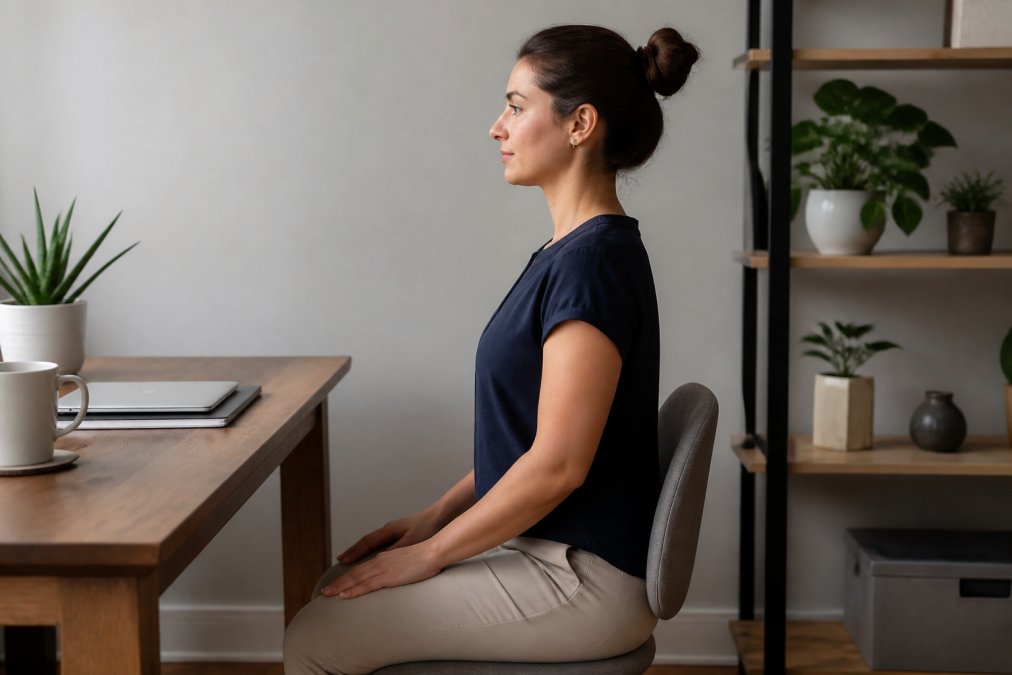
Sit upright in a chair with your feet flat on the floor. Your shoulders should be relaxed, not hunched toward your ears. Keep your spine aligned so your head sits directly over your shoulders. This alignment is critical because it prevents you from straining your neck while you work on it.
Take three slow, deep breaths before beginning. Breathing helps your muscles relax and prepares your nervous system for the work ahead. Many people hold their breath during self-massage, which keeps muscles tight. Avoid this by breathing steadily throughout.
Warm up your muscles first. A warm shower or heating pad applied for five minutes increases blood flow and makes your muscles more responsive to massage. Cold muscles resist pressure and won’t release as easily.
Check your environment. Make sure you have enough space to move your arms freely. Poor lighting makes it hard to locate tension points. A quiet space helps you focus on what your body is telling you.
Locating Trigger Points and Pressure Points for Neck Pain
Trigger points are tight knots within muscle fibers that refer pain to other areas. A trigger point in your upper trapezius might cause a headache even though the actual problem is in your shoulder.
Learning to find these spots takes practice. Start by feeling along the top of your shoulder, moving from your neck toward your shoulder blade. You’ll feel muscle fibers running diagonally across this area. Press gently with your thumb and move slowly. When you hit a tender spot, you’ve found a trigger point.
The cervical spine area (your neck) contains many pressure points that respond well to self-massage. Run your fingers down the back of your neck, just to the side of your spine. You’ll feel muscle groups on both sides. These cervical muscles often hold enormous tension from work posture and stress.
Your shoulder blade area holds several key pressure points. Reach your right hand over your left shoulder and feel along the inner edge of your shoulder blade. This area is frequently tight in people who work at computers. Press firmly but not painfully into this region.
Common trigger point locations include:
- Upper trapezius (top of shoulder, near the neck)
- Levator scapulae (side of neck, connects to shoulder blade)
- Rhomboids (between shoulder blades)
- Supraspinatus (above shoulder blade)
When you find a tender spot, note how it feels. Is it a sharp pain or a dull ache? Does it refer pain elsewhere? This information helps you understand which muscles need the most attention.
Core Self-Massage Techniques: Circular Motions and Firm Pressure
The most effective self-massage techniques for neck and shoulder tension use two main approaches: circular motions and sustained pressure.
Circular Motion Technique
Use your fingers or thumb to apply gentle pressure while moving in small circles. Start with light pressure and gradually increase it. The circles should be no larger than a quarter. Move slowly, spending 10-15 seconds on each spot before moving to the next area.
Work along the muscle fibers, not against them. Muscle fibers in your trapezius run diagonally from your neck toward your shoulder. Follow this direction as you massage. Moving against the grain creates irritation rather than relief.
Circular motions work best for larger muscle groups. They help break up muscle tightness and improve range of motion in the cervical spine area.
Firm Pressure Technique
Start your wellness journey today! →
Place your thumb or fingers on a trigger point and hold steady pressure for 20-30 seconds. Don’t move. Just press into the knot and breathe. You should feel the muscle gradually soften under your thumb. This is called a “hold and release” technique.
The pressure should be firm but never painful. If you experience sharp pain, you’re pressing too hard. Aim for a sensation of productive discomfort, the feeling that you’re reaching the tension but not harming yourself.
Repeat this hold and release technique three to five times on each trigger point. Rest for 30 seconds between repetitions.
Combining Both Techniques
Start with circular motions to warm up the area and locate tension. Then switch to firm pressure on specific trigger points. This combination addresses both general muscle tightness and localized knots.
| Technique | Best For | Duration | Pressure Level |
|---|---|---|---|
| Circular motions | General stiffness, warming up muscles | 10-15 seconds per spot | Light to moderate |
| Hold and release | Trigger points, muscle knots | 20-30 seconds per hold | Firm but not painful |
| Combined approach | Complete tension relief | 5-10 minutes total | Varies by phase |
How to Massage Shoulder Knots and Release Tension
Shoulder knots are concentrated areas of muscle tightness that feel like hard bumps under the skin. These knots restrict your range of motion and create that persistent ache many office workers experience.
Start by locating the knot. Use your opposite hand, right hand for left shoulder, left hand for right shoulder. Feel along the top of your shoulder and the area between your shoulder blade and spine. Press gently until you find the hardest spot.
Once you’ve located the knot, use your thumb to apply firm, steady pressure directly into it. Hold for 20 seconds. You should feel the knot gradually soften. Release and rest for 30 seconds.
Repeat this process three times. On the final repetition, add gentle circular motions while maintaining pressure. This combination helps release the knot more completely.
For knots near your shoulder blade, use your fingers instead of your thumb. Curl your fingers and press the knuckles into the muscle. This gives you more control and distributes pressure over a larger area.
Many people find relief by working on shoulder knots for just two to three minutes daily. Consistency matters more than intensity. A gentle daily routine outperforms aggressive weekly sessions.
Work systematically across your entire shoulder region. Don’t just focus on the most painful spot. Tension in one area often pulls on surrounding muscles, so addressing the whole region produces better results.
Duration of Self-Massage for Muscle Recovery and Results
How long should you spend on self-massage? The answer depends on your goals and the severity of your tension.
For general maintenance and stress reduction, five to ten minutes daily is effective. This brief routine keeps muscle tightness from building up.
When to See a Chiropractor for Neck Pain and Safety Warnings
Self-massage is powerful, but it has limits. Knowing when to seek professional help protects you from making problems worse.
- Symptoms persist beyond four weeks of consistent self-massage
- Pain worsens despite your efforts
- Tension affects your sleep or daily function
- You cannot identify the source of your pain
- You have a history of neck problems or injury
Never attempt to self-massage if you suspect a fracture, serious injury, or nerve damage. These conditions require immediate professional evaluation. Delaying proper diagnosis can lead to permanent damage and prolonged recovery.
Conclusion
Self-massage techniques for neck and shoulder tension offer an accessible tool for managing the muscle tightness that comes from modern work and stress. By learning proper technique, locating trigger points, and practicing consistently, you can reduce stiffness and improve your range of motion.
Frequently Asked Questions
How long should I perform self-massage techniques for neck and shoulder tension?
Start with 5-10 minutes per session, focusing on the areas with the most tension. As you become familiar with your trigger points, you can extend sessions to 15-20 minutes. Perform self-massage 3-5 times weekly for consistent results. Duration of self-massage for muscle recovery depends on your pain level and how your muscles respond. Consistency matters more than length, shorter daily sessions often work better than occasional longer ones. Stop if you experience sharp pain or numbness.
What are the main pressure points for neck pain relief?
Key pressure points for neck pain include the upper trapezius (the thick muscle at the top of your shoulder), the base of the skull where it meets the neck, and the area along the cervical spine. The pressure points for neck pain also include the levator scapulae muscle on the side of your neck. Apply gentle to moderate pressure to these areas using your fingers or thumbs, holding for 5-10 seconds before releasing. Locate tender spots, these muscle knots respond well to sustained pressure followed by slow circular motions.
When should I see a chiropractor instead of doing self-massage?
See a chiropractor if self-massage doesn’t reduce tension within 2-3 weeks, if you experience sharp or radiating pain down your arm, or if you have numbness or tingling. When to see a chiropractor for neck pain also applies if your range of motion is severely limited or if your tension follows an injury. Professional care is essential if you suspect cervical spine involvement or have underlying conditions. A chiropractor can identify root causes that self-care alone cannot address and recommend integrated treatment combining manual therapy, ergonomic adjustments, and other evidence-based approaches.
Are there risks to performing self-massage on the neck?
Yes, the neck contains delicate structures including blood vessels and nerves. Avoid applying deep pressure directly on the cervical spine itself; instead, work on the muscles surrounding it. Never perform aggressive massage if you have osteoporosis, recent injury, or cervical spine conditions without professional guidance first. Stop immediately if you feel sharp pain, dizziness, or numbness. Self-massage works best for muscle tension and stiffness, not for structural problems. When in doubt, consult a healthcare provider before beginning any new self-care routine.


5 Natural Remedies for Anxiety and Stress at Home
Discover 5 natural remedies for anxiety and stress at home, from breathing exercises to herbal supplements. Learn how functional medicine can help. Start.

How to Improve Posture to Reduce Pain: A 2026 Guide
Learn how to improve posture to reduce pain with exercises, stretches, and ergonomic tips. Discover a holistic approach to lasting relief. Start today.

How to Treat Adrenal Fatigue Without Medication
Learn how to treat adrenal fatigue without medication using diet, stress management, and natural supplements. Discover practical steps to restore.