Table of Contents
- How Massage Therapy Reduces Chronic Inflammation
- Lymphatic Drainage Massage for Inflammation: Clearing Metabolic Waste
- Deep Tissue Massage for Chronic Pain and Connective Tissue
- Anti-Inflammatory Massage Techniques You Can Use
- Massage Frequency for Chronic Inflammation: Treatment Planning
- Combining Massage With Diet and Lifestyle for Better Results
- What the Research Shows: Clinical Evidence for Massage Therapy
- Safety Considerations and When to Avoid Massage
Last Updated: August 2, 2026
Chronic inflammation has become one of the most persistent health challenges facing Americans today. At Holistic & Wellness Medicine, we’ve observed that many patients struggle with persistent pain, fatigue, and stiffness that conventional approaches fail to resolve. Massage therapy for chronic inflammation offers a scientifically-supported pathway to reduce symptoms at their source rather than simply masking them.
How Massage Therapy Reduces Chronic Inflammation
Massage therapy operates through multiple interconnected physiological mechanisms. When inflammation becomes chronic, tissues remain in a state of constant alert, a condition that massage directly interrupts.
The primary mechanism involves improved circulation and tissue oxygenation. Therapeutic massage increases vasodilation, widening blood vessels to deliver oxygen-rich blood to inflamed tissues, accelerating removal of pro-inflammatory markers and delivering nutrients for cellular repair.
Your nervous system plays an equally critical role. Chronic inflammation is perpetuated by sympathetic nervous system activation, keeping your body in fight-or-flight readiness. Massage activates the parasympathetic nervous system instead, triggering the "rest and digest" response. This shift reduces cortisol levels, the primary stress hormone that drives inflammation, allowing your body to redirect energy toward healing.
The timing of massage matters. Schedule sessions when you can dedicate 24 hours afterward to lighter activity, allowing your nervous system to fully integrate the parasympathetic shift.
Research from the National Center for Complementary and Integrative Health documents that massage therapy reduces systemic inflammation by lowering circulating cytokines, the signaling molecules that drive inflammatory cascades throughout your body.
Lymphatic Drainage Massage for Inflammation: Clearing Metabolic Waste
Lymphatic drainage massage represents one of the most underutilized approaches to managing chronic inflammation. Your lymphatic system functions as your body’s cleanup crew, removing metabolic waste, excess fluid, and inflammatory debris from tissues. Unlike your circulatory system, which has the heart to pump blood, your lymphatic system relies entirely on muscle contraction and manual stimulation to move fluid.
When inflammation becomes chronic, lymphatic congestion often accompanies it. Stagnant lymph allows inflammatory markers to accumulate locally, perpetuating pain and stiffness. Lymphatic drainage massage uses gentle, rhythmic pressure applied in specific directions toward lymph nodes to mobilize stagnant fluid and restore drainage patterns.
The technique differs fundamentally from deep tissue massage. Rather than applying firm pressure to release muscle tension, lymphatic drainage uses light touch and slow, deliberate strokes following the body’s natural lymphatic pathways. The pressure is typically no firmer than what you’d use to move ink across paper without tearing it.
For individuals with chronic inflammation affecting joints, edema reduction becomes a measurable outcome. Swelling in the knee, ankle, or shoulder often reflects lymphatic congestion as much as inflammatory fluid itself. Consistent lymphatic drainage massage reduces this edema by restoring normal fluid clearance, directly decreasing pressure on nerves and improving range of motion.
Lymphatic drainage works best as a preventive practice. Weekly sessions maintain healthy drainage patterns and prevent the fluid stagnation that perpetuates chronic inflammation.
Deep Tissue Massage for Chronic Pain and Connective Tissue
Deep tissue massage targets the connective tissue structures, fascia, tendons, and ligaments that become restricted and dysfunctional in chronic pain conditions.
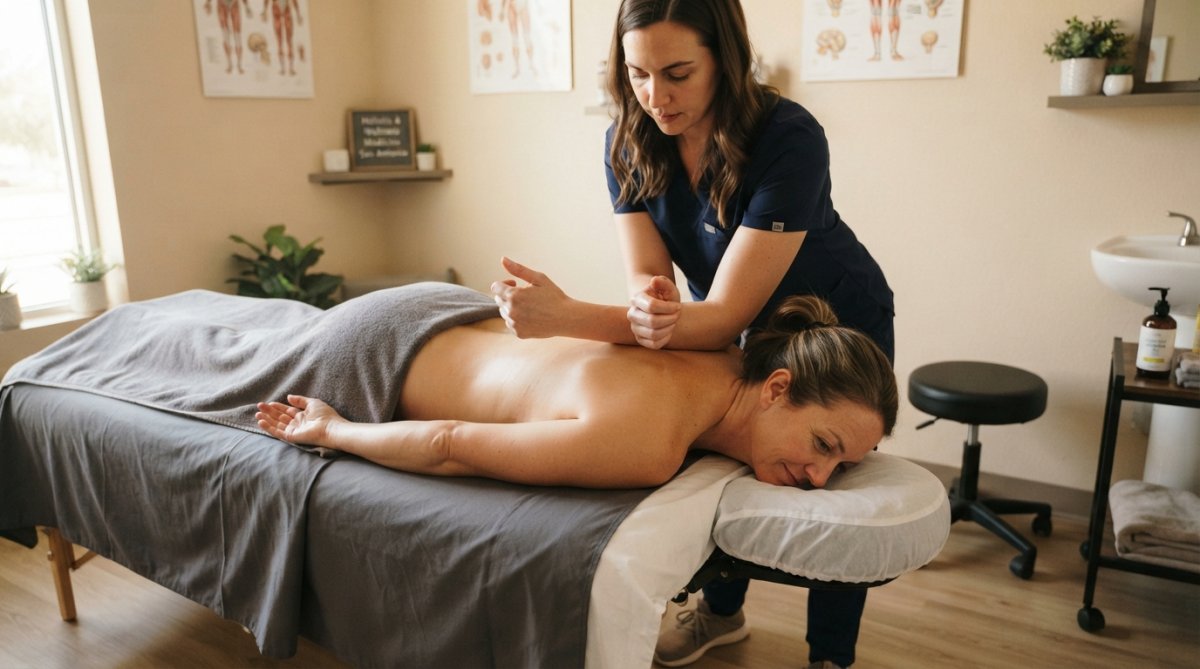
Chronic inflammation often manifests as myofascial restrictions, areas where connective tissue has become thickened, dehydrated, or adhered to surrounding structures. Deep tissue massage applies sustained pressure to these restricted areas, gradually encouraging the fascia to release and rehydrate. The mechanism involves breaking up adhesions and stimulating synovial fluid production, which lubricates joints and nourishes cartilage. Many patients report that joint stiffness diminishes noticeably within 3-5 sessions because mechanical restrictions have been addressed.
Deep tissue work also stimulates mitochondrial biogenesis, the creation of new mitochondria within muscle cells. By increasing mitochondrial density through consistent deep tissue massage, you enhance your tissues’ ability to generate energy needed for repair and regeneration.
Myofascial release and joint stiffness
Myofascial release uses sustained pressure and slow movements to encourage the fascia to release its grip on underlying structures. Joint stiffness in chronic inflammation often stems from fascial restriction rather than joint damage itself. When fascia tightens around a joint, it limits range of motion, increases friction during movement, and perpetuates pain signals.
Myofascial release applies steady pressure to trigger points, areas of particular fascial tightness, and holds that pressure until the tissue releases. This process typically requires 60-90 seconds of sustained pressure per trigger point, allowing the nervous system to recognize that the tissue is safe to release.
Anti-Inflammatory Massage Techniques You Can Use
While professional massage therapy delivers powerful results, self-massage techniques extend those benefits between sessions and help you participate actively in your healing.
Swedish massage and therapeutic touch
Swedish massage forms the foundation of most Western massage therapy. Its five primary strokes, effleurage (long gliding strokes), petrissage (kneading), friction, tapotement (rhythmic tapping), and vibration, each serve specific purposes in reducing inflammation and promoting circulation.
For chronic inflammation management, effleurage and petrissage work synergistically. Effleurage warms tissues and increases circulation; petrissage follows to mobilize deeper muscle layers and encourage fluid movement. Therapeutic touch activates genuine physiological changes by engaging mechanoreceptors in your skin, which signal your nervous system to downregulate inflammation. Research from the Journal of Alternative and Complementary Medicine documents that therapeutic touch reduces cortisol levels and increases parasympathetic activation.
Self-massage methods for home care
Self-massage extends professional treatment benefits and builds consistency between sessions.
Hand self-massage for upper extremities: Using your opposite hand, apply moderate pressure with your thumb or fingers to areas of tightness in your forearm, shoulder, or neck. Move slowly toward your heart to support lymphatic drainage. Spend 2-3 minutes per area using small circular motions or sustained pressure on trigger points.
Foam rolling for larger muscle groups: A foam roller allows you to apply sustained pressure to your back, hips, and legs. Use slow movements at low pressure rather than aggressive rolling. Roll slowly over each area for 60-90 seconds, pausing on areas of tightness.
Lacrosse ball technique for trigger points: A lacrosse ball or similar small firm ball allows precise pressure on trigger points. Place the ball against a wall or floor and lean into it, positioning it on an area of tightness. Hold pressure for 60-90 seconds, breathing slowly.
Avoid aggressive self-massage when inflammation is acute. Vigorous pressure can worsen inflammation by triggering additional tissue damage. During acute flare-ups, use only gentle techniques, light hand massage, very gentle foam rolling, or simply resting with the area elevated.
Massage Frequency for Chronic Inflammation: Treatment Planning
How often you receive massage therapy depends on your inflammation severity, treatment goals, and how your body responds.
Acute versus chronic inflammation: different approaches
Acute inflammation represents your body’s immediate response to injury or infection. It’s characterized by sudden onset, typically lasts days to weeks, and features visible signs like swelling, redness, and warmth. Chronic inflammation persists for months or years, often lacking obvious external signs but manifesting as persistent stiffness, low-grade pain, fatigue, or brain fog.
Treatment frequency differs significantly between these states. For acute inflammation following injury or surgery, massage therapy typically begins conservatively. Light lymphatic drainage massage 2-3 times per week for the first 2-3 weeks helps manage swelling and promotes healing. As acute inflammation resolves, deeper work can be introduced.
For chronic inflammation, consistency matters more than intensity. Most practitioners recommend weekly sessions as a maintenance baseline for chronic conditions. This frequency maintains improved circulation, prevents lymphatic congestion, and sustains parasympathetic activation.
| Inflammation Type | Initial Frequency | Duration | Transition Plan |
|---|---|---|---|
| Acute (injury/surgery) | 2-3x weekly | 2-3 weeks | Decrease to 1x weekly as swelling resolves |
| Chronic (ongoing) | 1x weekly | Ongoing | Adjust based on symptom response |
| Chronic with severe symptoms | 2x weekly | 4-8 weeks | Reduce to 1x weekly once inflammation improves |
| Maintenance (post-improvement) | 2-4x monthly | Ongoing | Continue indefinitely to prevent relapse |
The key principle is consistency. A single massage per week provides more cumulative benefit than three massages clustered into one week, then nothing for three weeks.
Combining Massage With Diet and Lifestyle for Better Results
Massage therapy works most powerfully when integrated into a comprehensive approach that addresses all drivers of inflammation. Ultra-processed foods high in seed oils, refined carbohydrates, and added sugars trigger inflammatory cascades throughout your body. Conversely, whole foods rich in omega-3 fatty acids, polyphenols, and micronutrients actively downregulate inflammatory pathways.
Chronic sleep deprivation elevates cortisol and inflammatory markers, directly opposing massage therapy’s benefits. Consistent sleep of 7-9 hours per night enhances parasympathetic nervous system function and accelerates tissue repair. Sedentary behavior perpetuates inflammation, while gentle consistent movement, walking, swimming, yoga, enhances circulation and lymphatic drainage between massage sessions.
Stress management represents another critical synergy. Chronic psychological stress maintains sympathetic nervous system activation, perpetuating inflammation regardless of massage frequency. Practices that activate parasympathetic function, meditation, breathwork, time in nature, extend and deepen massage therapy’s anti-inflammatory effects.
What the Research Shows: Clinical Evidence for Massage Therapy
Scientific evidence supporting massage therapy for chronic inflammation has expanded significantly. Research from the American Massage Therapy Association documents that regular massage reduces pro-inflammatory cytokines including interleukin-6 and tumor necrosis factor-alpha, the primary signaling molecules driving chronic inflammation.
Studies measuring cortisol levels show consistent reductions following massage sessions, with effects persisting for hours or days depending on frequency. The clinical efficacy of massage extends across multiple chronic inflammatory conditions. Patients with rheumatoid arthritis, fibromyalgia, chronic back pain, and other inflammatory conditions report significant symptom improvement with consistent massage therapy, including reduced pain intensity, increased range of motion, improved sleep quality, and decreased fatigue.
Massage therapy stimulates the release of endogenous opioids, your body’s natural pain-relieving chemicals, while simultaneously downregulating pain-signaling pathways. Additionally, massage increases parasympathetic activation measurable through heart rate variability changes, demonstrating objective nervous system shifts.
Safety Considerations and When to Avoid Massage
While massage therapy is generally safe, specific situations warrant caution or contraindication.
Acute infections represent a clear contraindication. If you’re experiencing fever, acute viral illness, or localized skin infection, massage should be postponed until the acute phase resolves. Similarly, open wounds, severe burns, or fresh surgical sites require healing before massage is appropriate.
Certain medications interact with massage therapy. Blood thinners increase bruising risk from deep tissue work, requiring lighter pressure or postponement. Cancer patients undergoing active chemotherapy should receive only gentle massage. Consult your oncology team before receiving massage during cancer treatment.
Undiagnosed pain warrants medical evaluation before massage. While massage effectively treats many chronic pain conditions, some pain signals serious underlying pathology. A qualified healthcare provider should evaluate new or unexplained pain before massage therapy begins.
Massage should never replace necessary medical treatment. If you have severe inflammation, fever, or acute symptoms, seek medical evaluation first. Massage complements medical care but does not substitute for it when serious conditions exist.
Pregnancy represents a special case rather than a contraindication. Prenatal massage can reduce pregnancy-related inflammation and pain, but requires a therapist trained in prenatal techniques. Communicate openly with your massage therapist about all health conditions, medications, and recent medical procedures.
Chronic inflammation doesn’t have to be permanent. When you address inflammation’s root causes rather than simply masking symptoms, you create conditions for genuine healing. Massage therapy for chronic inflammation activates multiple physiological systems simultaneously, improving circulation, activating parasympathetic function, reducing cortisol, and promoting lymphatic drainage. Integrated with dietary changes, consistent movement, and stress management, massage therapy becomes a cornerstone of sustainable inflammation reduction. At Holistic & Wellness Medicine, we combine massage therapy with functional medicine assessment, personalized nutrition guidance, and movement practices to address inflammation comprehensively. Start your wellness journey today and experience how root cause healing transforms your relationship with chronic inflammation.
Frequently Asked Questions
How does massage therapy reduce chronic inflammation?
Massage therapy reduces chronic inflammation through multiple mechanisms: it improves blood circulation to deliver oxygen and nutrients to inflamed tissues, enhances lymphatic drainage to remove metabolic waste and pro-inflammatory markers, and activates the parasympathetic nervous system to lower cortisol levels. These combined effects help reduce systemic inflammation and support the body's natural anti-inflammatory response over time.
What is the difference between lymphatic drainage massage and deep tissue massage for inflammation?
Lymphatic drainage massage uses gentle, rhythmic techniques to stimulate lymphatic flow and reduce edema, making it ideal for early-stage or acute inflammation. Deep tissue massage applies firmer pressure to address muscle tension and connective tissue restrictions that contribute to chronic pain and inflammation. For chronic inflammation, many people benefit from both approaches used strategically, depending on tissue condition and pain levels.
How often should I get massage therapy for chronic inflammation?
Treatment frequency depends on inflammation severity and your specific condition. Acute inflammation may respond to 1-2 sessions weekly initially, while chronic inflammation often benefits from consistent monthly or bi-weekly sessions combined with self-care. Your massage therapist and healthcare provider can recommend a personalized treatment plan based on your recovery progress and symptom changes.
Can massage therapy make inflammation worse?
Massage can temporarily increase inflammation if applied too aggressively or to acutely inflamed tissue. Proper technique, appropriate pressure, and timing are essential. Always inform your massage therapist about your condition, current inflammation levels, and any contraindications. Starting with gentler techniques and progressing gradually helps avoid setbacks and ensures safe, therapeutic results.
This article was written using GrandRanker


5 Natural Remedies for Anxiety and Stress at Home
Discover 5 natural remedies for anxiety and stress at home, from breathing exercises to herbal supplements. Learn how functional medicine can help. Start.

How to Improve Posture to Reduce Pain: A 2026 Guide
Learn how to improve posture to reduce pain with exercises, stretches, and ergonomic tips. Discover a holistic approach to lasting relief. Start today.

How to Treat Adrenal Fatigue Without Medication
Learn how to treat adrenal fatigue without medication using diet, stress management, and natural supplements. Discover practical steps to restore.