

Table of Contents
- Understanding Inflammation: Acute vs. Chronic and What Yoga Can Do
- Yoga Poses to Reduce Inflammation: A Gentle Starting Sequence
- Gentle Exercises to Reduce Inflammation Beyond the Mat
- The Best Type of Yoga for Inflammation: Matching Style to Your Body
- Building a Yoga Sequence for Inflammation: A Step-by-Step Routine
- Breathing, Stress Reduction, and Nervous System Regulation
- How to Measure Progress and Know When to Seek Medical Advice
- Conclusion: Making Movement a Sustainable Habit
- Frequently Asked Questions
Last Updated: October 12, 2026
Understanding Inflammation: Acute vs. Chronic and What Yoga Can Do
Inflammation is the immune system’s normal response to injury or infection, but when it lingers for months it works against you instead of for you, which is why so many people look for ways to lower inflammation. If you want to know how to lower inflammation with yoga and movement, the first step is understanding which kind you’re dealing with. At Holistic & Wellness Medicine, we see this confusion constantly: people treating a long-term problem like a short-term injury.
Why Chronic Inflammation Feels Different From a Sprained Ankle
Acute inflammation is loud. You sprain an ankle, it swells, turns red, and hurts for a few days, then settles.
Chronic inflammation is quiet. It shows up as fatigue, stiff joints, brain fog, and lingering aches that never fully resolve. Many people describe it as feeling “off” for months without a clear cause.
That difference matters for treatment. A sprained ankle heals with rest and time. Chronic inflammation needs a different plan, one built around stress, sleep, movement, and diet.
What Research Says About Yoga and Inflammatory Markers
Yoga’s effect on inflammation is promising but not proven as a cure. Studies on inflammatory markers like C-reactive protein and interleukin-6 suggest that regular yoga practice may help support a healthier immune response.
The honest answer: evidence is growing, but it’s not a replacement for medical care. Think of yoga as one supportive tool, not a standalone fix.
Don’t stop prescribed medication or skip medical follow-ups because a yoga routine is helping. Movement supports treatment; it doesn’t replace it.
Yoga Poses to Reduce Inflammation: A Gentle Starting Sequence
Yoga poses to reduce inflammation work best when they’re slow, supported, and comfortable. The goal isn’t a workout. It’s calming the nervous system and improving circulation.
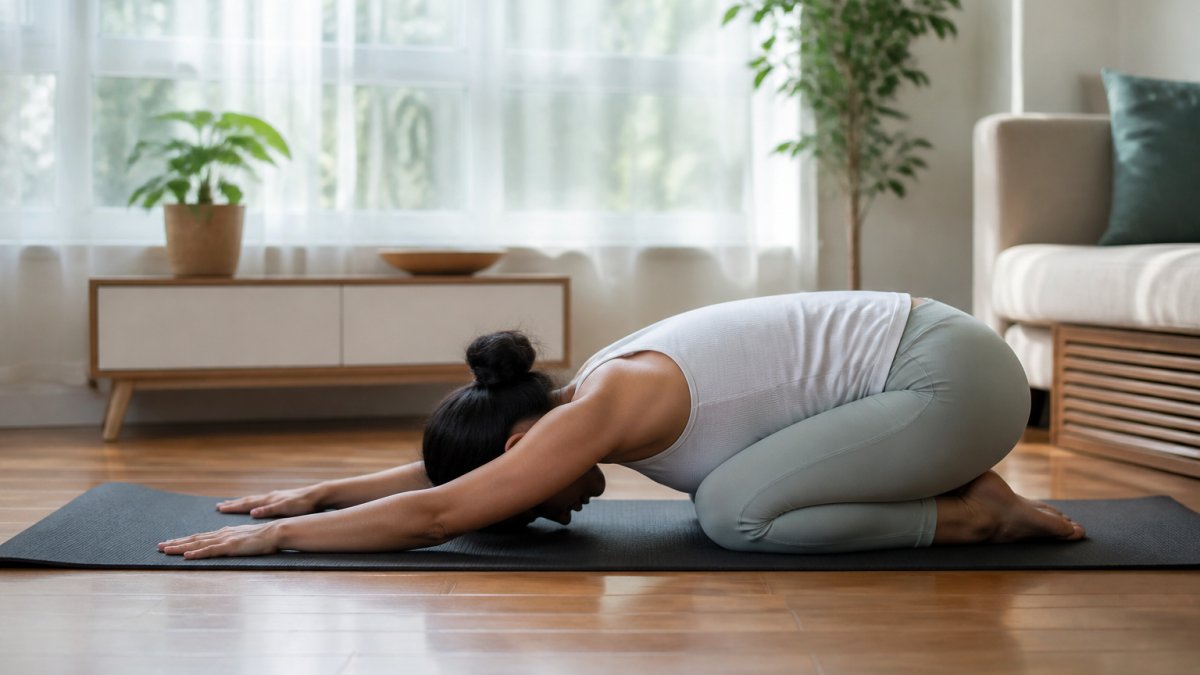
Start with these three poses, holding each for one to three minutes.
1. Supported Child’s Pose (Balasana)
Kneel and sit back on your heels, then fold forward with a pillow or bolster under your chest. Rest your forehead down and let your arms relax.
This pose calms the mind and gently stretches the lower back. If your knees bother you, place a folded blanket behind them.
2. Legs-Up-the-Wall (Viparita Karani)
Lie on your back and rest your legs up a wall, hips a few inches away. Keep your arms relaxed at your sides.
This position supports circulation and triggers a relaxation response. It’s one of the easiest ways to shift out of a stress state.
3. Cat-Cow (Marjaryasana-Bitilasana)
On hands and knees, alternate between arching your back and rounding it. Move slowly with your breath.
Cat-Cow warms the spine and eases stiffness from sitting. Office workers with postural strain tend to feel this one fast.
| Pose | Hold Time | Best For | Modification |
|---|---|---|---|
| Supported Child’s Pose | 1-3 min | Lower back tension | Pillow under chest |
| Legs-Up-the-Wall | 5-10 min | Circulation, stress | Blanket under hips |
| Cat-Cow | 8-10 rounds | Spinal stiffness | Seat of a chair |
Gentle Exercises to Reduce Inflammation Beyond the Mat
Gentle exercises to reduce inflammation don’t have to happen on a yoga mat. Walking, swimming, and tai chi all support the same goals: circulation, stress reduction, and low-impact movement.
What matters most is consistency, not intensity.
Walking, Swimming, and Tai Chi: Low-Impact Options
- Walking: 20-30 minutes most days. Easy on joints and good for mood.
- Swimming: Buoyancy takes pressure off sore joints while you move freely.
- Tai chi: Slow, flowing movement that builds balance and calms the nervous system.
If you’re coming from a high-intensity routine, expect these to feel too easy at first. That’s the point. Low-impact movement keeps you moving without triggering more inflammation.
The Best Type of Yoga for Inflammation: Matching Style to Your Body
The best type of yoga for inflammation is a slow, restorative style, not a fast, heated class. Restorative, yin, and chair yoga all fit that description.
Restorative, Yin, and Chair Yoga Compared
- Restorative yoga: Uses props to support long, restful holds. Best for fatigue and high stress.
- Yin yoga: Longer floor holds that target connective tissue. Best for stiffness.
- Chair yoga: All poses done seated or with chair support. Best for limited mobility.
Hot yoga and fast vinyasa flows can be great for fitness, but they raise your heart rate and body temperature. For chronic inflammation, that’s usually the wrong direction.
Start your wellness journey today! →
If you’re new to yoga, start with restorative or chair yoga for two to three weeks before trying anything faster. Your body needs time to adjust.
Building a Yoga Sequence for Inflammation: A Step-by-Step Routine
Most sequences you’ll find online assume a body that can already get on the floor, hold a forward fold, and breathe comfortably the whole time. This one is built differently: it’s progressive, it tells you how hard to work, and it includes a version for days when your body is flaring and a version for days when it isn’t.
Before You Start: Set Your Intensity
Use a simple 1-10 scale where 1 is lying still and 10 is the hardest you can push. For an inflammation-focused practice, stay between 2 and 4. If you can’t breathe through your nose the entire time, you’re working too hard.
What you’ll need: a mat, a firm pillow or bolster, a folded blanket, a strap or belt, and a wall. Total time: about 20 minutes. You can split it into two 10-minute blocks if 20 minutes isn’t realistic today.
Phase 1: Settle and Warm Up (5 minutes)
- Diaphragmatic breathing, seated or lying down, 2 minutes. One hand on your belly, one on your chest. Inhale through the nose for a count of 4, exhale for 6. The longer exhale is the point.
- Cat-Cow, 8 slow rounds. Move one vertebra at a time. If wrists complain, do this seated in a chair with hands on knees.
- Neck and shoulder rolls, 1 minute. Slow, small circles. Stop before anything pinches.
Phase 2: Gentle Flow (10 minutes)
Hold each pose for 1-2 minutes unless noted. Move between poses slowly enough that you could stop at any point.
- Supported Child’s Pose, 2 minutes. Bolster or pillow under the chest, forehead resting down. Modification: sit on a folded blanket between your heels, or do this with forearms on a chair seat if kneeling isn’t available.
- Seated Forward Fold, 1-2 minutes. Sit on a folded blanket so your hips are higher than your knees. Loop a strap around your feet and hold the ends rather than reaching for your toes. Modification: bend the knees generously. The stretch should be in the back of the legs, never in the lower back.
- Supine Twist, 1-2 minutes per side. Lie on your back, knees bent, and let them fall to one side with a pillow between them. Modification: keep both feet on the floor and just let the knees drift, no need to pin them down.
- Legs-Up-the-Wall, 3-5 minutes. Hips a few inches from the wall, arms relaxed. Modification: if your hamstrings are tight, move further from the wall and bend the knees.
Phase 3: Cool Down (5 minutes)
- Legs-Up-the-Wall or a supported reclining pose, 3 minutes. Let the breath slow on its own.
- Slow breathing, 2 minutes. Inhale 4, exhale 6-8. No breath holds.
What to expect by the end: looser muscles, slower breathing, and less mental tension. Not a dramatic shift, a small one you can repeat tomorrow.
Flare-Day Version (10 minutes)
On days when symptoms are worse, drop the flow entirely and do this:
- Diaphragmatic breathing, lying down, 3 minutes
- Supported Child’s Pose or a seated forward fold in a chair, 3 minutes
- Legs-Up-the-Wall, 4 minutes
That’s it. The goal on a flare day is to keep the habit alive without adding load.
How to Progress Without Overdoing It
- Weeks 1-2: Do the 10-minute flare-day version daily. This builds the habit before it builds intensity.
- Weeks 3-4: Add the full 20-minute sequence 3 days a week.
- Week 5 onward: Add 5 minutes to the flow phase, or add one new gentle pose per week. Never add both at once.
Back off if: pain increases during or after the session, you feel more fatigued the next day, or sleep gets worse. A practice that leaves you more inflamed isn’t helping, reduce duration or intensity and rebuild.
If you’re new to yoga, start with the flare-day version for two to three weeks before adding the full sequence. Your body needs time to adjust, and the habit matters more than the length of any single session.
Breathing, Stress Reduction, and Nervous System Regulation
Breathing techniques are where yoga and inflammation connect most directly. Slow, controlled breathing activates the parasympathetic branch of the autonomic nervous system, the part that handles rest and recovery (pubmed.ncbi.nlm.nih.gov).
That’s the stress-inflammation link in plain terms: ongoing stress keeps your body in a low-grade alert state, and that state supports chronic inflammation.
Try this: inhale for four counts, hold for four, exhale for six. Repeat for five minutes. The longer exhale is what tips you toward nervous system regulation.
How to Measure Progress and Know When to Seek Medical Advice
Track progress with simple markers, not lab numbers you can’t interpret alone. Note your sleep quality, morning stiffness, energy levels, and mood each week.
Because inflammation has many causes, no single routine works for everyone. If you notice swelling, fever, chest pain, or symptoms that keep getting worse, see a doctor promptly.
For persistent fatigue, joint pain, or unexplained symptoms, a root-cause evaluation can help identify what’s driving the problem. At Holistic & Wellness Medicine, our team combines chiropractic care, functional medicine, massage therapy, and yoga to address the underlying drivers of pain and stress rather than masking symptoms.
Yoga and movement support your body’s own recovery systems. They work best alongside proper medical care, not instead of it.
Conclusion: Making Movement a Sustainable Habit
The hardest part of any routine isn’t starting, it’s keeping it going when your schedule gets busy. Pick two or three practices you actually enjoy, keep sessions short, and anchor them to something you already do daily.
If you’re dealing with chronic pain, fatigue, or stubborn inflammation, working with a team that looks at the whole picture can make the process far easier.
Frequently Asked Questions
Does yoga actually get rid of inflammation?
Yoga does not eliminate inflammation, but regular practice can help lower chronic inflammation by reducing stress, improving circulation, and supporting the lymphatic system. Research shows that people who practice yoga consistently may have lower levels of inflammatory markers like C-reactive protein and interleukin-6. The effect is gradual and works best as part of a broader routine that includes gentle movement, breathing techniques, and stress management.
What are four yoga poses that can significantly reduce inflammation?
Four gentle poses often recommended for inflammation are supported child’s pose, legs-up-the-wall, cat-cow, and a reclining twist. These poses calm the nervous system, encourage circulation, and avoid straining joints. Hold each for 1 to 3 minutes, breathing slowly. If you have chronic pain or an injury, check with a healthcare provider before starting a new pose.
What type of yoga is best for inflammation?
Restorative yoga, yin yoga, and gentle hatha are often considered the best types for inflammation because they emphasize slow movement, long holds, and relaxation. These styles activate the parasympathetic nervous system, which helps lower stress hormones that drive chronic inflammation. High-intensity styles may be too taxing if your body is already under stress. Start with a gentle class or a guided video and adjust based on how you feel.
How often should you do yoga to support a healthy inflammatory response?
Aim for 20 to 30 minutes of gentle yoga most days of the week, or at least 3 to 4 times weekly. Consistency matters more than duration. Even short sessions of 10 minutes can help if done regularly. Pair yoga with other low-impact movement like walking, and give yourself rest days. If you are new to yoga, begin with 2 sessions per week and build gradually.