Quick Summary
Restorative yoga uses a few supported poses held for five to twenty minutes each, letting gravity and props do the work. It may make the back feel more comfortable, reduce guarding and improve sleep, though it is not a proven treatment for a specific spinal condition.
- Restorative yoga holds poses for five to twenty minutes using bolsters, blankets and blocks.
- Research on yoga for low-back pain shows modest improvements in pain and function.
- Legs-up-the-wall can be held for five to ten minutes with a bolster under the hips.
- Stop and seek care for numbness, weakness, or bladder or bowel changes.
Table of Contents
- How to Use Restorative Yoga for Back Health
- What Restorative Yoga Is and How It Differs From Other Styles
- How Restorative Yoga May Support Back Health
- Restorative Yoga Poses for Back Comfort
- Restorative Yoga for Beginners: Setup, Props and Modifications
- How Often to Practice Restorative Yoga for Your Back
- Red Flags: When to Stop and When to Seek Medical Care
- Booking Your First Consultation for Back Care in San Antonio
- Frequently Asked Questions
How to Use Restorative Yoga for Back Health
Last Updated: November 2, 2026
What Restorative Yoga Is and How It Differs From Other Styles
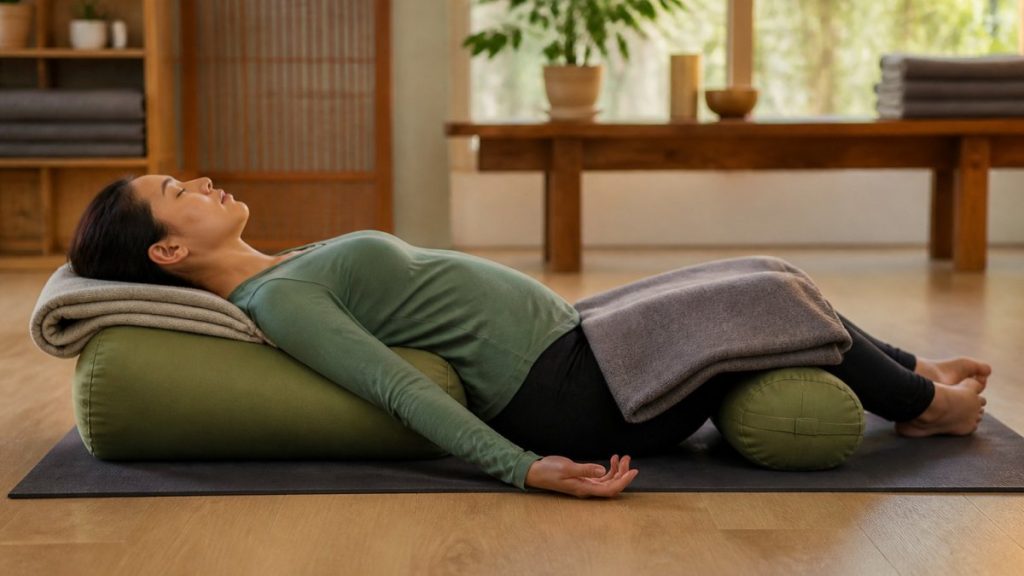
Restorative yoga is a gentle practice in which you hold a small number of supported poses for five to twenty minutes each, using bolsters, blankets and blocks so your muscles can let go.
The difference from other styles is mostly intensity and duration. Vinyasa and power yoga build heat and strength through continuous movement, while yin yoga uses long, passive holds to load connective tissue.
A common mistake is treating restorative sessions as a lazy substitute for a real workout.
How Restorative Yoga May Support Back Health
Restorative yoga is not a treatment for a specific spinal condition, but it can make the back feel more comfortable and less guarded. Supported positions reduce the load on the lumbar spine and the muscles around it, which is why many people find them easier to hold than standing or floor-based poses.
What the Research Actually Shows, and What It Doesn’t
Most of the evidence people cite for restorative yoga and back health comes from studies of yoga broadly, not restorative yoga specifically. Reviews of yoga for low-back pain generally report modest improvements in pain and function compared with usual care or education alone, but the styles studied are often a mix of stretching, strength work, breathing and relaxation rather than long, prop-supported holds (Yoga: Effectiveness and Safety).
For chronic pain more broadly, the strongest case for restorative practice rests on the relaxation response rather than on any single mechanical effect. Slow breathing and supported stillness appear to reduce sympathetic nervous system activity, which can lower perceived tension and make symptoms feel less threatening.
A reasonable way to read the evidence: restorative yoga is low-risk for most people and may help with comfort, sleep and stress around back pain, but it should not be presented as a proven treatment for a diagnosed spinal condition. Readers who want to review the evidence themselves can start with the National Center for Complementary and Integrative Health overview of yoga, which summarizes the state of yoga research and its limitations.
Which Back Symptoms May Be Appropriate
Guidance differs by what is actually going on, and restorative yoga is not equally suited to every back problem. The notes below are general education, not diagnosis or treatment advice.
- Nonspecific low-back pain: The most common category and the best fit for a gentle restorative practice. Supported supine poses and gentle forward folds are usually well tolerated, and the main benefit is often reduced guarding and better sleep rather than a change in the spine itself. For more back-friendly poses beyond the restorative ones, see our practical pose guide for lower back pain.
- Sciatica or radiating leg pain: Positions that flex the spine forward or stretch the hamstrings can aggravate nerve symptoms. Legs-up-the-wall and supported supine poses with the knees bent are often easier than deep forward folds. Stop any pose that reproduces the radiating pain.
- Spinal stenosis: Many people with stenosis feel better in slight flexion, so supported forward folds over a bolster may be more comfortable than extension-based poses such as supported bridge. Test gently and back off if symptoms spread.
People do best when they match the pose to the direction their back tolerates, rather than following a generic sequence. If flexion feels better, favor supported forward folds; if extension feels better, favor supported bridge and prone rest with a pillow under the hips.
Relaxation, the Nervous System and Muscle Tension
Many people carry back tension without noticing it. To understand the deeper drivers of chronic pain and stress, read our root-cause healing guide.
Muscle tension in the back is often a protective habit rather than a sign of damage.
Watch out: relaxation is not the same as treatment. If back pain is accompanied by new weakness, numbness, or bowel or bladder changes, stop and seek medical care rather than continuing the practice.
How It Fits With Other Care
Restorative yoga can complement, but is not a replacement for, individualized medical care. To see how yoga pairs with hands-on treatment, read about combining chiropractic care and yoga. For most people with persistent back pain, the evidence supports staying active and building strength and endurance over time; restorative yoga is a low-intensity way to stay moving and manage stress when harder exercise is not appealing.
Restorative Yoga Poses for Back Comfort
The poses below are common starting points for back comfort. Each entry gives the setup, prop placement, hold time, a back-specific cue, and an easier alternative. Adjust height and support to your body, and stop if any position causes sharp pain, numbness or pain that radiates down a leg.
Start your wellness journey today! →
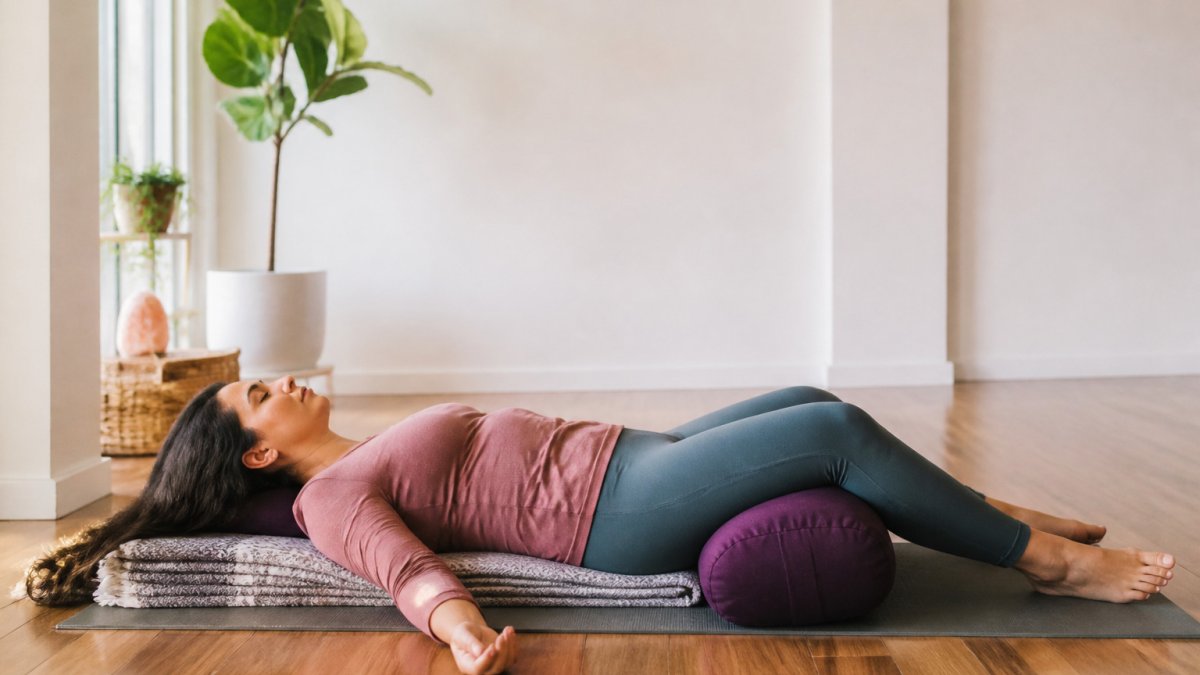
Legs-Up-the-Wall
- Setup: Place a folded blanket or bolster six to twelve inches from a wall. Sit sideways next to the wall, then swing your legs up as you lower your back to the floor. Your hips can rest on the blanket or the floor, whichever feels better.
- Props: One firm bolster or two folded blankets under the hips; a folded towel under the head if the chin lifts.
- Hold: Five to ten minutes.
Supported Child’s Pose
- Setup: Kneel on a padded surface with the knees hip-width or wider. Place a bolster lengthwise between the thighs and sit back toward the heels, resting the torso on the bolster. Turn the head to one side and switch halfway through.
- Props: A firm bolster or two stacked blankets; a folded blanket under the knees and shins.
- Hold: Three to five minutes per side.
Reclined Bound Angle
- Setup: Lie back on a bolster placed lengthwise under the spine, with the soles of the feet together and the knees dropped outward. Support each knee with a blanket or block so the inner thighs are not straining.
- Props: A bolster under the spine; two blankets or blocks under the knees; a folded towel under the head.
- Hold: Five minutes.
Supported Bridge
- Setup: Lie on your back with the knees bent and feet flat, hip-width apart. Lift the hips just enough to slide a block under the sacrum, then rest the hips on the block. The block should support the pelvis, not press into the low back.
- Props: One block under the sacrum; a folded blanket under the head and shoulders if the neck feels strained.
- Hold: Three to five minutes.
General Setup Notes for a Back-Friendly Practice
For the most back-friendly setup, keep the bolster firm enough to hold your weight but soft enough to contour around your spine. A folded blanket under the neck or head helps the cervical spine stay neutral. Place every prop before you lie down, and keep a folded blanket within reach in case you need to adjust mid-pose. A common mistake is forcing the hips or knees into a position they are not ready for; if you feel a stretch in the front of the thigh or a pinch in the low back, raise the support or shorten the hold.
Restorative Yoga for Beginners: Setup, Props and Modifications
You do not need a studio. A living room floor, a firm couch cushion, two bath towels and a couple of pillows can serve as props. A bolster is useful, but a stack of blankets works well.
Use the following steps for your first session:
- Set up one or two poses and place every prop before you lie down. Getting up to adjust mid-pose defeats the purpose.
- Choose a quiet time, such as before bed or after work, and dim the lights.
- Enter each pose slowly, and check for any pinching or pulling. Move a prop if something feels wrong.
- Stay for at least five minutes, breathing through the nose and letting the exhale be longer than the inhale.
- Come out gradually by rolling to one side and pausing before sitting up.
Modify the poses whenever a position increases pain. If you feel a stretch in the front of the thigh or a pinch in the low back, raise the support or shorten the hold.
How Often to Practice Restorative Yoga for Your Back
There is no standard prescription, but most people benefit from a short practice several times a week rather than one long session. Ten to twenty minutes on most days, or three to four thirty-minute sessions, is a realistic starting point.
Track how you feel for two to four weeks, sleep quality, back comfort during the day and how much effort it takes to get up from a chair. If these improve, the routine is working. If pain increases or new symptoms appear, reduce the session length and speak with your provider.
Restorative yoga also fits into a broader plan. Combining it with walking, workplace posture breaks and sleep habits may complement the practice.
Red Flags: When to Stop and When to Seek Medical Care
Stop the practice immediately and seek medical care if you notice any of the following: numbness, tingling or weakness in a leg, loss of bladder or bowel control, fever with back pain, pain after an injury such as a fall, or pain that wakes you at night and does not ease with rest. If posture-related strain is part of the picture, our guide to everyday habits that prevent tech-neck symptoms explains what to avoid.
Mild stretching sensations are normal, but sharp pain, dizziness or pain that worsens over several sessions is not. Speak with your doctor before starting any new exercise program if you have a known spinal condition, heart disease, glaucoma or uncontrolled blood pressure.
Restorative yoga is general wellness guidance. It is not a diagnosis or a replacement for medical assessment, and it should not delay care for a serious symptom.
Booking Your First Consultation for Back Care in San Antonio
If you want help figuring out whether restorative yoga fits alongside other care for your back, book a consultation with a qualified professional.
For a practical starting point, you can also read our guide on what causes back pain to keep returning and how to address those factors. Pricing depends on the services you need, so please check the official website for current prices or request a quote.
Frequently Asked Questions
How often should you do restorative yoga?
Many people find that one to three sessions per week, each lasting 20 to 45 minutes, is a practical starting point for back comfort. Consistency usually matters more than session length. Some people add a short practice on days when they feel stiff or stressed. Track how your back feels over several weeks rather than judging a single session. If pain increases or does not improve over time, stop and speak with a qualified healthcare provider before continuing.
What type of yoga is best for back pain?
Gentle, low-impact styles such as restorative yoga are often chosen by people with back discomfort because they rely on props and passive holding rather than strong effort. Research on yoga and back pain is broader than research on restorative yoga specifically, so results vary. A qualified instructor or healthcare provider can help you choose a style that fits your condition and history.
Is restorative yoga different from yin yoga?
Yes. Restorative yoga uses many props, such as bolsters and blankets, to fully support the body in poses held for several minutes, with the goal of relaxation. Yin yoga also holds poses for longer periods but typically places more gentle tissue stress on joints and connective tissue. Both can be low-intensity, yet restorative sessions are usually more supported and less targeted at deep stretching.
Can restorative yoga help with chronic lower back pain?
Restorative yoga may help some people manage chronic lower back discomfort by easing muscle tension and encouraging relaxation, but direct evidence specific to restorative yoga is limited. It is best viewed as one part of a broader plan rather than a stand-alone cure. Discuss any ongoing back pain with a qualified healthcare professional to rule out conditions that need other care.