

Table of Contents
- Understanding Natural Alternatives to Ibuprofen for Joint Pain
- Turmeric and Curcumin for Arthritis: A Closer Look
- Omega-3 Fatty Acids and Other Supplements for Joint Health
- The Role of an Anti-Inflammatory Diet for Joint Pain
- Chiropractic Care for Joint Pain: A Non-Drug Approach
- Topical Analgesics and Heat/Cold Therapy for Localized Relief
- Safety First: Drug Interactions, Dosage, and When to Seek Help
- Conclusion: Integrating Natural Alternatives into Your Joint Pain Plan
- Frequently Asked Questions
Last Updated: October 2, 2026
Understanding Natural Alternatives to Ibuprofen for Joint Pain
Here is the honest framing most articles skip: natural alternatives are not weaker versions of ibuprofen.
A common mistake is expecting a turmeric capsule to kill acute pain within an hour the way an NSAID does. That is not how plant-based compounds behave.
Below, we break down the strongest options, how to dose them, and the drug interactions that matter.
Turmeric and Curcumin for Arthritis: A Closer Look
Curcumin is the bioactive compound in turmeric responsible for most of its anti-inflammatory activity, and it works by inhibiting inflammatory pathways including COX-2.
The catch is bioavailability. Plain turmeric powder absorbs poorly. NIH research on curcumin bioavailability shows that pairing curcumin with piperine or a lipid-based formulation dramatically improves absorption. Without that, you may be taking an expensive placebo.
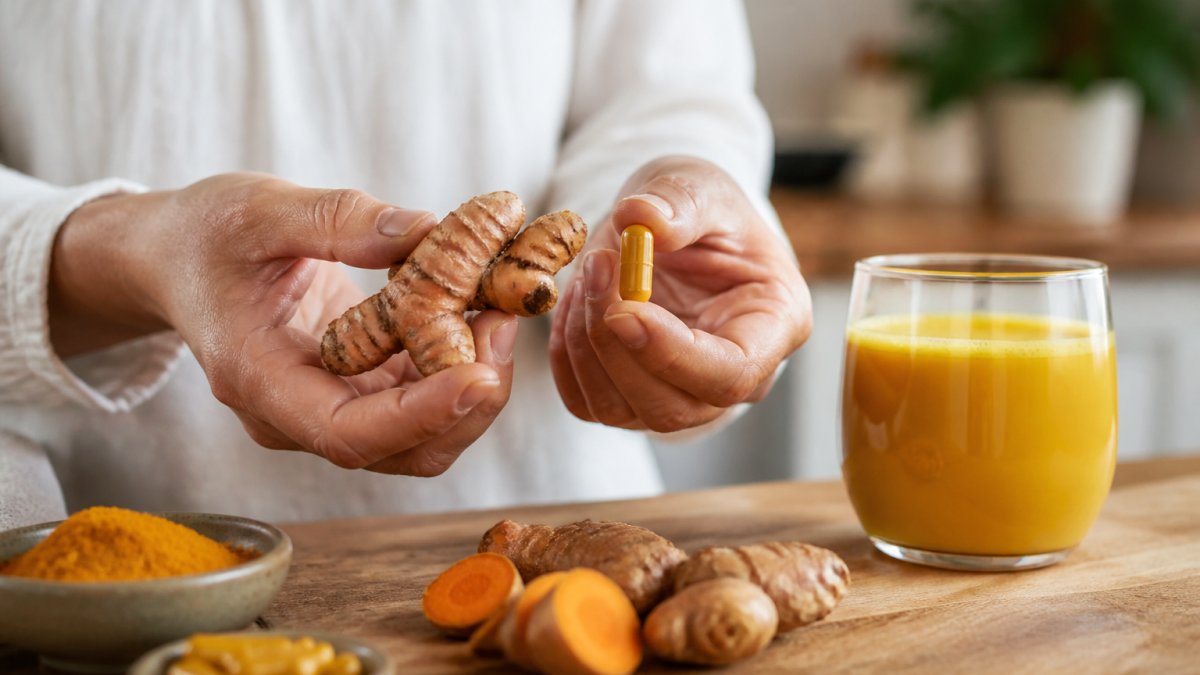
What most guides miss is timing. Curcumin builds up gradually, so consistent daily use for four to eight weeks is where people typically notice a difference in joint stiffness.
Look for a curcumin extract standardized to 95% curcuminoids and paired with piperine or a phytosome delivery system. If the label just says “turmeric powder,” absorption will likely be poor.
Omega-3 Fatty Acids and Other Supplements for Joint Health
Omega-3 fatty acids and herbal extracts like boswellia and ginger offer complementary anti-inflammatory support, often with fewer gastrointestinal side effects than daily NSAIDs. They work best as part of a broader regimen, not as a single silver bullet.
Omega-3 Fatty Acids: EPA and DHA
EPA and DHA are the two omega-3 fatty acids that modulate the body’s inflammatory response. A Harvard Health overview of NSAID alternatives notes that fish oil is among the better-studied options for reducing reliance on oral pain medication.
Dosing matters here. Many practitioners suggest aiming for a combined EPA and DHA content of at least 1,000 mg daily, though the right amount depends on your health history. Check the label for actual EPA and DHA, not total fish oil.
The one drawback: mild digestive upset or a fishy aftertaste is common. Taking it with food helps.
Other Promising Supplements: Boswellia, Ginger, and More
Boswellia serrata targets the 5-LOX enzyme, a different inflammatory pathway than curcumin. Ginger root extract, which contains gingerols and shogaols, is another accessible option, with typical dosages around 500 to 1,000 mg once or twice daily.
| Supplement | Primary Action | Typical Daily Range | Watch For |
|---|---|---|---|
| Curcumin | Inhibits COX-2 pathways | 500-1,000 mg | Poor absorption without piperine |
| Omega-3 (EPA/DHA) | Modulates systemic inflammation | 1,000 mg combined | Fishy aftertaste, digestive upset |
| Boswellia | Inhibits 5-LOX enzyme | 300-500 mg | Slow onset, 4-8 weeks |
| Ginger | Reduces muscle and joint inflammation | 500-1,000 mg | Heartburn at high doses |
| White Willow Bark | Natural salicin, aspirin-like | Varies by extract | Not for aspirin allergies |
White willow bark deserves a mention because it contains salicin, a natural salicylate. If you are allergic to aspirin, skip it entirely.
The Role of an Anti-Inflammatory Diet for Joint Pain
An anti-inflammatory diet for joint pain centers on reducing processed foods, refined sugars, and excess omega-6 fats while increasing vegetables, fatty fish, and antioxidant-rich foods. Diet is the foundation most people overlook because it does not come in a bottle, and because it changes the same inflammatory pathways that supplements and NSAIDs target.
The mechanism matters here. Ibuprofen blocks COX enzymes after inflammation has already started. Food works upstream: it shifts the ratio of omega-6 to omega-3 fatty acids in your cell membranes, feeds or starves the gut bacteria that regulate systemic inflammation, and changes how much advanced glycation end-product (AGE) load your joints accumulate from grilled and fried foods. That is why dietary change tends to show up in joint stiffness over weeks, not hours.
Foods worth building meals around
- Fatty fish, salmon, sardines, mackerel, and anchovies deliver EPA and DHA directly. Two to three servings per week is a common target.
- Cruciferous vegetables, broccoli, Brussels sprouts, cabbage, and cauliflower contain sulforaphane, which supports the body’s own antioxidant response.
- Leafy greens, spinach, kale, and collards supply vitamin K and polyphenols linked to lower inflammatory markers.
- Berries, blueberries, strawberries, and tart cherries are rich in anthocyanins; tart cherry in particular is a traditional gout and joint-support food.
- Extra-virgin olive oil, its oleocanthal has a mechanism similar to ibuprofen, though at far lower potency.
- Nuts and seeds, walnuts, flaxseed, and chia provide plant omega-3s (ALA), which convert to EPA/DHA inefficiently but still contribute.
- Turmeric and ginger used in cooking, culinary amounts are not therapeutic doses, but they add to the total anti-inflammatory load.
What to cut back on
What you remove matters as much as what you add. Many people find that reducing ultra-processed snacks, sugary drinks, refined seed oils, and charred or deep-fried foods lowers joint stiffness within a few weeks. Alcohol is worth flagging separately: it increases uric acid, which matters if your joint pain has a gout component.
A practical plate pattern
A common pattern practitioners suggest is to fill half the plate with vegetables and fruit, a quarter with fatty fish, beans, or lean protein, and a quarter with whole grains or starchy vegetables, with olive oil as the primary fat. That is not a rigid prescription, it is a default that naturally crowds out the foods driving inflammation.
Supplements work better on top of a solid diet, not as a replacement for one. If your meals are driving inflammation daily, no capsule will outrun that. And if you are on blood thinners or diabetes medication, tell your clinician before you overhaul your diet, changes in leafy green and fatty fish intake can shift how some drugs behave.
Chiropractic Care for Joint Pain: A Non-Drug Approach
Chiropractic care for joint pain focuses on restoring proper alignment and mobility so that joints and surrounding muscles carry load more efficiently. It is a non-pharmacological option that addresses mechanical contributors to pain rather than masking symptoms.
At Holistic & Wellness Medicine, chiropractic care is combined with massage therapy, functional medicine, and yoga to treat the underlying drivers of pain rather than the symptom alone.
Start your wellness journey today! →
A common mistake is treating an adjustment as a one-time fix. Lasting change usually comes from combining manual therapy with movement work and posture correction, especially for people who sit at a desk all day.
Topical Analgesics and Heat/Cold Therapy for Localized Relief
Topical analgesics and heat or cold therapy deliver localized relief with far less systemic exposure than oral pills. For a single sore knee or wrist, this is often the smartest first move, and it is the category where the evidence hierarchy is clearest, so it is worth sorting options by how well they actually work rather than by how natural they sound.
Evidence-based hierarchy for topical options
Strongest clinical support:
- Topical diclofenac gel, a topical NSAID approved for arthritis pain. It is not a natural supplement, but it reduces systemic side effects because less of the drug enters the bloodstream. FDA information on topical diclofenac confirms its approved use for arthritis pain. Apply per label, typically two to four times daily to the affected joint, and wash hands afterward.
- Capsaicin cream, derived from chili peppers, it depletes substance P in nerve endings and reduces pain signaling. It requires consistent use for one to two weeks before benefit appears, and the initial burning sensation is expected, not a sign of harm.
Moderate or mixed support:
- Menthol and camphor balms, provide counterirritant relief and a cooling or warming sensation. Good for short-term comfort, less so for changing the underlying inflammation.
- Arnica gel, widely used for localized muscle and joint soreness; evidence is strongest for bruising and post-exercise soreness rather than chronic arthritis.
Anecdotal or traditional:
- Comfrey, wintergreen, and various herbal salves, popular in traditional practice, but comfrey in particular should not be used on broken skin and is not recommended for long-term internal or extensive topical use.
How to apply topicals correctly
- Patch-test on a small area for 24 hours before wider use.
- Do not apply to broken skin, near eyes, or under airtight bandages unless the label says so.
- Never combine a topical NSAID with an oral NSAID without checking with a clinician, the systemic dose still adds up.
- Wash hands thoroughly after application, especially before touching your face or handling contact lenses.
Heat and cold: a simple rule
- Cold for acute swelling or a fresh injury, applied in short intervals of about 15 to 20 minutes, with a cloth barrier between the pack and skin.
- Heat for chronic stiffness and muscle tension, especially before movement or stretching. Moist heat tends to penetrate more comfortably than dry heat.
- Alternate when you are unsure, and stop if skin irritation, numbness, or increased pain appears.
If you have reduced sensation from diabetes or neuropathy, use extra caution with heat and capsaicin, you may not feel a burn until damage is done. And if joint pain is accompanied by redness, warmth, fever, or sudden swelling, that is a reason to seek care, not to reach for a balm.
Safety First: Drug Interactions, Dosage, and When to Seek Help
Natural does not mean risk-free, and this is where most guides fall short. Herbal compounds can interact with prescription medications, and dosage errors are common.
Key interaction warnings:
- White willow bark and bromelain may increase bleeding risk when combined with blood thinners like warfarin or aspirin
- Curcumin can amplify the effect of anticoagulants and may interfere with some chemotherapy drugs
- Fish oil at high doses can also thin the blood
- Ginger in large amounts may interact with blood pressure and diabetes medications
On dosage and bioavailability: more is not better. Curcumin without an absorption enhancer, or a fish oil with low EPA/DHA content, wastes money without benefit.
Talk to a qualified healthcare professional before combining supplements with prescription medication, and before starting any new regimen if you are pregnant, nursing, or managing a chronic condition.
Conclusion: Integrating Natural Alternatives into Your Joint Pain Plan
Joint pain rarely has one cause, so it rarely has one fix. The strongest approach combines anti-inflammatory eating, well-chosen supplements, topical relief, and hands-on therapies that address why the joint is struggling in the first place.
That is exactly the model at Holistic & Wellness Medicine. Our integrated team brings together chiropractic care, functional medicine, massage therapy, and yoga to find the root cause instead of masking symptoms. If you have cycled through temporary fixes and want a plan built around your body, start your wellness journey today.
Frequently Asked Questions
What is a natural anti-inflammatory instead of ibuprofen?
Several natural substances can help reduce inflammation. Curcumin, the active compound in turmeric, has been shown in clinical trials to reduce arthritis pain by up to 58% compared to placebo. Omega-3 fatty acids from fish oil also modulate inflammation and may allow some people to reduce their NSAID use. Other options include Boswellia serrata, ginger root extract, and white willow bark. Always consult a healthcare provider before starting any supplement, especially if you take other medications.
What can I take for joint pain if I can’t take ibuprofen?
If you cannot take ibuprofen due to stomach issues, kidney concerns, or other reasons, you have several alternatives. Topical analgesics like diclofenac gel provide localized relief with lower systemic absorption. Natural supplements such as curcumin, omega-3s, and Boswellia may help manage inflammation over time. Non-drug therapies like chiropractic care, acupuncture, and heat/cold therapy can also reduce pain. A healthcare professional can help you choose the safest option for your situation.
What is the strongest natural anti-inflammatory for joints?
Curcumin, the active ingredient in turmeric, is often considered the strongest natural anti-inflammatory for joints. Clinical studies show it can be as effective as some NSAIDs for arthritis pain. However, curcumin has poor bioavailability on its own, so it should be combined with piperine (black pepper extract) or taken in a lipid-based formulation. Omega-3 fatty acids and Boswellia serrata are also potent, but curcumin has the most robust evidence for joint pain specifically.
Are there herbal supplements that effectively reduce joint inflammation?
Yes, several herbal supplements have evidence for reducing joint inflammation. Boswellia serrata inhibits the 5-LOX enzyme and may improve joint comfort. Ginger root extract contains gingerols that have anti-inflammatory effects. White willow bark contains salicin, which acts similarly to aspirin. Bromelain, an enzyme from pineapple, can reduce swelling. Each has different mechanisms and potential interactions, so consult a healthcare provider before use.
How do lifestyle changes complement natural joint pain management?
Lifestyle changes can significantly enhance the effects of natural supplements and therapies. An anti-inflammatory diet rich in fruits, vegetables, fatty fish, and whole grains helps reduce systemic inflammation. Regular low-impact exercise like swimming or walking maintains joint mobility and strengthens supporting muscles. Chiropractic care and massage therapy address structural imbalances and muscle tension. Stress reduction through yoga or meditation can lower pain perception. Combining these approaches often yields better results than any single intervention.
Chronic joint pain does not have to mean a lifetime of daily pills. Holistic & Wellness Medicine combines chiropractic care, functional medicine, massage therapy, and yoga into one integrated plan that targets the underlying drivers of pain and inflammation. Our patient-centered approach helps you understand why your joints hurt and gives you the tools to build lasting resilience. Get started with Holistic & Wellness Medicine and take an active role in your recovery.





[…] you are weighing anti-inflammatory supplements against standard pain relievers, our breakdown of natural alternatives to ibuprofen for joint pain covers the […]