
Table of Contents
- Why Antibiotics Wreck Your Gut Microbiome
- Quick Comparison: 7 Best Probiotics for Gut Health After Antibiotics
- 1. Florastor Saccharomyces boulardii: Best to Take During Antibiotics
- 2. Culturelle Lactobacillus rhamnosus GG: Best Clinically Studied Strain
- 3. Renew Life Ultimate Flora: Best High-Potency CFU Count
- 4. Garden of Life Dr. Formulated: Best Shelf-Stable Option
- 5. Seeking Health ProBiota 12: Best Strain Diversity
- 6. Align Probiotic 24/7: Best for Bloating and Digestive Comfort
- How Long Does It Take to Heal Your Gut After Antibiotics?
- How to Choose a High-Quality Probiotic
- Frequently Asked Questions
Last Updated: October 1, 2026
Why Antibiotics Wreck Your Gut Microbiome
Antibiotics save lives, but they do not discriminate between the bacteria making you sick and the bacteria keeping you well. A course of amoxicillin or ciprofloxacin can wipe out large portions of your gut flora, leaving you with bloating, loose stools, and a digestive system that feels unfamiliar. This guide breaks down the 7 best probiotics for gut health after antibiotics so you can rebuild with intention rather than guesswork. (Source: the National Institute of Allergy and Infectious Diseases (NIAID))
Antibiotic-associated diarrhea is the most common visible sign of this disruption. Broad-spectrum drugs reduce microbial diversity, which weakens your intestinal barrier and gives pathogenic bacteria room to take hold. That imbalance is called dysbiosis, and it can linger well after your last pill.
The good news: targeted probiotic supplementation can shorten recovery. Below, we discuss seven options by strain quality, CFU count, and how well each fits a specific recovery scenario.
Quick Comparison: 7 Best Probiotics for Gut Health After Antibiotics
Here is the short version for anyone who wants to decide fast.
| Product | Key Strain(s) | CFU Count | Best For |
|---|---|---|---|
| Florastor | Saccharomyces boulardii | 5 billion | Taking during antibiotics |
| Culturelle | L. rhamnosus GG | 10 billion | Clinically studied strain |
| Renew Life Ultimate Flora | Multi-strain blend | 30-50 billion | High-potency replenishment |
| Garden of Life Dr. Formulated | L. acidophilus, B. lactis | 50 billion | Shelf-stable convenience |
| Seeking Health ProBiota 12 | 12 strains | 25 billion | Maximum strain diversity |
| Align Probiotic 24/7 | Bifidobacterium 35624 | 1 billion | Bloating and comfort |
1. Florastor Saccharomyces boulardii: Best to Take During Antibiotics
Florastor is the one probiotic on this list you can take while the antibiotic is still in your system. That is because Saccharomyces boulardii is a yeast, not a bacterium, so antibacterial drugs do not kill it.
- Contains S. boulardii lyo CNCM I-745
- Naturally resistant to antibiotics
- Supports intestinal barrier function
The tradeoff is real. Yeast-based formulas do not rebuild bacterial diversity, so you will likely want a bacterial strain once your course ends.
Take Florastor at least two hours apart from your antibiotic dose. The yeast survives the drug, but spacing still reduces any interference with absorption.
2. Culturelle Lactobacillus rhamnosus GG: Best Clinically Studied Strain
Culturelle leans on a single, heavily researched strain: Lactobacillus rhamnosus GG. If you want the strain with the deepest body of clinical evidence behind it, this is your pick.
- 10 billion colony forming units of LGG
- Dairy-free and gluten-free
- Widely available at most pharmacies
The limitation: one strain means narrower coverage. Strain-specific efficacy is a strength here, but microbial diversity is not.
3. Renew Life Ultimate Flora: Best High-Potency CFU Count
When your goal is aggressive gut flora restoration, Renew Life brings the numbers. Depending on the version, you get 30 billion to 50 billion CFUs across multiple Lactobacillus and Bifidobacterium strains.
- Delayed-release capsules
- Diverse strain profile
- Higher therapeutic dose per capsule
One drawback: many versions need refrigeration to hold potency. If you travel, that is a genuine annoyance.
4. Garden of Life Dr. Formulated: Best Shelf-Stable Option
Garden of Life solves the storage problem that trips up most high-CFU brands. These capsules are shelf-stable, meaning no fridge required.
- Includes prebiotic fiber to feed the strains
- Non-GMO Project Verified
- Strains like L. acidophilus and Bifidobacterium lactis
Some users find the capsules large. That is a minor gripe for the convenience you get.
5. Seeking Health ProBiota 12: Best Strain Diversity
If dysbiosis hit you hard, diversity matters more than raw CFU count. ProBiota 12 packs 12 distinct strains into one capsule.
- Both Lactobacillus and Bifidobacterium species
- Free from dairy and soy
- 25 billion CFUs
This is the pick for CFU count vs. strain diversity debates: here, diversity wins.
6. Align Probiotic 24/7: Best for Bloating and Digestive Comfort
Align focuses on one well-known strain, Bifidobacterium 35624, and targets digestive wellness rather than broad replenishment.
Start your wellness journey today! →
- Low 1 billion CFU dose
- Aimed at bloating and irregularity (Source: the National Institutes of Health (NIH))
The single-strain focus is both its strength and its ceiling. Great for comfort, less useful for full gut flora restoration.
How Long Does It Take to Heal Your Gut After Antibiotics?
There is no single timeline, because recovery depends on the antibiotic, the dose, the length of the course, and your baseline microbiome diversity. A common pattern is a noticeable shift in digestion within one to two weeks, with broader microbial diversity taking longer to stabilize.
Phase 1: During the antibiotic course. If you and your clinician decide to add a probiotic, the yeast-based option (Saccharomyces boulardii) is the one that survives antibacterial drugs. Space any probiotic dose at least two hours from the antibiotic dose. This phase is about damage control, not full restoration.
Phase 2: The first two weeks after the last dose. This is when antibiotic-associated diarrhea usually eases and bloating starts to settle. A bacterial probiotic with well-studied strains, such as Lactobacillus rhamnosus GG or a multi-strain Lactobacillus/Bifidobacterium blend, is the typical choice here. Continue for at least two to four weeks past the final antibiotic dose rather than stopping the same day.
- Diarrhea lasting more than a few days, or any blood in the stool
- Persistent bloating, gas, or cramping that does not improve week over week
- New food sensitivities or reactions you did not have before the course
- Fatigue, low mood, or skin changes that track with the digestive symptoms
Seek medical care promptly if you develop severe or bloody diarrhea, high fever, or significant abdominal pain after antibiotics. These can signal a more serious infection and are not something to manage with supplements alone.
Foods to eat for gut health after antibiotics include:
- Fermented foods like yogurt with live cultures, kefir, and refrigerated sauerkraut
- Prebiotic fiber from oats, bananas, garlic, onions, and legumes
- Cooked, easy-to-digest vegetables while symptoms are still settling
How to Choose a High-Quality Probiotic
Most buying guides stop at “look for a named strain and a CFU count.” That is the floor, not the ceiling. Two factors that rarely get covered are the ones that most often decide whether a probiotic actually works for you: storage and stability, and the CFU count vs. strain diversity trade-off.
If you remember one thing: match the product to your goal. A yeast-based option for during antibiotics, a well-studied single strain for a specific symptom, and a diverse multi-strain formula for broad rebuilding. Storage instructions and expiry-date CFU guarantees are the two details that separate a real product from a marketing label.
Frequently Asked Questions
What is the best probiotic to take after finishing antibiotics?
The best choice depends on your goal. For preventing antibiotic-associated diarrhea during and after treatment, Saccharomyces boulardii (found in Florastor) is a yeast and is not killed by antibacterial drugs. For general gut flora restoration after your course ends, a multi-strain formula with Lactobacillus and Bifidobacterium species, like Renew Life Ultimate Flora or Seeking Health ProBiota 12, offers broader microbial diversity. A healthcare provider can help match a probiotic to your specific antibiotic and health history.
How long should I take probiotics after a course of antibiotics?
Most clinical studies support taking probiotics for at least two to four weeks after finishing antibiotics, and some extend to eight weeks for full gut flora restoration. If you are taking Saccharomyces boulardii during your antibiotic course, continue it for one to two weeks afterward. For multi-strain supplements, a common approach is to continue daily for four weeks, then reassess your digestive symptoms. Some people benefit from ongoing use, especially if they have a history of dysbiosis or gastrointestinal conditions. Your timeline should account for the antibiotic’s half-life and your individual recovery.
Which antibiotics are worst for the gut microbiome?
Broad-spectrum antibiotics like clindamycin, fluoroquinolones (ciprofloxacin, levofloxacin), and certain cephalosporins cause the most disruption because they target a wide range of bacteria, including beneficial gut flora. Clindamycin in particular is linked to a higher risk of Clostridioides difficile infection. Narrow-spectrum antibiotics affect fewer bacterial species and may allow faster recovery. The duration of your course also matters: longer treatment courses cause more sustained dysbiosis. If you must take a broad-spectrum antibiotic, starting a probiotic like Saccharomyces boulardii at the same time can reduce the risk of antibiotic-associated diarrhea.
How do I rebuild my gut after antibiotics?
Rebuilding your gut after antibiotics involves three main strategies. First, take a clinically studied probiotic supplement, ideally starting during or right after your antibiotic course, to reintroduce beneficial bacteria. Second, eat fermented foods like yogurt with live cultures, kefir, sauerkraut, and kimchi to support bacterial colonization. Third, feed those bacteria with prebiotic fiber from garlic, onions, oats, bananas, and legumes, which promote short-chain fatty acid production. Most people see meaningful improvement in digestive wellness within two to four weeks, though full microbial diversity can take several months to return. Avoiding unnecessary antibiotics and managing stress also support long-term gut health.
Which probiotic is most effective for gut recovery?
Strain-specific efficacy matters more than brand names. Lactobacillus rhamnosus GG (in Culturelle) is a well-known strain. Saccharomyces boulardii (in Florastor) is a yeast probiotic. Bifidobacterium lactis and Bifidobacterium 35624 (in Align) are also recognized strains. For broad recovery, a multi-strain formula, like Renew Life Ultimate Flora, combines several strains. The most effective probiotic is one that matches your specific symptoms and survives storage long enough to reach your gut alive.
Antibiotic recovery is not a guessing game, but it does take a plan. If bloating, fatigue, or digestive discomfort lingers well past your last dose, your gut may need more than an over-the-counter capsule. Holistic & Wellness Medicine combines functional medicine, personalized diet guidance, and an integrated care team to address the underlying drivers of gut-brain axis disruption and immune system support needs. Start your wellness journey today and rebuild from the root up.


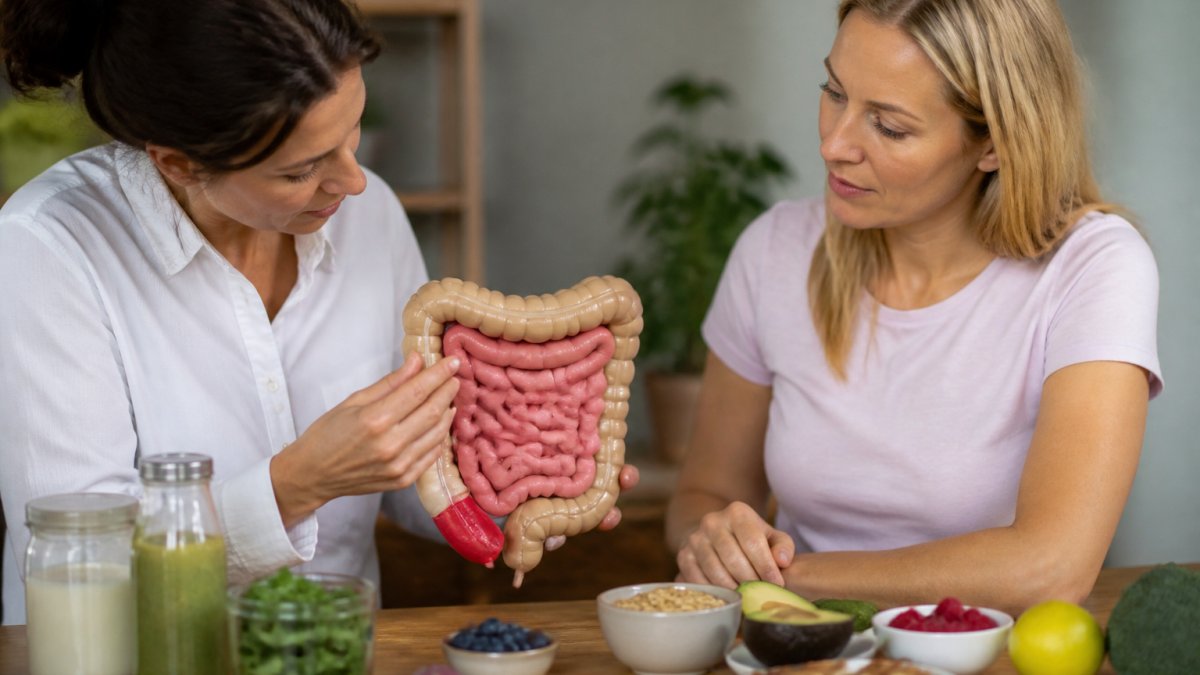


[…] Fermented foods like plain yogurt, kefir, sauerkraut, kimchi, and tempeh add live cultures and organic acids. Some people report less bloating and more regular bowel patterns; results vary by product, dose, and individual. Look for refrigerated products labeled “live and active cultures” and check sodium on sauerkraut and kimchi if you are watching blood pressure. For product-specific guidance, see the best probiotics for gut health after antibiotics. […]
[…] for gut health lays out the trade-offs. When you are ready to act on supplements, our list of the best probiotics for gut health after antibiotics covers what to look […]
[…] If you recently finished a course, our guide to the best probiotics for gut health after antibiotics covers […]