
Table of Contents
- What Anterior Pelvic Tilt Actually Is (and What It Isn’t)
- Structural vs. Functional Tilt: Why the Difference Decides Your Approach
- Anterior Pelvic Tilt Exercises That Address the Root Cause
- Hip Flexor Stretches for Pelvic Tilt: Release Without Overstretching
- How Long to Fix Anterior Pelvic Tilt: Realistic Timelines
- Ergonomic Workspace Changes That Support Pelvic Alignment
- Integrating Movement Into Daily Life (Beyond the Gym)
- When to Seek Professional Support for Pelvic Tilt
- Frequently Asked Questions
Last Updated: September 24, 2026
What Anterior Pelvic Tilt Actually Is (and What It Isn’t)
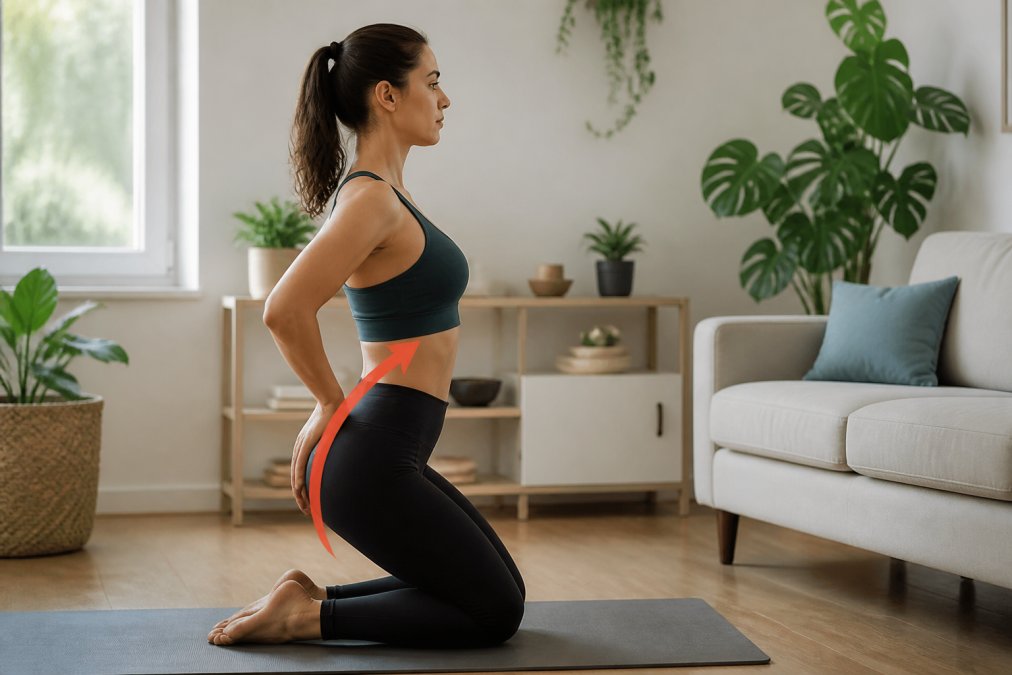
Anterior pelvic tilt is a posture where the front of your pelvis drops forward and your lower back arches more than usual. At Holistic & Wellness Medicine, we see it often in people who sit for long hours: the hip flexors tighten and the glutes stop doing their share of the work.
Anterior pelvic tilt is a posture pattern, not a diagnosis. The fix depends on whether yours is a habit you can change or a shape your bones are built with.
Structural vs. Functional Tilt: Why the Difference Decides Your Approach
Functional tilt comes from habits and muscle imbalances. Structural tilt comes from the shape of your bones and joints. This distinction changes everything about your plan.
Anterior Pelvic Tilt Exercises That Address the Root Cause
Anterior pelvic tilt exercises work best when they target the muscles that hold your pelvis in place. Random stretching won’t do it. You need to lengthen what’s tight and wake up what’s weak, and know which muscles drive your tilt, because functional and structural tilts don’t respond to the same plan.
Why the Root Cause Is Usually a Balance Problem, Not a Tight Muscle
A forward-tilted pelvis is held there by a tug-of-war. On the front, the hip flexors (iliacus, psoas, and rectus femoris) and lower back erectors pull the pelvis forward and down; on the back, the glutes and hamstrings pull it back and down. When the front team is overactive and the back team underactive, the pelvis tips forward and stays there.
Core Stability and Transverse Abdominis Activation
The transverse abdominis is a deep core muscle that wraps around your waist like a corset. When it works, it helps hold your pelvis neutral and takes load off your lower back.
Try this:
- Lie on your back with knees bent and feet flat.
- Gently pull your belly button toward your spine, about 30% effort, not a hard brace.
- Hold for 5 seconds while breathing normally.
- Repeat 10 times.
A second drill that trains the same pattern under load is the dead bug:
- Lie on your back, arms up, knees bent at 90 degrees.
- Press your lower back gently into the floor.
- Slowly extend one arm and the opposite leg without letting your back arch.
- Return and switch sides. Do 8 reps per side.
Glute and Hamstring Strengthening for Posterior Chain Balance
Your glutes and hamstrings pull the back of your pelvis down. When they’re weak, the front takes over and the tilt returns no matter how much you stretch.
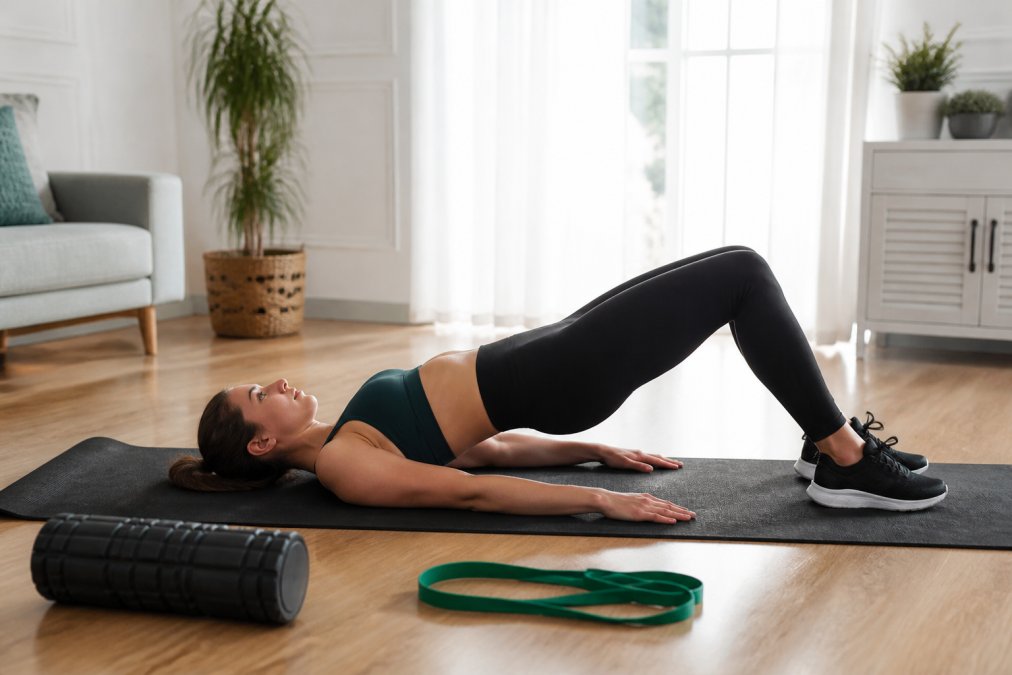
- Glute bridges: 2 sets of 12, squeeze at the top and hold for 2 seconds
- Single-leg glute bridges: 2 sets of 8 per side once double-leg feels easy
- Hip hinges: 2 sets of 10 with a light weight, ribs down, spine neutral
- Hamstring curls: 2 sets of 12
- Banded walks: 2 sets of 15 steps each way
- Deadlifts (light to moderate): 2 sets of 8 once your hinge pattern is clean
A Sample 15-Minute Session You Can Repeat
You don’t need a gym or an hour. A short, consistent session beats a long one you skip.
- Release (3 min): half-kneeling hip flexor stretch, 30 seconds per side, two rounds
- Activate (3 min): transverse abdominis breathing, 10 slow reps; dead bug, 8 per side
- Strengthen (7 min): glute bridges, 2 x 12; hip hinges, 2 x 10; banded walks, 2 x 15 steps each way
- Re-check (2 min): stand tall, tuck your tailbone slightly, and notice the difference
Film yourself from the side once a week. Photos and video catch changes your hands and eyes miss, and they keep you honest about whether your ribs are staying down.
How to Tell It’s Working
Progress isn’t a straighter back overnight. Early signs are subtler: your lower back aches less after sitting, your glutes feel sore after sessions (a good sign they’re finally working), and you catch the tilted position and correct it more easily. If nothing changes after 8 to 12 weeks of consistent work, get a hands-on assessment, don’t just add more exercises.
Hip Flexor Stretches for Pelvic Tilt: Release Without Overstretching
Hip flexor stretches for pelvic tilt loosen the front of your hip, but more isn’t better, overstretching a tight muscle can make it guard harder.
- Half-kneeling stretch: tuck your tailbone, then shift forward
- Couch stretch: foot up on a wall or couch, knee down
- Standing lunge stretch: keep your back leg straight
How Long to Fix Anterior Pelvic Tilt: Realistic Timelines
Most people see real change in 6 to 12 weeks with consistent work, depending on how long the pattern has been there and whether it’s functional or structural.
Here’s what to expect:
- Weeks 1-2: You notice the position more often
- Weeks 3-6: Stretches feel easier, glutes start firing
- Weeks 6-12: New posture starts to feel normal
Stopping once you feel better is the fastest way to lose your progress. The pattern returns within weeks if you drop the daily habits that built it.
Ergonomic Workspace Changes That Support Pelvic Alignment
Your chair and desk shape your posture for 8 hours a day. That’s more time than any exercise session.
Small changes add up:
- Set your chair so your hips sit level or slightly above your knees
- Add a small cushion or wedge to tilt your seat forward
- Keep your feet flat on the floor
- Raise your screen so your head sits over your shoulders
Integrating Movement Into Daily Life (Beyond the Gym)
The gym is one hour; the rest of your day is what really shapes your posture. This is the part most guides skip, and it decides whether your exercises stick or get undone by 8 hours of sitting.
Fix the Pattern, Not Just the Exercise
Think of your tilt as a default setting your body returns to when you stop paying attention. Exercises build the capacity to hold a new position; daily movement patterns decide whether it becomes your default.
Three patterns matter most:
- Sitting: Most people sit with the pelvis rolled back and the lower back flattened, then slump forward. Instead, sit on your sit bones, let your pelvis stay level or slightly forward, and keep your ribs stacked over your hips. A small wedge cushion that tilts the seat forward makes this easier to hold.
- Standing: Stop locking your knees and pushing your hips forward. Stand with feet hip-width, weight even, and a slight softness in the knees. Gently tuck your tailbone until you feel your lower back lengthen, not flatten.
- Walking: Let your glutes drive each step instead of pulling yourself forward with your hip flexors. A slightly faster, brisker pace naturally recruits the glutes and reduces the forward-tilt pull.
Build Cues Into Routines You Already Have
Habit research shows that attaching a new behavior to an existing routine beats trying to remember it out of context. Use what you already do as a trigger:
- Coffee or tea brewing: half-kneeling hip flexor stretch, 30 seconds per side
- At every red light or stop sign: tuck your tailbone and squeeze your glutes for 5 seconds
- Phone calls: stand up and walk; pacing is a posture reset
- Brushing your teeth: stand on one leg for 30 seconds, then switch, trains the glutes and balance at once
- Before you sit down at your desk: one glute bridge or one hip hinge, just to remind the back team to fire
- Waiting for the microwave or kettle: 10 slow transverse abdominis breaths
The 30-Minute Rule for Sitting
No chair fixes a posture you hold for hours without a break. Stand up every 30 to 45 minutes; a short walk, even 60 seconds to the kitchen and back, resets the muscles that hold your pelvis and interrupts the tightening that builds while you sit.
If you cannot leave your desk, do this 30-second reset:
- Stand and place your hands on your lower ribs.
- Gently tuck your tailbone and squeeze your glutes.
- Take two slow breaths, keeping your ribs down.
- Sit back down on your sit bones, not rolled back.
Watch for the Posture-Anxiety Trap
There’s a real downside to obsessing over your tilt. Constantly checking, correcting, and worrying about your posture can create tension, shallow breathing, and anxiety that makes you feel worse, not better. Posture isn’t a moral virtue, and a perfectly neutral pelvis isn’t required for a pain-free life.
You do not fix pelvic tilt in the gym. You fix it in the 15 hours a day you spend sitting, standing, and walking, the gym just gives you the strength to hold the change.
When to Seek Professional Support for Pelvic Tilt
See a professional if you have pain that limits daily activity, numbness, or symptoms that don’t improve after several weeks of consistent work. A trained provider can distinguish a functional habit from a structural pattern.
Frequently Asked Questions
Is it possible to reverse anterior pelvic tilt?
Functional anterior pelvic tilt, where posture habits and muscle imbalances drive the tilt, responds well to consistent corrective exercise and daily movement changes. Structural tilt, caused by the shape of your bones or spine, cannot be reversed through exercise alone but can be managed. A qualified practitioner can help you determine which type you have and build a plan around your specific situation.
What muscles are weak if I have anterior pelvic tilt?
Anterior pelvic tilt typically involves weakness in the glutes (especially gluteus maximus), hamstrings, and deep core muscles like the transverse abdominis. Meanwhile, the hip flexors (iliopsoas) and lower back erectors tend to be tight. Anterior pelvic tilt exercises that target glute activation, hamstring engagement, and core stability help restore muscular balance and support a more neutral spine.
How long does it take to fix anterior pelvic tilt?
Most people notice improvement in posture and discomfort within 6 to 12 weeks of consistent daily work. How long to fix anterior pelvic tilt depends on how long the pattern has been present, your activity level, and whether you address ergonomic triggers. Some people see meaningful change in 4 to 6 weeks; others need several months. Consistency matters more than intensity.
Can chiropractic care help with pelvic alignment?
Chiropractic care can improve joint mobility and reduce tension in the lower back and hips, which supports pelvic alignment. However, adjustments alone rarely resolve anterior pelvic tilt long-term if muscle imbalances and daily habits remain unchanged. A combined approach that includes chiropractic care, targeted exercise, and ergonomic changes tends to produce more lasting results than any single method on its own.
Anterior pelvic tilt rarely fixes itself, and pushing harder isn’t the answer. The real work is understanding your pattern and building daily habits that hold. At Holistic & Wellness Medicine, our integrated team uses chiropractic care, massage therapy, yoga, and functional medicine to find the root cause and build a plan that fits your life. Start your wellness journey today and take the first step toward lasting balance.