
Table of Contents
- Why Posture Matters for Pain Relief
- Exercises for Better Posture You Can Do at Home
- Posture Correction Stretches to Relieve Tension
- Ergonomic Workspace Setup for Desk Workers
- How to Improve Posture Throughout the Day
- Postural Assessment Tools and Wearable Tech
- When to Seek Professional Help for Posture-Related Pain
- Frequently Asked Questions
Last Updated: September 15, 2026
Why Posture Matters for Pain Relief
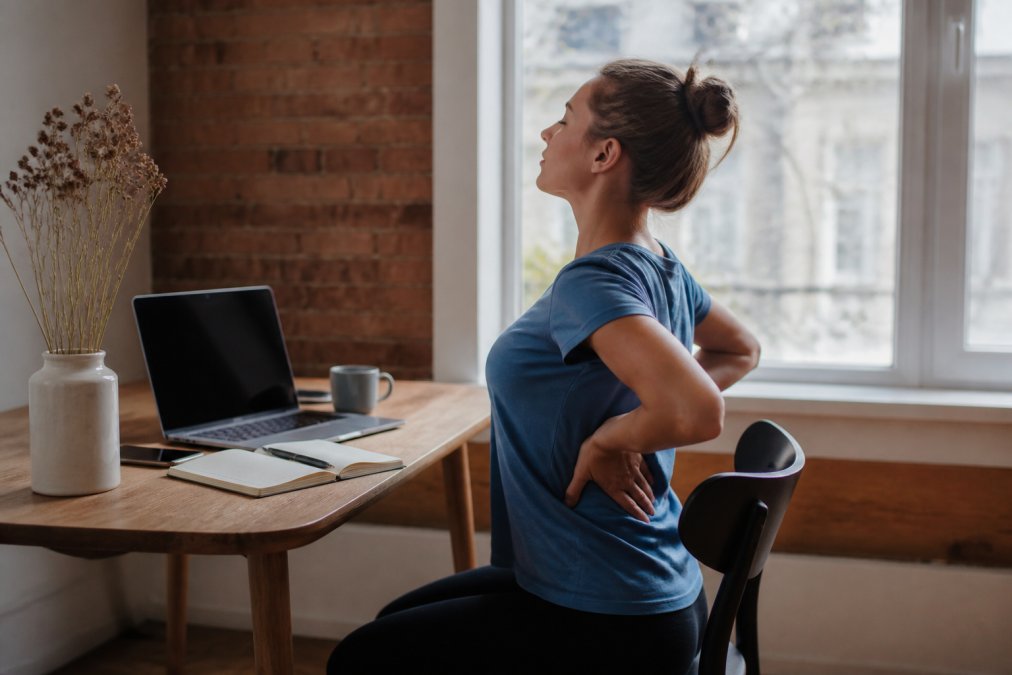
Posture is how your body holds itself against gravity, and when alignment drifts, load shifts onto structures never designed to carry it. At Holistic & Wellness Medicine, patients with chronic back pain are often surprised that daily sitting habits are a primary driver. Learning how to improve posture to reduce pain starts with understanding that pain is often a signal, not the problem.
The Mechanics of Forward Head Posture
Forward head posture is the clearest example of how small misalignments compound. The head weighs roughly ten to twelve pounds in neutral. For every inch it drifts forward of the shoulders, the load on the neck and upper back muscles multiplies; at two inches forward, they work several times harder, a lever-arm problem, and the muscles pay the bill.
Over time, that tension contributes to muscle imbalance, joint pressure, and nagging discomfort. The deep neck flexors weaken, the upper trapezius and levator scapulae tighten, and the thoracic spine stiffens into the rounded shape that reinforces the pattern.
Why the Lower Back Follows
Sitting is not passive. With a slumped spine, the lumbar discs see higher compressive load than when you stand, because the lower back’s natural curve flattens and pressure shifts toward the front of the disc (pubmed.ncbi.nlm.nih.gov). Hip flexors shortened by hours in a chair pull the pelvis into an anterior tilt, arching the lower back and compressing the facet joints, the chain behind the ache after a long workday.
The Link Between Posture and Chronic Pain
The link between posture and chronic pain is well documented. The American Chiropractic Association’s overview of posture and health notes that prolonged poor posture places abnormal stress on the spine and surrounding musculature. That stress accumulates quietly, which is why so many people only notice it once the pain has already settled in.
What matters for recovery is that this chain runs both ways. If load created the problem, reducing load, restoring mobility, and rebuilding strength can reverse it. In most cases the tissues are not damaged beyond repair; they are simply being asked to do a job they were not built for.
Pain from poor posture rarely appears overnight. It builds through repetitive strain, which means it also responds well to consistent, gradual correction rather than one-time fixes.
Exercises for Better Posture You Can Do at Home
The most effective home routine combines core-strengthening work with mobility drills for the upper back and shoulders. No equipment or gym membership is needed, ten to fifteen minutes, most days of the week, starts reversing the patterns that cause pain.
Core-Strengthening Moves for Spinal Support
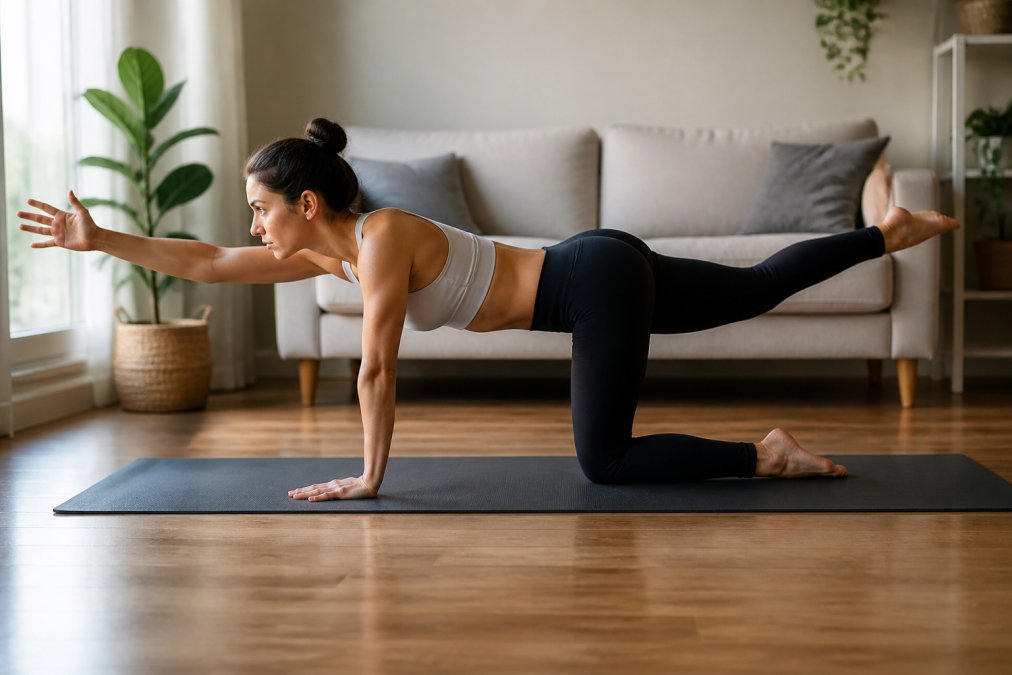
Your core is the muscular corset that holds your vertebral column in a neutral spine position. When it is weak, the lower back and hip flexors take over, driving pelvic tilt and compression. These moves target that gap:
- Bird-dog: On hands and knees, extend the opposite arm and leg while keeping your spine level. Hold for five seconds, then switch. Ten reps per side.
- Dead bug: Lie on your back with arms and legs raised. Lower one arm and the opposite leg toward the floor without letting your lower back arch. Ten reps per side.
- Plank: Hold a straight line from head to heels. Start with twenty seconds and build up. Stop the moment your hips sag.
- Glute bridge: Lie on your back, knees bent, and lift your hips until your body forms a line from knees to shoulders. Fifteen reps.
These are isometric and controlled by design. Speed defeats the purpose.
Scapular Retraction and Thoracic Mobility Drills
Rounded shoulders and a stiff thoracic spine are the most common findings in desk workers. Scapular retraction trains the muscles between your shoulder blades to pull back and down, while thoracic mobility work restores the mid-back movement sitting steals.
- Band pull-aparts: Hold a light resistance band at chest height and pull it apart, squeezing your shoulder blades together. Fifteen reps.
- Wall angels: Stand with your back against a wall, arms in a goalpost position, and slide them up and down while keeping contact with the wall.
- Cat-cow: On hands and knees, alternate between arching and rounding your spine through its full range. Ten slow cycles.
- Thoracic extension over a foam roller: Lie with the roller across your mid-back and gently extend over it. Move it up an inch at a time.
A common mistake is treating these as a warm-up only. They work best as a daily practice, separate from your main workout.
Posture Correction Stretches to Relieve Tension
Stretching addresses the tight side of a muscle imbalance, just as important as strengthening the weak side. Posture correction stretches target the chest, hip flexors, and neck, the three areas that tighten most from sitting and screen time.
Start your wellness journey today! →
Hold each stretch for thirty seconds, breathing steadily. You should feel tension, not sharp pain. If a stretch produces pain, back off and mention it to a clinician.
- Doorway chest stretch: Place your forearms on a doorframe at shoulder height and step through gently to open the chest.
- Hip flexor stretch: In a half-kneeling position, tuck your pelvis and shift your weight forward until you feel the front of the hip open.
- Chin tuck: Sitting tall, draw your chin straight back as if making a double chin. Hold five seconds, repeat ten times. This directly counters forward head posture.
- Upper trapezius stretch: Gently tilt your head to one side and use your hand for light overpressure. Switch sides.
Yoga Stretches for Flexibility and Alignment
Yoga combines flexibility training with postural awareness, which is why it fits a posture correction plan so well. It asks you to notice where your body is in space, and that awareness carries into how you sit and stand the rest of the day.
Three poses deliver most of the benefit for spinal health:
- Child’s pose: Kneel and fold forward, arms extended, letting the spine decompress.
- Cat-cow: Already covered above, but in yoga it becomes a moving meditation on segmental spine control.
- Downward-facing dog: Lengthens the hamstrings and calves while engaging the core to hold a neutral spine.
At Holistic & Wellness Medicine, yoga practitioners can build these into individualized sessions for patients recovering from musculoskeletal pain, adjusting the intensity to what your body can handle on a given day.
Ergonomic Workspace Setup for Desk Workers
An ergonomic workstation is configured so your body can hold a neutral spine with minimal effort. The goal is not luxury but removing the daily strain that undoes your exercise routine, sit six hours in a poorly arranged chair and no amount of stretching will keep up.
Start with these adjustments:
- Monitor height: The top of the screen should sit at or slightly below eye level, roughly an arm’s length away.
- Elbows: Bent to about ninety degrees, forearms roughly parallel to the floor.
- Feet: Flat on the floor or on a footrest.
Choosing the Right Ergonomic Chair and Lumbar Support
Set a timer to stand and reset every thirty to forty-five minutes. The specific interval matters less than the consistency. Postural habits are built in the transitions, not in the perfect static position.
How to Improve Posture Throughout the Day
Try this daily reset rhythm:
Postural Assessment Tools and Wearable Tech
The Wall Test for Forward Head Posture
The Doorway Test for Rounded Shoulders
The Pelvic Tilt Check
What Wearables Actually Do
| Tool Type | What It Measures | Best For | Limitations |
|---|---|---|---|
| Wearable posture trainer | Slouch angle, time in poor position | Building awareness during desk work | Does not build strength |
| Phone posture app | Head-forward angle from a photo | Quick self-checks | Single snapshot, not daily trend |
| Pressure mat | Weight distribution standing | Pelvic tilt assessment | Requires a clinician to interpret |
| Professional gait analysis | Full-body movement mechanics | Complex or persistent pain | Needs an appointment |
Re-test yourself with the wall test and doorway test every two weeks. If your head gets closer to the wall and your knuckles start pointing down instead of forward, the routine is working. If nothing changes after six weeks, that is your signal to get a professional assessment rather than buying another device.
When to Seek Professional Help for Posture-Related Pain
Frequently Asked Questions
Can improving posture help back pain?
Yes, improving posture can significantly reduce back pain by decreasing strain on the vertebral column and surrounding muscles. Poor posture leads to muscle imbalance and increased joint pressure, which contributes to chronic back pain. By practicing postural correction and using ergonomic supports, you can relieve repetitive strain and support spinal alignment. A holistic approach that includes exercises for better posture and posture correction stretches often provides lasting relief.
How long does it take to see results from posture correction?
Results vary depending on your starting point and consistency. Many people notice reduced tension within a few weeks of daily posture correction stretches and ergonomic adjustments. However, lasting changes to muscle memory and spinal alignment typically take several months. Combining exercises for better posture with an ergonomic workspace setup and regular movement breaks can speed progress. Patience and repetition are key to retraining postural habits.
Are there specific posture corrections for office workers?
Office workers can benefit from setting up an ergonomic workstation with a chair that supports lumbar support and a monitor at eye level. Taking breaks every 30 minutes to stand, stretch, and reset your neutral spine helps counteract prolonged sitting. Incorporating posture correction stretches like chin tucks and shoulder blade squeezes into your day reduces forward head posture and rounded shoulders. These habits address the root cause of musculoskeletal pain rather than just masking symptoms.
When should I seek professional help for posture-related pain?
If you experience persistent pain, numbness, or weakness that interferes with daily activities, consult a qualified healthcare professional. A physical therapist or chiropractor can assess your posture, identify muscle imbalances, and create a personalized plan. For chronic back pain or post-injury recovery, an integrated approach combining chiropractic care, massage therapy, and therapeutic yoga may be appropriate. Always seek individualized advice before starting new exercises.


5 Natural Remedies for Anxiety and Stress at Home
Discover 5 natural remedies for anxiety and stress at home, from breathing exercises to herbal supplements. Learn how functional medicine can help. Start.

How to Treat Adrenal Fatigue Without Medication
Learn how to treat adrenal fatigue without medication using diet, stress management, and natural supplements. Discover practical steps to restore.
Benefits of Massage Therapy for Lymphatic Drainage
Discover how massage therapy for lymphatic drainage reduces swelling, supports recovery, and when to avoid it. Learn what to expect from each session.