
Table of Contents
- Why Daily Anti-Inflammatory Herbs Beat Occasional Use
- Turmeric for Inflammation: Curcumin, Black Pepper, and Realistic Doses
- Ginger for Inflammation: Gingerol, Daily Amounts, and What the Evidence Shows
- Garlic and Green Tea: Two Everyday Sources of Antioxidant Compounds
- Anti-Inflammatory Herbs for Joint Pain: Cayenne, Rosemary, Thyme, and Parsley
- How to Use Anti-Inflammatory Herbs Daily: A Realistic Routine
- Safety, Medication Interactions, and How to Choose a Quality Supplement
- Conclusion: Start Small and Stay Consistent
- Frequently Asked Questions
Last Updated: October 8, 2026
Why Daily Anti-Inflammatory Herbs Beat Occasional Use
The 5 best anti-inflammatory herbs for daily use work because consistency matters more than intensity.
Consistency matters more than intensity. People often add turmeric to one meal, feel no different, and quit.
Many people want a natural remedy they can use long term without leaning on medication.
Below: five herbs and spices, realistic daily amounts, and how to fit them into a routine you will keep.
Turmeric for Inflammation: Curcumin, Black Pepper, and Realistic Doses
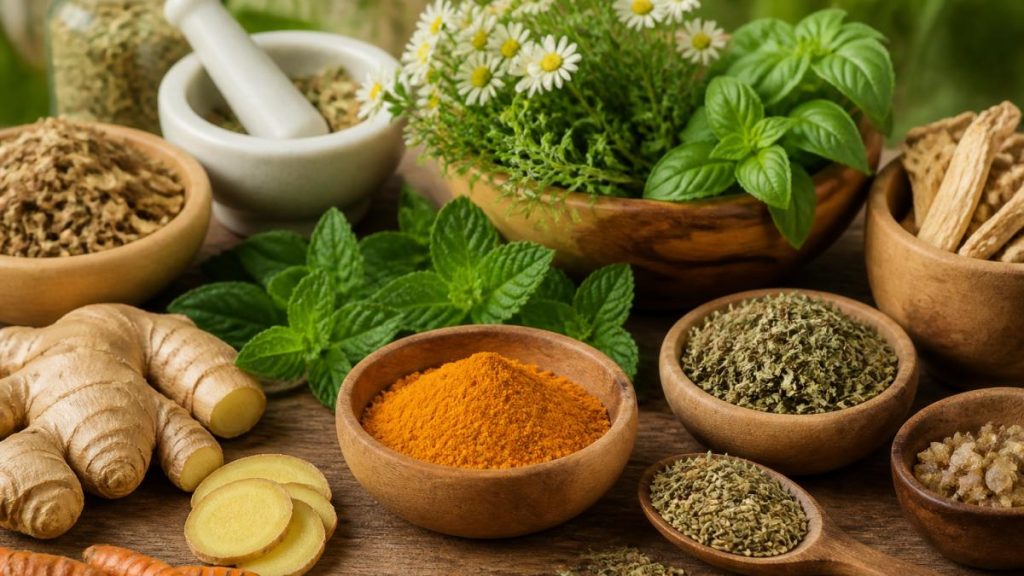
Turmeric is the most studied culinary spice for inflammation, and curcumin is the compound behind that interest.
That is why black pepper matters. Piperine, the compound that gives pepper its bite, helps your body hold onto curcumin longer.
A realistic daily amount is roughly 1/2 to 1 teaspoon of turmeric powder in food. Higher doses usually come from standardized extracts, not the spice jar.
How to Get More Curcumin From Turmeric
- Add turmeric to soups, stews, rice, and scrambled eggs
- Pair it with a pinch of black pepper every time
- Mix it with a fat source, such as olive oil or full-fat yogurt
Heat and fat both help. Cooking turmeric into a dish with oil releases more curcumin than stirring it into cold water. If you drink turmeric tea, add a splash of milk or a teaspoon of oil.
Ginger for Inflammation: Gingerol, Daily Amounts, and What the Evidence Shows
Ginger is one of the most practical anti-inflammatory herbs for daily use because it fits into almost anything.
The evidence for ginger is strongest for nausea and modest for pain.
A common daily amount is 1 to 2 grams of fresh ginger, about a 1-inch piece, or 1/4 to 1/2 teaspoon of ground ginger.
Ways to use it:
- Grate fresh ginger into tea with lemon and honey
- Add ground ginger to oatmeal, smoothies, or stir-fries
- Simmer fresh slices in broth for soups
If you take blood thinners, talk to your doctor before using large amounts of ginger. The same caution applies to turmeric.
Garlic and Green Tea: Two Everyday Sources of Antioxidant Compounds
Garlic and green tea are not exotic, exactly why they belong here. Both are easy to work into a normal day, and both carry antioxidant properties that support your body’s inflammatory pathways.
Garlic: Allicin and Antioxidant Effects
Garlic’s main compound, allicin, forms when you chop or crush a clove. Letting crushed garlic sit about 10 minutes before cooking preserves more of it, since heat reduces allicin activity.
One to two cloves a day is a reasonable target for most adults. Add it to pasta sauce, roasted vegetables, salad dressing, or hummus.
Green Tea: Catechins and Daily Cups
Green tea contains catechins, antioxidants linked to lower inflammation markers in some studies. Two to three cups a day is a common range.
- Steep at a lower temperature to avoid bitterness
- Skip the sugar, which works against the goal
- Drink it earlier in the day if caffeine affects your sleep
Garlic supplements in high doses can raise bleeding risk and may interact with blood-thinning medication. Food amounts are generally safer. Check with your doctor before using concentrated extracts.
Anti-Inflammatory Herbs for Joint Pain: Cayenne, Rosemary, Thyme, and Parsley
For joint pain, cayenne earns its place through capsaicin, the compound that creates heat. Capsaicin is used in topical pain creams, and small amounts in food deliver the same compound at a gentler dose.
Rosemary, thyme, and parsley round out the group.
None of these will replace medical care for a chronic condition. But used daily, they add up.
| Herb or Spice | Active Compound | Easy Daily Amount | Best Added To |
|---|---|---|---|
| Turmeric | Curcumin | 1/2 to 1 tsp powder | Soups, rice, eggs |
| Ginger | Gingerol | 1-inch fresh piece | Tea, stir-fries, broth |
| Garlic | Allicin | 1 to 2 cloves | Sauces, dressings |
| Green tea | Catechins | 2 to 3 cups | Morning and afternoon |
| Cayenne, rosemary, thyme, parsley | Capsaicin, antioxidants | A pinch to a handful | Most cooked dishes |
How to Use Anti-Inflammatory Herbs Daily: A Realistic Routine
The routine that works is the one you do not have to think about. Build these herbs into meals you already eat rather than adding new steps.
Start your wellness journey today! →
A Sample Day at Food-Level Amounts
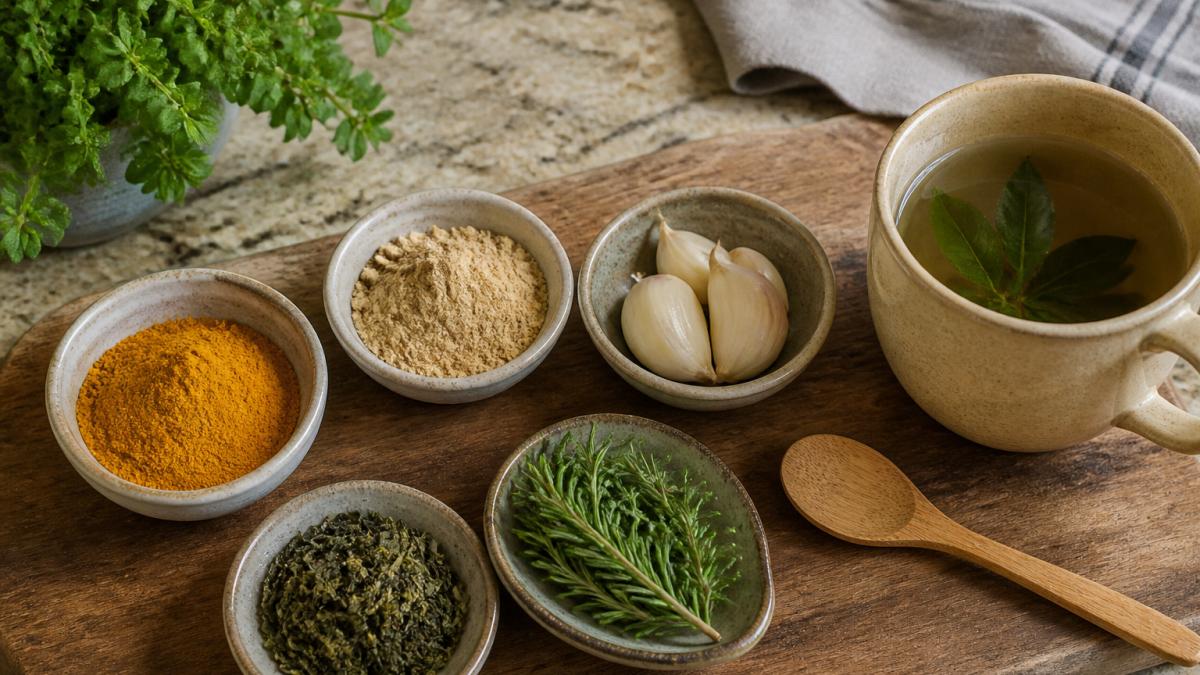
- Morning: 2 to 3 cups of green tea across the morning, or a mug of ginger tea made from a 1-inch piece of fresh ginger steeped 10 minutes with lemon.
- Lunch: 1 to 2 cloves of garlic, crushed and rested 10 minutes, stirred into a vinaigrette or grain bowl. A handful of chopped parsley on top.
- Afternoon: A second cup of green tea, or golden milk made with 1/2 teaspoon turmeric, a pinch of black pepper, and a fat source like whole milk or coconut milk.
That adds up to roughly the daily amounts above: 1/2 to 1 teaspoon turmeric, a 1-inch piece of ginger, 1 to 2 cloves garlic, and 2 to 3 cups green tea. Nothing requires a capsule.
How to Build the Habit Without Overhauling Your Diet
Start with two herbs, not five. Pick the two that already fit meals you eat most weeks, turmeric in curry or soup, garlic in pasta sauce, ginger in tea. Add the rest once those feel automatic.
A few practical patterns that make consistency easier:
- Prep once, use all week. Grate a knob of ginger and store it in the fridge. Crush several garlic cloves at once. Pre-mix a turmeric-and-pepper blend in a small jar so it is ready to spoon into any cooked dish.
- Anchor to an existing habit. Add turmeric to whatever you already cook on weeknights. Add green tea to whatever you already drink in the morning. New habits stick when they attach to old ones.
- Use fat and heat for turmeric. Curcumin is fat-soluble and poorly absorbed on its own, so cooking turmeric into a dish with oil or full-fat dairy does more than stirring it into cold water.
Food-level amounts of these herbs are the realistic starting point. Give the routine four to six weeks before judging it, and keep the amounts in the culinary range unless a clinician has told you otherwise.
What This Routine Is Not
This is a supportive food habit, not a treatment plan. It will not replace medication for an inflammatory condition, nor reproduce effects studied in trials using concentrated, standardized extracts at much higher doses. If you have a diagnosed condition, discuss the routine with your care team rather than swapping it in for prescribed care.
Comparing the Herbs by Goal
If you are choosing where to start, compare by what each herb is actually good for rather than treating the list as interchangeable:
| If your goal is… | Start with… | Because… |
|---|---|---|
| Easiest daily habit | Garlic, green tea | Both fit existing meals and drinks with no prep |
| Most studied for inflammation | Turmeric with black pepper | Curcumin has the deepest research base, though absorption is the limiting factor |
| Digestion and nausea support | Ginger | Evidence is strongest for nausea and modest for pain |
| Joint comfort | Cayenne (topically), turmeric | Capsaicin is used in topical pain creams; turmeric has the broader oral evidence |
| Everyday antioxidant coverage | Rosemary, thyme, parsley | Easy to add to most cooked dishes and salads |
Pick the row that matches your goal, start there, and expand once it is a habit.
Safety, Medication Interactions, and How to Choose a Quality Supplement
Whole herbs in food amounts are generally well tolerated. Risks rise with concentrated extracts and high-dose supplements, not with a teaspoon of turmeric in your soup. That distinction, culinary use versus concentrated extract, is the most important safety point here, and the one most roundups skip.
Why Extracts Are Different From Food
A teaspoon of turmeric powder contains little curcumin, and your body absorbs only a fraction. A standardized curcumin extract can deliver many times that in one capsule, and the same holds for garlic, ginger, and green tea. Concentrating a compound also concentrates its potential to interact with medications and cause side effects that food amounts rarely produce.
Who Should Talk to a Clinician First
Talk to your doctor before regular use of concentrated extracts if you:
- Take blood thinners or antiplatelet drugs such as warfarin, aspirin, or clopidogrel. Garlic, ginger, turmeric, and green tea can all affect bleeding in high doses, and the effect stacks with medication.
- Have a bleeding disorder or a history of easy bruising or bleeding.
- Take diabetes medication. Some of these herbs can affect blood sugar, which may compound the effect of your medication.
This is not a reason to avoid these herbs in food. It is a reason to treat supplements as what they are: concentrated products that deserve the same scrutiny as any over-the-counter drug.
Food amounts of these herbs are generally safe for most adults. Concentrated extracts are not the same thing. If you take a prescription medication, check with your pharmacist or doctor before adding a high-dose supplement, a quick conversation is cheaper than a bleeding scare.
How to Choose a Quality Supplement
If you decide to use a supplement, the label separates a reasonable product from a marketing pitch. Look for:
- A named extract with a stated standardization. For example, a curcumin extract standardized to a specific percentage of curcuminoids, or a green tea extract standardized to a stated percentage of EGCG. “Turmeric root powder” and “standardized curcumin extract” are not the same product.
- A clear amount per serving. The label should tell you exactly how much of the active compound you are getting, not just how much raw herb.
- Third-party testing. Independent testing programs verify that what is on the label is in the bottle and that the product is free of contaminants. Look for a testing seal or a certificate of analysis from the manufacturer.
What the Evidence Actually Shows
It helps to be honest about the research. Much of what is known comes from laboratory and animal studies, not large human trials. Where human trials exist, they often use concentrated extracts at doses far above food amounts, and results vary by herb, dose, and condition. Turmeric and ginger have the most human research; culinary herbs have less.
When to See a Clinician Instead
If you have persistent joint pain, fatigue, or other concerning symptoms, herbs are not the place to start. Get evaluated first: a clinician can rule out conditions that need treatment, review your medications for interactions, and help you decide whether herbs make sense alongside your care rather than instead of it.
This is where an integrated approach helps. At Holistic & Wellness Medicine, our team reviews your medications, diet, and symptoms together, so herbs support your care instead of working against it.
Conclusion: Start Small and Stay Consistent
The hardest part of using anti-inflammatory herbs is not choosing them. It is keeping the habit past week two.
Pick two herbs, add them to meals you already eat, and give it a month before judging the results. Holistic & Wellness Medicine combines chiropractic care, functional medicine, massage therapy, natural medicine, and yoga to address the root causes of pain and inflammation, not just the symptoms.
Frequently Asked Questions
Which anti-inflammatory herbs are safe to use every day?
Turmeric, ginger, garlic, green tea, and culinary herbs like rosemary and thyme are generally safe in food amounts. For concentrated extracts, typical daily ranges discussed in research include 500-1,000 mg of curcumin and 1-3 grams of dried ginger. Check with a healthcare provider before daily use if you take blood thinners, have a bleeding disorder, or are pregnant. Start with small culinary amounts and increase gradually.
Can herbs reduce inflammation and joint pain?
Some herbs show promise for joint pain. Turmeric and ginger have the most studied anti-inflammatory compounds, and small trials suggest they may help with knee osteoarthritis discomfort. Garlic and green tea provide antioxidant support that may influence inflammatory pathways. Results vary, and herbs work best as part of a broader plan that includes movement, sleep, and an anti-inflammatory diet. Talk to a qualified professional about your specific joint pain.
What is the most powerful herb for inflammation?
Turmeric, specifically its curcumin content, is the most researched anti-inflammatory herb. Curcumin influences multiple inflammatory pathways, but it is poorly absorbed on its own. Pairing it with black pepper or a lipid-based formulation improves absorption. Ginger is a close second. No single herb replaces medical care, and a professional can help you match the right herb and dose to your health history.
How can I add anti-inflammatory herbs to my diet?
Add turmeric and black pepper to soups, rice, and scrambled eggs. Stir fresh grated ginger into tea, smoothies, or stir-fries. Use garlic in dressings and sauces, and drink one to three cups of green tea daily. Chop rosemary, thyme, and parsley over roasted vegetables or salads. These small, consistent additions fit everyday meals without major diet changes. For higher doses, ask a qualified professional about extracts.





[…] Curcumin, the active compound in turmeric, is studied for its anti-inflammatory properties and possible effects on oxidative stress. The catch is bioavailability: standard curcumin absorbs poorly, so look for a formulation paired with piperine or a enhanced-absorption version. Readers who want everyday herbal support alongside it can review our guide to the 5 best anti-inflammatory herbs for daily use. […]