

Table of Contents
- What Holistic Wellness Actually Means for Long-Term Health
- Why Fragmented Care Falls Short: The Mind-Body-Spirit Connection
- How to Create a Holistic Wellness Plan That Works
- Holistic Nutrition for Longevity and Sustained Energy
- Stress Management and Emotional Regulation as Health Foundations
- Physical Health Through Integrated Movement and Recovery
- Holistic Wellness Tools and Resources for Daily Practice
- Measuring Your Progress: Tracking Wellness Outcomes That Matter
Last Updated: August 8, 2026
What Holistic Wellness Actually Means for Long-Term Health
Holistic wellness for long-term health is an integrated approach that treats your body, mind, and spirit as interconnected systems rather than separate problems. Instead of chasing quick fixes for individual symptoms, this model addresses underlying causes of pain, fatigue, stress, and disease.
Conventional care isolates symptoms: knee pain gets medication, exhaustion gets sleep advice, stress gets an antidepressant. Holistic wellness asks harder questions: why is your knee hurting, why can’t you sleep, and why is your nervous system stuck in stress mode? Those answers usually connect.
At Holistic & Wellness Medicine, this integrated approach combines chiropractic care, functional medicine, massage therapy, natural medicine, and yoga into a unified strategy. Rather than treating symptoms separately, practitioners examine how posture, nutrition, stress levels, movement patterns, and emotional state reinforce each other. A person with chronic back pain might discover the real driver isn’t structural, it’s postural strain from desk work, combined with poor sleep from anxiety, combined with inflammation from their diet.
Research shows that integrated care models reduce hospital readmissions and improve patient outcomes compared to fragmented treatment. Your body doesn’t compartmentalize health the way medical specialties do. Stress affects inflammation. Poor posture creates muscle tension. Sleep deprivation impairs healing. Nutrition influences mood and energy. These systems are inseparable.
This guide walks you through building a sustainable holistic wellness plan that addresses root causes instead of cycling through temporary relief.
Why Fragmented Care Falls Short: The Mind-Body-Spirit Connection
Most people experience this frustration: you treat one problem, it improves briefly, then returns or a new one emerges. Each intervention works partially, in isolation, then stops working because fragmented care misses the connections.
Your physical body, emotional state, and spiritual sense of purpose aren’t separate domains, they’re a unified system where each part influences the others. When you’re under chronic stress, your nervous system stays in fight-or-flight mode, triggering inflammation, muscle tension, sleep disruption, impaired digestion, and suppressed immunity. A symptom-focused approach treats each separately, but you’re still stressed, so the body keeps producing symptoms. The root cause never gets addressed.
The mind-body connection works both directions. Physical tension creates emotional holding patterns. Poor posture restricts breathing and changes how your nervous system interprets threat. Chronic pain rewires your brain’s pain processing and often leads to depression or anxiety.
Spiritual wellness, meaning, purpose, connection, and alignment with your values, isn’t separate from physical health either. Research consistently shows that people with strong sense of purpose have better health outcomes, lower inflammation, and longer lifespans compared to those without. When your daily life conflicts with your values, your body experiences chronic stress. When you feel disconnected from community or meaning, your immune system suffers.
Holistic wellness recognizes these connections and refuses to treat them separately. Instead of asking "What symptom needs fixing?" it asks "What’s driving this symptom, and how do all the systems involved need to change?"
How to Create a Holistic Wellness Plan That Works
Building a sustainable holistic wellness plan requires structure without becoming unsustainable. The goal is addressing root causes while remaining realistic for your actual life.
Assess Your Current State
Start by mapping your current reality honestly across multiple dimensions.
Document your physical state: Where do you experience pain, tension, or limitation? How’s your sleep quality and duration? What’s your energy level throughout the day? Be specific, not "I have back pain" but "I have sharp pain in my lower left back that worsens after sitting four hours, especially if I’m stressed."
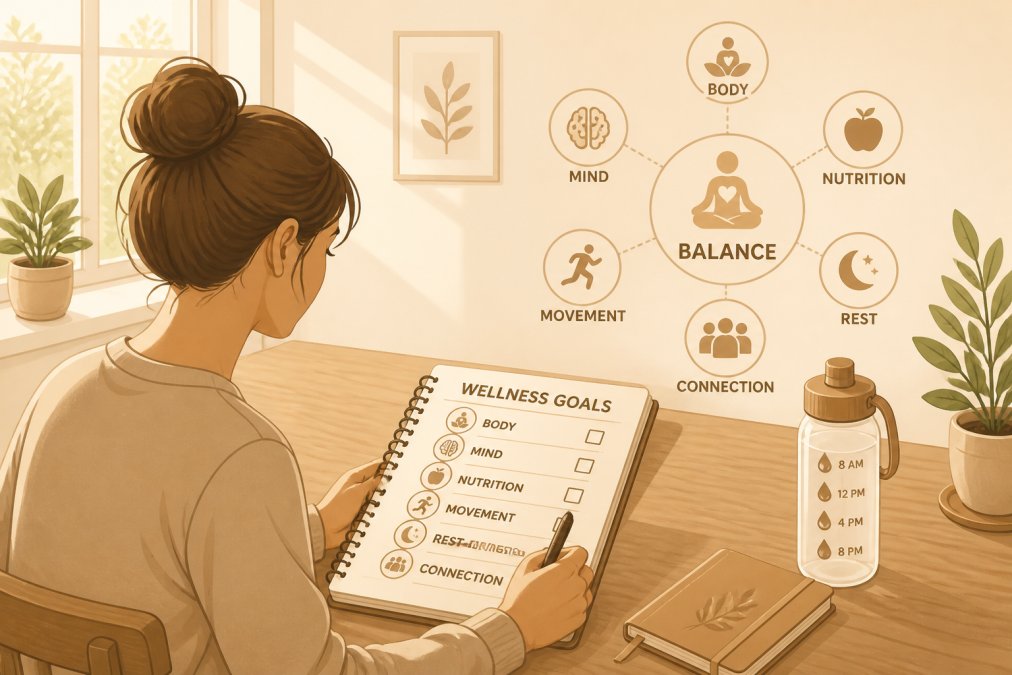
Examine your emotional and mental state: How do you typically manage stress? Do you notice mood patterns? Are you sleeping poorly due to racing thoughts? What relationships feel supportive versus draining?
Assess your lifestyle patterns: How many hours do you sit daily? What’s your movement like? How’s your nutrition honestly? How much water do you drink? Do you have a consistent sleep schedule?
Look at your sense of purpose and connection: Does your work align with your values? Do you have meaningful relationships and community? Are there areas where you feel stuck or unfulfilled?
Don’t judge these answers. Assessment isn’t about shame, it’s about accuracy so you can address root causes.
Identify Root Causes, Not Just Symptoms
Once you’ve mapped your current state, start asking why. If you have chronic pain, what movement patterns or postural habits contribute to it? Does stress intensify it? Does sleep quality affect pain levels? Does inflammation from your diet make it worse?
If you’re exhausted, what’s actually draining your energy? Poor sleep quality, chronic stress, nutritional deficiency, blood sugar dysregulation, lack of meaningful activity, or emotional depletion?
If you’re anxious or depressed, what conditions sustain it? Isolation, physical inactivity, poor sleep, inflammatory diet, lack of sunlight or nature exposure, or meaningless work?
Root causes usually involve multiple systems. Someone with chronic headaches might discover the real drivers are forward head posture, dehydration, caffeine dependency, unmanaged stress, and irregular sleep. Addressing all of them eliminates the headaches.
Working with practitioners experienced in functional medicine and root cause analysis becomes valuable here. They’re trained to connect seemingly unrelated symptoms into patterns.
Build Your Integrated Care Team
Holistic wellness typically requires more than one practitioner because different specialists address different systems.
A chiropractor or osteopath addresses structural and postural issues that create pain and limit movement. A functional medicine practitioner or naturopathic doctor investigates nutritional, hormonal, and metabolic factors. A massage therapist releases chronic muscle tension and improves circulation. A yoga instructor teaches movement that supports your body. A therapist addresses emotional patterns and stress management.
The specific practitioners you need depend on your situation. The key is that these practitioners communicate and coordinate so all parts of your plan work together.
Holistic Nutrition for Longevity and Sustained Energy
Nutrition is foundational because it directly affects inflammation, energy production, mood regulation, sleep quality, and disease prevention.
Holistic nutrition for longevity focuses on three principles: reducing inflammatory foods, supporting nutrient density, and finding an eating pattern that matches your body’s actual needs.
Inflammatory foods are typically ultra-processed foods, refined carbohydrates, seed oils high in omega-6, added sugars, and excessive alcohol. These trigger immune activation and chronic inflammation throughout your body, driving pain, accelerating aging, impairing cognitive function, and increasing disease risk.
Start your wellness journey today! →
Nutrient density means prioritizing foods that deliver vitamins, minerals, antioxidants, and phytonutrients per calorie. A salad with dark leafy greens and colorful vegetables is nutrient-dense. A bagel with cream cheese is calorie-dense but nutrient-poor.
Individual variation matters enormously. Some people thrive on higher carbohydrates; others feel better with lower carb intake. Some digest animal protein easily; others prefer plant-based protein. The holistic approach involves identifying your personal nutritional needs through elimination diets, food tracking, and working with a practitioner who understands functional nutrition.
Making dietary changes gradually creates sustainability. Identify one or two changes with the biggest impact, maybe reducing processed foods or adding a vegetable to each meal, and master those before adding more.
Stress Management and Emotional Regulation as Health Foundations
Chronic stress is a primary driver of nearly every health problem: inflammation, pain, poor sleep, digestive issues, immune dysfunction, anxiety, depression, and accelerated aging.
Your nervous system has two main operating modes: sympathetic (fight-or-flight) and parasympathetic (rest-and-digest). Modern life keeps most people stuck in sympathetic activation. Work demands, information overload, financial pressure, and relationship strain create constant low-level threat signals. Your body responds by staying vigilant and reactive.
When that activation becomes chronic, it becomes pathological. Your body maintains elevated cortisol, stays inflamed, can’t digest properly, can’t sleep deeply, and remains in pain-sensitivity mode.
Stress management means actively shifting your nervous system into parasympathetic mode through consistent practice. Practices that reliably shift nervous system state include deep breathing (especially longer exhales), progressive muscle relaxation, meditation, time in nature, physical movement, warm baths, massage, and meaningful social connection. Consistency matters, five minutes daily is more effective than one hour weekly.
Emotional regulation involves recognizing what you’re feeling, understanding what triggered it, and responding consciously rather than reactively. Yoga is particularly valuable here, combining physical movement, breathing practice, and mindfulness to downregulate the nervous system.
Physical Health Through Integrated Movement and Recovery
Your body is designed for movement, yet most modern lives involve prolonged sitting, creating postural distortion, muscle imbalance, restricted mobility, poor circulation, and chronic pain.

Integrated movement means addressing both habitual movement patterns and overall activity level. Postural assessment reveals where your body has adapted to poor positioning. Forward head posture from desk work tightens your chest and weakens your upper back. Sitting all day tightens hip flexors and weakens glutes. Correcting these requires consistent attention, better ergonomics, regular stretching, and strengthening of weak areas.
Regular physical activity supports cardiovascular health, metabolic function, bone density, mood regulation, and cognitive function. Consistent moderate activity produces better long-term results than high-intensity training if you’re already stressed or injured.
Recovery is essential, your body adapts and strengthens during rest, not during activity. Adequate sleep, rest days between intense workouts, and active recovery all support adaptation.
Mobility work, stretching, foam rolling, yoga, or targeted flexibility training, maintains range of motion and prevents the tightness that creates pain. The integrated approach combines postural correction, consistent moderate activity, targeted strength and flexibility work, and adequate recovery.
Holistic Wellness Tools and Resources for Daily Practice
Sustainable wellness requires practical tools that fit into real life and support your specific needs.
Tracking tools help you notice patterns. A simple symptom tracker recording pain, energy, mood, and sleep quality daily reveals what actually affects how you feel. You might discover your pain correlates with stress levels, sleep quality, or certain foods.
Breathing and meditation apps provide guided practice for nervous system regulation. Five minutes daily is more valuable than sporadic longer sessions.
Fitness tracking or movement apps help ensure consistent movement. Journal writing supports emotional processing and stress management. A support community, whether friends, a wellness group, or online community, provides accountability and reduces isolation.
The most valuable tool is working with practitioners who understand your situation holistically, a functional medicine doctor who orders comprehensive labs, a chiropractor who assesses your whole posture and movement, a therapist who helps you understand stress patterns.
Measuring Your Progress: Tracking Wellness Outcomes That Matter
Sustainable wellness requires seeing that your efforts are working. Meaningful wellness outcomes are often subtler but more important than dramatic symptom elimination.
Physical outcomes worth tracking include pain levels and location, movement and mobility, sleep quality, energy levels throughout the day, and how you feel in your body. Functional outcomes matter more: Can you work without pain? Can you exercise without limitations? Can you sleep through the night?
Emotional and mental outcomes include stress resilience, mood stability, emotional regulation, and sense of purpose or meaning. Biological markers from functional medicine testing might show improvement in inflammation, blood sugar regulation, nutrient levels, or hormone balance.
Timeline matters. Some changes appear within weeks, better sleep, more energy, reduced pain. Others take months or years. Patience is essential.
A simple monthly check-in reveals progress you might otherwise miss. The goal isn’t perfection. Holistic wellness is about addressing root causes, restoring balance, and building resilience so you can live the life you want without being limited by pain, fatigue, or emotional dysregulation.
Building holistic wellness for long-term health requires addressing the interconnected systems that drive your health rather than chasing isolated symptom relief. The integrated approach used at Holistic & Wellness Medicine, combining chiropractic care, functional medicine, massage therapy, natural medicine, and yoga, treats your body, mind, and spirit as a unified whole. This means investigating root causes, coordinating care across practitioners, and building sustainable practices you can maintain for life. If you’re tired of temporary fixes and fragmented care that never quite resolves your underlying issues, start your wellness journey today with practitioners who understand that true health comes from addressing what’s actually driving your symptoms.
Frequently Asked Questions
How does holistic wellness for long-term health differ from conventional medical treatment?
Conventional medicine typically addresses symptoms individually, treating back pain with one specialist, fatigue with another. Holistic wellness for long-term health looks at the whole person: how your posture, stress levels, nutrition, and emotional state all contribute to pain or exhaustion. Instead of masking symptoms, this integrated approach identifies root causes and builds lasting resilience through preventative practices, lifestyle modification, and whole-person care that treats your body, mind, and spirit as interconnected.
What should I include when I create a holistic wellness plan?
Start with a comprehensive assessment of your physical health, stress levels, sleep quality, nutrition, and emotional well-being. Work with qualified practitioners to identify root causes of your symptoms rather than treating them separately. Your plan should integrate multiple modalities: nutrition adjustments, movement practices like yoga, stress management techniques, and targeted therapies. Set measurable wellness outcomes, energy levels, pain reduction, sleep quality, and schedule regular check-ins to track progress. The key is customization: your plan should reflect your life stage, work demands, and health goals.
Is holistic nutrition for longevity just about eating healthy foods?
Holistic nutrition for longevity goes deeper than calorie counting or food lists. It examines how specific foods affect your inflammation levels, energy, digestion, and mental clarity. It considers your individual health history, genetic factors, and lifestyle stress. A holistic nutrition approach might identify that certain foods trigger your symptoms, or that timing and food combinations matter for your energy levels. It's about nutritional balance tailored to you, not generic dietary rules, to support healthspan and prevent chronic disease over decades.
What long-term benefits can I expect from a holistic approach to wellness?
Long-term benefits include sustained energy, reduced chronic pain, better emotional regulation, improved sleep, and greater resilience to stress. Because holistic wellness addresses root causes rather than symptoms, improvements tend to stick: your pain doesn't return within weeks because you've addressed the underlying drivers. You also gain clarity about your body's signals and develop self-care practices you can maintain independently. Many people report improved quality of life, better focus at work, and the ability to prevent illness rather than constantly managing it.
This article was written using GrandRanker


5 Natural Remedies for Anxiety and Stress at Home
Discover 5 natural remedies for anxiety and stress at home, from breathing exercises to herbal supplements. Learn how functional medicine can help. Start.

How to Improve Posture to Reduce Pain: A 2026 Guide
Learn how to improve posture to reduce pain with exercises, stretches, and ergonomic tips. Discover a holistic approach to lasting relief. Start today.

How to Treat Adrenal Fatigue Without Medication
Learn how to treat adrenal fatigue without medication using diet, stress management, and natural supplements. Discover practical steps to restore.