
Table of Contents
- Why Gut Health Matters for Anxiety
- Understanding the Gut-Brain Connection
- Probiotic Foods for Gut Health: What to Add to Your Plate
- Foods That Support Gut Health Beyond Probiotics
- Probiotics for Anxiety: What the Evidence Says
- How to Improve Digestive Health with Daily Habits
- A Step-by-Step Plan to Improve Gut Health for Anxiety Relief
- When to Seek Professional Support
- Frequently Asked Questions
Last Updated: October 19, 2026
Why Gut Health Matters for Anxiety
Your gut and your brain talk to each other all day long. That constant conversation is why learning how to improve gut health for anxiety relief has become one of the most practical self-care skills you can build. At Holistic & Wellness Medicine, we understand this connection: digestive complaints and anxious feelings often arrive together.
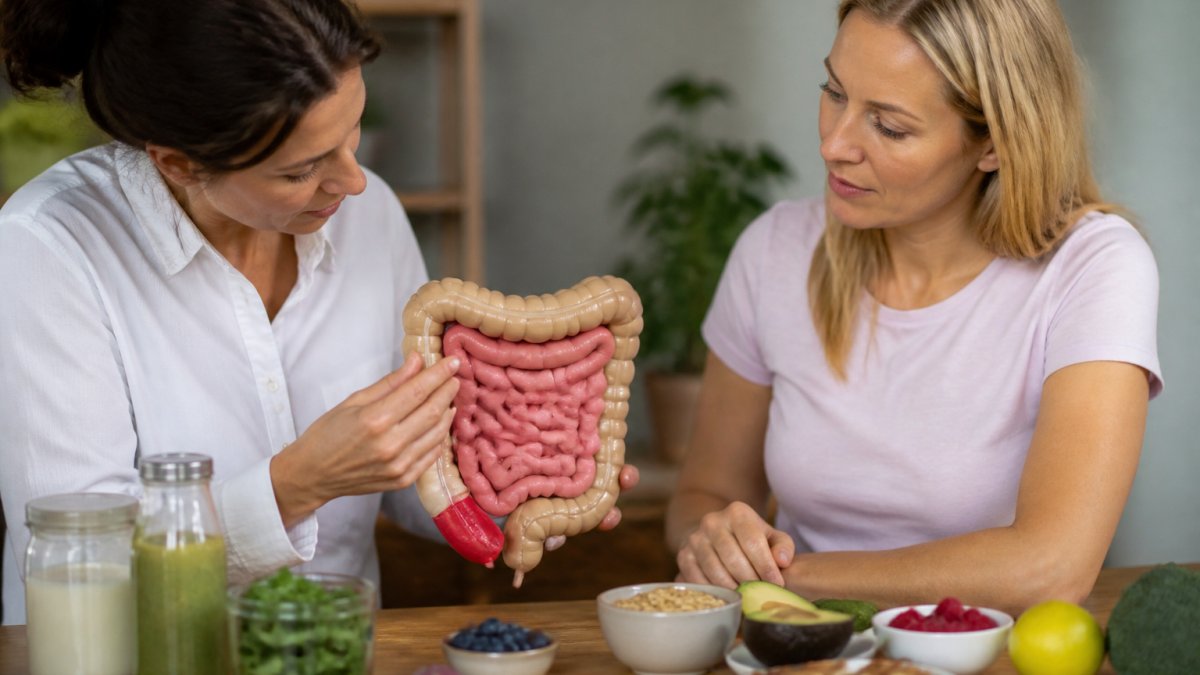
The gut-brain axis is the two-way communication system linking your digestive tract and your brain. It runs on nerve signals, hormones, and chemical messengers made by gut bacteria.
Here is the part most people miss. Anxiety is not “all in your head.” Your gut sends signals upward that can shape mood and stress response. So calming the gut can be one useful lever for calming the mind.
That does not mean food replaces care. It means daily habits can support the bigger picture.
Understanding the Gut-Brain Connection
The gut-brain axis works like a busy two-lane highway. Signals travel from brain to gut, and from gut back to brain.
Your gut microbiome is the community of bacteria living in your digestive tract. These bacteria help break down food and make compounds that influence how you feel.
Stress tightens this loop. When you are anxious, digestion often slows or speeds up, which can trigger bloating, cramping, or nausea. Those symptoms then feed more worry.
Breaking that cycle is the goal. Small, steady changes to food and routine tend to work better than dramatic overhauls.
The gut-brain connection is a loop, not a one-way street. Easing digestive stress can help ease mental stress, and the reverse is also true.
Probiotic Foods for Gut Health: What to Add to Your Plate
Probiotic foods are fermented foods that still carry live cultures when you eat them. The most common examples in American kitchens are plain yogurt, kefir, refrigerated sauerkraut, kimchi, miso, tempeh, and some aged cheeses. The label phrase to look for is “live and active cultures”, without it, the product may have been heat-treated after fermentation, which kills the bacteria you are trying to eat.
Start smaller than you think you should. A common pattern is one to two tablespoons of plain yogurt or a two- to four-ounce pour of kefir with a meal, once a day, for the first week. Jumping straight into a full bowl or a large glass is a frequent cause of gas, bloating, and cramping, not because ferments are bad, but because your gut bacteria are adjusting to new arrivals.

A simple daily rotation that keeps portions modest:
- Plain yogurt with breakfast, one to two tablespoons to start
- Kefir as a snack or smoothie base, two to four ounces
- A forkful of refrigerated sauerkraut or kimchi with lunch
- Miso stirred into soup or a marinade a few times a week
Not everyone tolerates dairy ferments. If dairy bothers you, plant-based kefir and water-based ferments such as sauerkraut, kimchi, and miso are reasonable swaps. Read the label on plant-based kefirs, some are pasteurized after fermentation and no longer contain live cultures.
Personalization matters more than any single food. If you have irritable bowel syndrome (IBS), a history of small intestinal bacterial overgrowth (SIBO), or a known food intolerance, the same fermented food that helps one person can trigger symptoms in another. High-FODMAP ferments such as some kimchi and sauerkraut can be problematic during an IBS flare, and dairy ferments can be an issue for anyone with lactose intolerance.
Fermented foods are a food-first way to support gut bacteria, but strain, dose, and your own tolerance all matter. Small servings, one new food at a time, and a short symptom log beat a dramatic overhaul.
Foods That Support Gut Health Beyond Probiotics
Foods that support gut health go beyond ferments. Prebiotics are the fiber types that feed your good bacteria, and they matter just as much.
Good prebiotic sources include:
- Garlic and onions
- Bananas, especially slightly green ones
- Oats and whole grains
- Beans and lentils
- Asparagus and leeks
Fiber-rich plants keep things moving and support microbial balance. Aim for variety rather than perfection. Different plants feed different bacteria, so a colorful plate does more than the same meal on repeat.
Hydration matters here too. Fiber works best when you drink enough water through the day.
Probiotics for Anxiety: What the Evidence Says
Probiotic supplements are one of the most oversold products in the gut-health aisle, so it helps to separate what human research actually shows from what the label implies. The honest summary: some randomized controlled trials report small improvements in perceived stress or anxiety scores with specific strains, but results are inconsistent across studies, effect sizes tend to be modest, and many trials are short, small, or funded by manufacturers. Most of the evidence is in people with irritable bowel syndrome or other digestive conditions rather than in people with diagnosed anxiety disorders. That means association and promising early findings should not be read as proof that a supplement treats anxiety.
A realistic expectation is that a probiotic, if it helps at all, is one small lever alongside sleep, movement, stress skills, and professional care, not a replacement for therapy or medication. Anyone with an anxiety disorder, or who is considering stopping or changing mental-health treatment, should talk with a clinician first.
Start your wellness journey today! →
If you decide to try a supplement, the label is where most products fall short. Use these criteria:
- Genus, species, and strain. A label that says only “Lactobacillus” or “probiotic blend” is not specific enough. Look for a full strain designation, such as a genus, species, and strain code, because effects in studies are strain-specific and do not automatically transfer to other strains.
- CFU count at time of use, not at manufacture. Colony-forming units decline over time. Check the expiration date and whether the label guarantees the count through expiry rather than “at time of manufacture.”
- Third-party testing. Look for a certificate of analysis or testing by an independent lab. Supplements are regulated as food, not drugs, so independent verification of identity and purity matters.
- Storage and form. Some strains require refrigeration; others are shelf-stable. Follow the label, and check whether the product is enteric-coated or otherwise protected for stomach acid if the strain is one that studies delivered that way.
- One product at a time. Introduce a single supplement and give it several weeks before judging effects, so you can tell what helps and what causes gas, bloating, or other side effects.
Some people should not start a probiotic without talking to a clinician first: anyone who is immunocompromised, has a central venous line, has a serious illness, or is critically ill. People with SIBO or IBS may find certain strains worsen bloating, and people taking antibiotics should ask whether the timing of a probiotic matters for their situation. Probiotics are not interchangeable, and a product that helped a friend is not evidence it will help you.
Rapid supplement stacking is a common mistake. Adding several new products at once makes it impossible to know what helps and what causes side effects. Introduce one at a time, keep a simple symptom log, and talk to your clinician first, especially if you take medication or have a digestive condition.
How to Improve Digestive Health with Daily Habits
How to improve digestive health comes down to rhythm, not willpower. Your gut responds well to consistency.
Try these habits:
- Eat slowly and chew well. Digestion starts in your mouth.
- Practice mindful eating. Sit down, put the phone away, and notice your food.
- Take short walks after meals. Gentle movement supports digestion.
- Protect sleep. Poor sleep tends to worsen both stress and gut symptoms.
- Use deep breathing. A few slow breaths before eating can calm the stress response.
Stress management belongs on this list, not off to the side. Relaxation routines like stretching, yoga, or a short breathing practice help settle the gut-brain loop.
For a structured approach, the National Center for Complementary and Integrative Health’s guidance on stress and digestion offers plain-language background on mind-body practices.
A Step-by-Step Plan to Improve Gut Health for Anxiety Relief
Here is a practical sequence you can follow over several weeks. Go in order, and do not rush the early steps.
| Week | Focus | Daily Action | What to Watch |
|---|---|---|---|
| 1 | Basics | Eat slowly, walk after one meal | Bloating, fullness |
| 2 | Add ferments | One small serving of yogurt or kefir | Gas, tolerance |
| 3 | Add prebiotics | One fiber-rich plant per meal | Bowel changes |
| 4 | Add stress habits | 5 minutes of deep breathing | Sleep, tension |
| 5+ | Review | Track symptoms in a simple log | Patterns over time |
Track how you feel in a notebook or phone note. Note digestion, mood, and sleep. Patterns show up faster than you expect.
Personalization matters. If you have a known food intolerance or a digestive condition, adjust the plan with guidance rather than pushing through discomfort.
This is where our team at Holistic & Wellness Medicine approaches things differently. We look at the whole picture, including stress, sleep, diet, and movement, rather than chasing one symptom. Our integrated care model pairs functional medicine with hands-on therapies and lifestyle support, offering personalized care that addresses the underlying drivers of pain, stress, and inflammation.
Change one thing at a time and give it a full week. Slow changes are easier to read and easier to keep.
When to Seek Professional Support
Some symptoms need a clinician, not a diet tweak. Seek care if you notice:
- Blood in your stool
- Unexplained weight loss
- Severe or worsening abdominal pain
- Persistent vomiting or trouble swallowing
- Symptoms that wake you at night
Anxiety that interferes with work, sleep, or daily life also deserves professional attention. Gut-health strategies work best alongside care, not instead of it.
The U.S. Department of Health and Human Services’ information on mental health services can help you find qualified support. For digestive concerns, the National Institute of Diabetes and Digestive and Kidney Diseases publishes reliable patient resources.
At Holistic & Wellness Medicine, we build personalized plans that address root causes rather than masking symptoms. That includes diet guidance, stress support, and a care team that works together.
Frequently Asked Questions
How long does it take to improve gut health?
Most people notice small changes in digestion within one to two weeks of eating more fiber and fermented foods, but shifts in the gut microbiome can take several months of consistent habits. Anxiety relief tied to gut health usually follows a slower timeline because it depends on stress management and sleep as much as diet. Track your symptoms weekly rather than daily, and give any new routine at least four to six weeks before deciding whether it helps.
Can probiotics help reduce anxiety?
Research on probiotics for anxiety is promising but still early. Some studies suggest certain strains may support mood and stress response through the gut-brain axis, but results vary by strain, dose, and the person taking them. Probiotics are not a treatment for an anxiety disorder. Think of them as one part of a broader plan that includes fiber-rich foods, sleep, movement, and stress management, and talk with a healthcare professional before starting a supplement.
Which foods support a healthy gut microbiome?
Foods that support gut health fall into two groups. Probiotic foods like yogurt, kefir, and kimchi add beneficial bacteria, while prebiotic foods like garlic, onions, bananas, oats, and other fiber-rich plants feed the bacteria already in your gut. Aim for variety across fruits, vegetables, legumes, and whole grains, since plant diversity matters more than any single food. Introduce new items gradually to avoid bloating.
When should I talk with a healthcare professional about anxiety and digestive symptoms?
See a healthcare professional if digestive symptoms last more than a few weeks, disrupt sleep or work, or come with unexplained weight loss, blood in your stool, or severe pain. The same applies if anxiety interferes with daily life or you have thoughts of self-harm. A clinician can rule out conditions such as irritable bowel syndrome or celiac disease and help you build a plan that combines gut-health habits with appropriate mental health care.
If anxiety and digestive symptoms keep pulling you in circles, you do not have to sort it out alone. Holistic & Wellness Medicine offers an integrated approach that combines functional medicine, chiropractic care, massage therapy, and yoga to address the drivers behind stress and gut symptoms. Our patient-centered model puts you in the driver’s seat with a plan built around your life. Start your wellness journey today and take the first step toward lasting balance.