Table of Contents
- What Lymphatic Drainage Massage Does for Your Body
- How Long Does a Lymphatic Drainage Massage Last?
- Benefits of Lymphatic Massage for Swelling and Edema
- Who Should Avoid Lymphatic Drainage Massage
- Self-Massage Techniques You Can Do at Home
- Evidence-Based Claims vs. Lymphfluencer Hype
- How to Prepare and What to Do After a Session
- Frequently Asked Questions
Last Updated: September 13, 2026
What Lymphatic Drainage Massage Does for Your Body
Lymphatic drainage is a light-touch form of therapeutic massage that follows the pathways of your lymphatic system to help move lymph fluid and reduce fluid retention. The benefits of massage therapy for lymphatic drainage start with one simple job: helping your body clear the fluid that builds up between cells.
Your lymphatic system is a network of vessels and lymph nodes that collects excess fluid, metabolic waste, and cellular debris, then routes it back into circulation for elimination. Unlike your circulatory system, it has no central pump. It relies on muscle movement, breathing, and manual stimulation to keep lymph fluid moving.
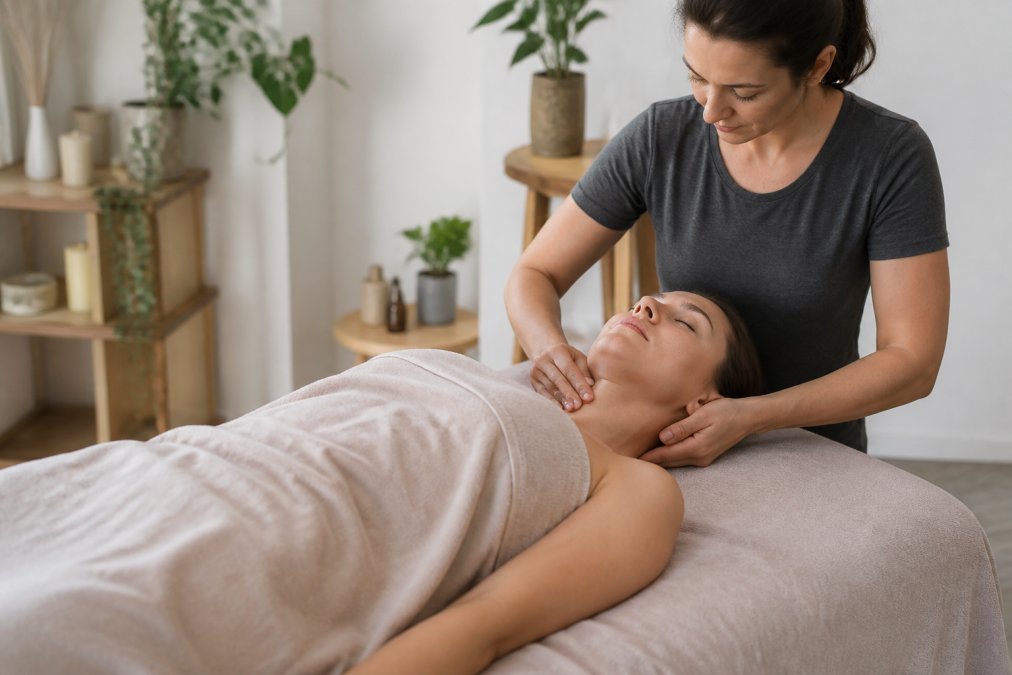
Manual lymphatic drainage (MLD) uses gentle, rhythmic strokes applied in a specific sequence, usually starting near the collarbone and working outward toward the limbs.
The most consistent benefits people report are reduced swelling, less post-surgical edema, and a general sense of lightening in the limbs. What it is not is a detox cure. We will get to that distinction shortly.
How Long Does a Lymphatic Drainage Massage Last?
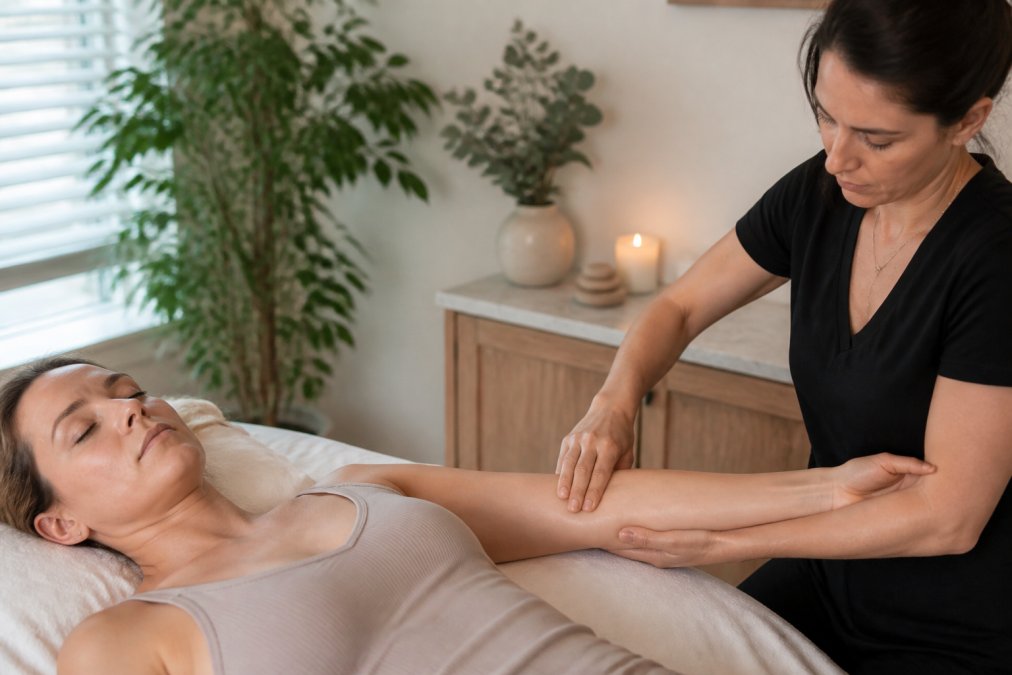
A lymphatic drainage massage typically runs 45 to 60 minutes for a full-body session and about 30 minutes for a targeted area such as one arm or one leg. The session length matters less than the cadence, because lymph fluid re-accumulates between sessions and results depend on consistency rather than a single long appointment.
Session length by goal
- General wellness and mild fluid retention: 45 to 60 minutes, full body.
- Targeted post-surgical area (one limb, one quadrant): 30 to 45 minutes.
- Lymphedema management: 45 to 60 minutes, often with compression bandaging applied at the end of the session.
- First visit: usually shorter, because the therapist spends part of the appointment on assessment.
Frequency depends on what you are treating
A common pattern practitioners use looks like this:
- Maintenance for mild puffiness: one session every two to four weeks.
- Post-surgical swelling (first two to four weeks): two to three sessions per week, tapering as swelling settles.
- Chronic lymphedema: daily to several times weekly during an intensive phase, then a maintenance schedule once limb volume stabilizes.
- Post-exercise recovery: one session as needed, usually within 24 to 48 hours of hard training.
Most practitioners find that the intensive phase is where the visible change happens, and the maintenance phase is what protects it. Skipping the maintenance phase is the most common reason people feel like results ‘wore off.’
What actually determines how long results last
A single session’s effect is temporary. Three variables drive how long the change holds:
- Compression timing. If your therapist recommends a compression garment or bandage, putting it on within the window they specify, often immediately after the session, is what keeps mobilized fluid from pooling back into the same area.
- Movement. Walking and light activity within the first few hours after a session help the lymphatic system keep moving fluid on its own, since it has no central pump.
- Hydration. Drinking water supports the fluid shift drainage sets in motion. Dehydration works against it.
Do not judge results by session one. The first appointment is usually shorter because the therapist needs to assess your swelling pattern, screen for contraindications, and map the affected area before treating it. The second and third sessions are where the cadence starts to show.
How this compares to other bodywork
Deep tissue massage, sports massage, and Swedish massage are not substitutes. Deep tissue works on muscle and fascia with firmer pressure; lymphatic drainage works on the fluid space between cells with very light pressure and a specific directional sequence. If your goal is swelling reduction, a deep tissue session can actually aggravate the area rather than help it. If your goal is muscle tension, lymphatic drainage is the wrong tool. Matching the modality to the goal is the first decision, and session length is the second.
When to expect a change
A common pattern is a noticeable difference in tightness and heaviness after the first few sessions, with measurable limb-volume change over two to four weeks of consistent treatment. If you see no change after several sessions at the recommended cadence, that is a signal to revisit the diagnosis with your physician rather than to add more sessions. If you see no change after several sessions at the recommended cadence, that is a signal to revisit the diagnosis with your physician rather than to add more sessions.
Benefits of Lymphatic Massage for Swelling and Edema
The clearest evidence for lymphatic massage sits in swelling management. Manual lymphatic drainage is a standard component of care for lymphedema and chronic edema in clinical settings, and it is widely used after surgery to help reduce post-surgical swelling. What separates a credible claim from a marketing one is whether the benefit is tied to a mechanism and a measurable outcome.
Where the evidence is strongest
- Post-surgical swelling reduction. After surgery, fluid collects around the incision and in the surrounding tissue. Gentle drainage helps move that fluid toward functioning lymph nodes, which can ease tightness and support tissue repair. This is one of the most common reasons people seek the treatment.
- Lymphedema management. Lymphedema is a chronic condition in which lymph fluid accumulates because the lymphatic system has been damaged or impaired, often after lymph node removal, radiation, or infection. Manual lymphatic drainage is one component of complete decongestive therapy, the standard clinical approach, which combines manual drainage, compression, skin care, and exercise.
- Chronic venous edema. People with sluggish venous return often notice less heaviness in the legs and ankles after drainage. The mechanism is straightforward: reducing the fluid load takes pressure off the venous system.
Where the evidence is weaker
- Post-exercise recovery. Light drainage may reduce the puffiness and soreness that follow hard training, but the research here is thinner than the research on clinical edema. Treat it as a reasonable adjunct, not a proven recovery protocol.
- General ‘detox’ and immune boosting. Your lymphatic system does clear metabolic waste and cellular debris as part of normal immune function, that is real physiology. What is not well supported is the idea that a massage flushes accumulated ‘toxins’ in a way that produces dramatic, visible results. The mechanism is real; the dramatic claims are not.
How swelling is actually measured
A credible provider does not rely on how your leg feels. They measure. Common methods include:
- Circumference measurement at fixed points along the limb, repeated at each visit.
- Limb volume calculation using the circumference measurements.
- Perometry or water displacement in specialized settings.
- Patient-reported tightness and heaviness as a secondary, subjective measure.
Why combined therapy outperforms massage alone
Start your wellness journey today! →
The strongest outcomes come from combining therapies rather than chasing a single treatment. Manual lymphatic drainage works best alongside:
- Compression therapy, garments or bandages that keep mobilized fluid from pooling back.
- Movement and exercise, muscle contraction is one of the few pumps the lymphatic system has.
- Skin care, intact skin reduces infection risk, which matters in lymphedema.
- Physician or physical therapist oversight, especially for post-surgical and lymphedema cases.
This is the distinction most wellness content skips. Lymphatic drainage is not a standalone cure; it is one lever in a coordinated plan. The National Library of Medicine research on manual lymphatic drainage is a reasonable place to see how the clinical evidence actually reads, and the Centers for Disease Control and Prevention offers plain-language background on how the lymphatic and immune systems function.
If a claim about lymphatic drainage sounds too dramatic to be true, it usually is. Ask what the mechanism is, ask how the outcome is measured, and ask who benefits from you believing it.
Who Should Avoid Lymphatic Drainage Massage
Lymphatic drainage massage is not appropriate for everyone, and the contraindications are not optional reading. People with certain heart, kidney, or clotting conditions should not receive it without clearance from their physician.
Avoid or postpone lymphatic drainage if you have:
- Congestive heart failure. Extra fluid mobilization can overload a heart that is already struggling.
- Deep vein thrombosis (DVT) or a history of clots. Moving a clot is dangerous.
- Active infection, fever, or cellulitis. Drainage can spread infection.
- Untreated kidney or liver disease. These organs handle fluid elimination, and drainage adds load.
- Active cancer without oncology clearance. Some cancer treatments require modified technique and a trained specialist.
If you are unsure whether you qualify, ask. A qualified therapist will screen you before the first session, and a physician’s clearance is a reasonable request, not an inconvenience.
Self-Massage Techniques You Can Do at Home
Self-massage cannot replicate a trained therapist’s hands, but it can support lymphatic circulation between sessions. The technique is light, slow, and directional, and it works best when you follow the same logic a therapist uses: clear the center before you clear the limbs.
Try this basic sequence:
- Start at the collarbone with flat fingers, stroking gently downward toward the heart for 10 slow repetitions.
- Move to the neck with the same light pressure, working from behind the ear down toward the collarbone.
- Work the armpit area with soft circular strokes to stimulate the lymph nodes there.
- Move down each arm from wrist to shoulder, using long, gentle strokes.
- Finish with the legs, sweeping upward from ankle to groin.
Keep pressure light. If your skin reddens or you feel pain, you are pressing too hard. Aim for five to ten minutes, once daily, and stop if you have any of the contraindications listed above.
Do not self-massage an area that is hot, red, swollen suddenly, or painful to touch. Those signs point to infection or a clot, not fluid retention, and massage can make either worse. See a physician first.
Evidence-Based Claims vs. Lymphfluencer Hype
Social media has turned lymphatic drainage into a wellness trend, and the gap between what the technique can do and what it is sold as doing has widened. The honest position is that lymphatic massage has solid support for swelling and lymphedema, and much thinner support for the dramatic detox claims you see online.
Here is the distinction that matters. Your lymphatic system does clear metabolic waste and cellular debris as part of normal immune function. That is real physiology. What is not supported is the idea that a massage flushes accumulated “toxins” from your body in a way that produces visible, dramatic results.
What most guides miss is that the strongest outcomes come from combining therapies rather than chasing a single miracle treatment. Manual lymphatic drainage works best alongside compression therapy, movement, and, where relevant, the care of a physician or physical therapist. The National Library of Medicine research on manual lymphatic drainage is a reasonable place to see how the clinical evidence actually reads, and the Centers for Disease Control and Prevention offers plain-language background on how the lymphatic and immune systems function.
If a claim sounds too dramatic to be true, it usually is. Ask what the mechanism is, and ask who benefits from you believing it.
How to Prepare and What to Do After a Session
Preparation is simple, and aftercare is where most people leave results on the table. Arrive hydrated, wear loose clothing, and skip a heavy meal right before your appointment. Tell your therapist about any recent surgery, current medications, or swelling that has changed suddenly.
After your session:
- Drink water. Hydration supports the fluid shift that drainage sets in motion.
- Keep moving. Walking and light activity help lymph fluid continue to circulate.
- Follow compression guidance if your therapist recommends it.
- Expect to urinate more for the next day or two. That is normal.
- Skip alcohol and heavy, salty meals for the rest of the day.
You may feel relaxed or slightly tired afterward. Some people notice a temporary increase in urination or a mild headache. If you develop pain, heat, or new swelling, contact your provider rather than waiting it out.
Holistic & Wellness Medicine provides an integrated approach to health, focusing on root cause healing rather than temporary symptom relief. By combining chiropractic care, functional medicine, massage therapy, natural medicine, and yoga, the practice treats the body, mind, and spirit as a unified whole. Swelling rarely has a single cause. For anyone weighing a one-off massage against a coordinated approach, the National Center for Complementary and Integrative Health is a useful starting point for understanding how integrative therapies are evaluated.
Fluid retention, post-surgical swelling, and chronic tension rarely resolve with a single treatment, and chasing one-off sessions tends to produce one-off results. Holistic & Wellness Medicine takes a different route: an integrated care team that combines massage therapy, chiropractic care, functional medicine, and yoga to address the underlying drivers of swelling, inflammation, and pain rather than masking symptoms. If you have been told nothing is wrong while still feeling off, or if you want a plan that treats the cause instead of the symptom, start your wellness journey today with Holistic & Wellness Medicine.
Frequently Asked Questions
What happens to your body during a lymphatic drainage massage?
A trained therapist uses light, rhythmic strokes along the paths of your lymphatic vessels to encourage lymph fluid to move toward lymph nodes, where it is filtered. Sessions are typically relaxing rather than deep or painful. Afterward, many people notice reduced puffiness, lighter-feeling limbs, and more frequent urination as excess fluid is processed. Individual responses vary, so treat any single session as one part of a broader plan rather than a standalone fix.
How long does a lymphatic drainage massage last?
Most sessions run 45 to 60 minutes, though a therapist may shorten or extend that based on your condition, the area being treated, and whether it is your first visit. Post-surgical protocols sometimes use shorter, more frequent sessions. Ask your provider how many sessions they recommend for your situation, because a single appointment rarely resolves long-standing swelling on its own.
Who should avoid lymphatic drainage massage?
People with active infections, blood clots such as deep vein thrombosis (DVT), untreated congestive heart failure, or kidney failure should not receive this massage without clearance from their physician. The same applies if you have a known malignancy that has not been evaluated by your care team. Always disclose your full medical history before booking, and let a qualified professional decide whether the technique is appropriate for you.
Is lymphatic drainage massage safe for post-surgical recovery?
Many surgeons refer patients for manual lymphatic drainage after procedures to help manage post-surgical swelling, but timing matters. You generally need your surgeon’s approval before starting, and the therapist should be trained in post-operative protocols. Done too early or too aggressively, massage can irritate healing tissue. Follow your surgeon’s instructions on when to begin and share those instructions with your therapist.


5 Natural Remedies for Anxiety and Stress at Home
Discover 5 natural remedies for anxiety and stress at home, from breathing exercises to herbal supplements. Learn how functional medicine can help. Start.
How to Improve Posture to Reduce Pain: A 2026 Guide
Learn how to improve posture to reduce pain with exercises, stretches, and ergonomic tips. Discover a holistic approach to lasting relief. Start today.

How to Treat Adrenal Fatigue Without Medication
Learn how to treat adrenal fatigue without medication using diet, stress management, and natural supplements. Discover practical steps to restore.