Table of Contents
- 1. Functional Medicine for Anxiety: A Root-Cause Approach
- 2. Breathing Exercises for Stress Relief You Can Do Anywhere
- 3. Herbal Supplements for Anxiety: What the Evidence Shows
- 4. Aromatherapy and Sensory Grounding Techniques for Calm
- 5. Digital Detox and Mindful Screen Time Management
- 6. Budget-Friendly Home Adjustments for Natural Anxiety Relief
- Conclusion
- Frequently Asked Questions
Last Updated: September 16, 2026
1. Functional Medicine for Anxiety: A Root-Cause Approach
Functional medicine for anxiety asks a different question than conventional care. Instead of “which medication suppresses this symptom,” it asks “what is driving the nervous system into overdrive in the first place.” That shift matters, because anxiety rarely has a single cause.
At Holistic & Wellness Medicine, we treat anxiety and stress as outputs of an overloaded system, not as a standalone diagnosis. Poor sleep, blood sugar swings, caffeine load, unresolved muscle tension, and constant screen exposure all feed the same fire. Functional care maps those inputs before recommending anything.
How Functional Medicine Differs from Conventional Care
Conventional care excels at acute problems and medication management. Functional care complements it by examining lifestyle, nutrition, movement, and stress physiology together. The goal is nervous system regulation, not just symptom management.
A word of caution: natural remedies support a plan, they do not replace one. If you take psychiatric medication or have a diagnosed anxiety disorder, talk to your prescriber before adding supplements or herbs.
St. John’s wort and kava kava can interact with prescription antidepressants and anti-anxiety medications. Never combine them without checking with your prescriber first.
2. Breathing Exercises for Stress Relief You Can Do Anywhere
Breathing exercises for stress relief work because slow, extended exhales activate the parasympathetic branch of the nervous system. No equipment, no cost, no appointment.
The two techniques worth learning first are 4-7-8 breathing and box breathing. Both are easy to learn and easy to abandon when you need them most, which is why practicing them when calm matters more than practicing them when panicked.
4-7-8 Breathing and Box Breathing Techniques
- 4-7-8 breathing: Inhale through the nose for 4 counts, hold for 7, exhale slowly through the mouth for 8. Repeat four cycles.
- Box breathing: Inhale 4 counts, hold 4, exhale 4, hold 4. Picture a square as you trace each side.
A common mistake is breathing too deeply. Deep breathing is not the goal; slow breathing is. If you feel lightheaded, shorten the counts and try again.
Practice either technique for two minutes while your coffee brews. Building the habit during low-stress moments is what makes it available during high-stress ones.
3. Herbal Supplements for Anxiety: What the Evidence Shows
Herbal supplements for anxiety range from well-studied to barely researched, and the label rarely tells you which is which. That gap is where most people waste money.
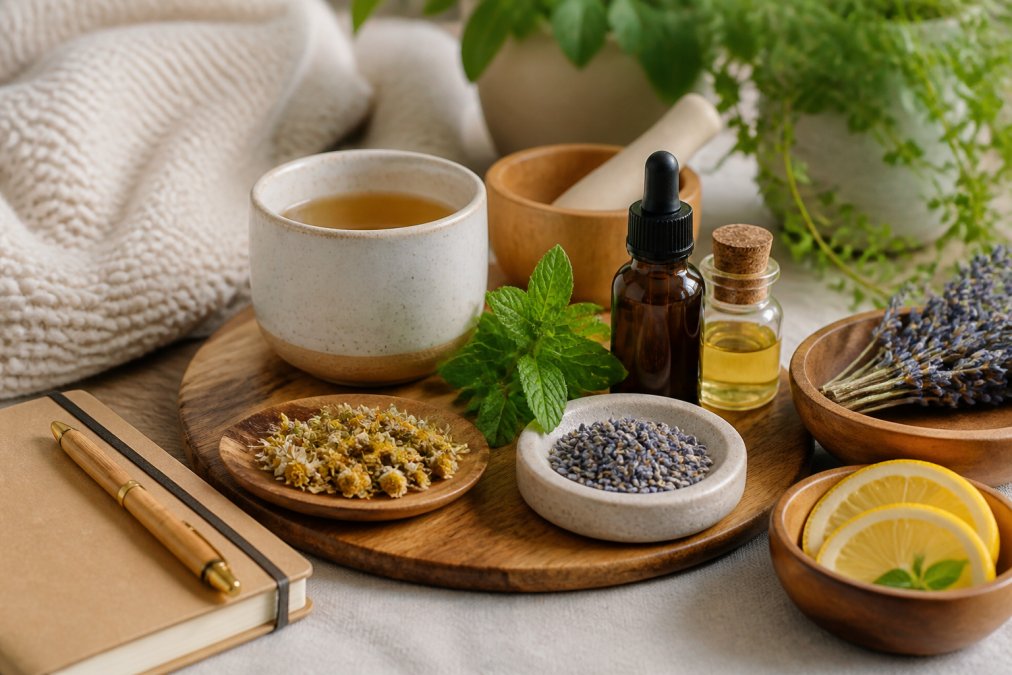
Chamomile, lavender oil, magnesium, valerian root, passion flower, and kava kava all appear in the research literature, with varying strength of evidence. Magnesium glycinate, for example, supports muscle relaxation and nervous system function. Chamomile tea offers a gentle, ritualistic wind-down. Neither is a substitute for addressing sleep debt or caffeine intake.
The National Center for Complementary and Integrative Health maintains plain-language summaries of what the evidence actually supports for each herb.
| Remedy | Typical Use | Watch For |
|---|---|---|
| Magnesium glycinate | Evening relaxation, muscle tension | Digestive upset in some users |
| Chamomile tea | Wind-down ritual, mild calming effect | Effects are gentle, not dramatic |
| Lavender oil | Aromatherapy, diffused or topical | Skin sensitivity; dilute before use |
| Valerian root | Sleep support | Drowsiness; avoid with sedatives |
| Kava kava | Short-term calming | Liver concerns; drug interactions |
Start with one remedy at a time, at a low dose, for two weeks. Stacking five supplements at once makes it impossible to know what is helping and what is causing side effects.
4. Aromatherapy and Sensory Grounding Techniques for Calm
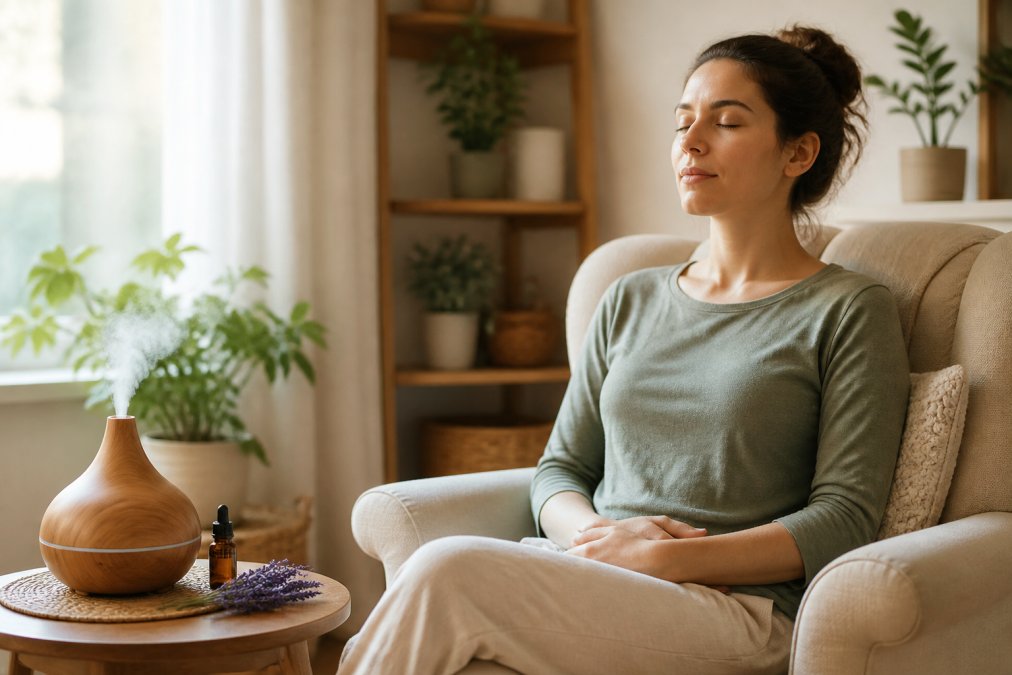
Aromatherapy and sensory grounding work on the same principle: give an overactive mind a physical anchor. Scent, touch, temperature, and sound reach the nervous system faster than thoughts do, which is why they can interrupt a spiral before you have talked yourself out of it.
How Aromatherapy Actually Works
Inhaled scent molecules travel to the olfactory bulb, which sits close to the amygdala and hippocampus, the brain regions involved in emotion and memory. That short pathway is why a familiar scent can shift how you feel within seconds, before any conscious reasoning happens.
Lavender is the most studied essential oil for relaxation. A few drops in a diffuser, or diluted in a carrier oil such as jojoba or fractionated coconut oil for the wrists and temples, is enough. A common dilution is roughly 2 to 3 drops of essential oil per teaspoon of carrier oil for adult skin. The ritual itself, the pause, the breath, the familiar scent, does part of the work.
A few practical notes:
- Keep diffuser sessions short, around 15 to 30 minutes, and ventilate the room afterward.
- Do not apply undiluted essential oils to skin, and patch-test on the inner forearm first.
- Keep oils away from pets and small children; some oils are toxic to cats and dogs.
- Citrus oils can increase sun sensitivity on skin.
The 5-4-3-2-1 Grounding Protocol
Sensory grounding goes further than scent. The 5-4-3-2-1 method pulls attention out of the spiral and into the room by giving the mind a structured task. Work through the senses slowly, pausing for a full breath between each one:
- 5 things you can see. Name them out loud or in your head, with detail: the grain of the table, the color of a mug.
- 4 things you can touch. Press your feet into the floor, feel the fabric of your sleeve, the cool of a countertop.
- 3 things you can hear. A fan, traffic, your own breathing.
- 2 things you can smell. Coffee, laundry, or a nearby candle.
- 1 thing you can taste. A sip of water, a mint, or just the inside of your mouth.
Temperature and Touch as Fast Anchors
Temperature changes reach the nervous system quickly. Splashing cold water on your face or holding an ice cube briefly can trigger the dive reflex, which slows heart rate. A warm shower or a weighted blanket works the opposite way, using steady pressure and heat to signal safety. Neither is a cure, but both are fast, free, and available at home.
Pair one scent with one grounding method and use the same combination every time. Repetition is what turns a technique into a reflex you can reach for under stress.
5. Digital Detox and Mindful Screen Time Management
Constant notifications keep the nervous system in a low-grade alert state.
6. Budget-Friendly Home Adjustments for Natural Anxiety Relief
You do not need a renovation to make your home work for your nervous system.
Light: Set the Body Clock
Light is the strongest signal your brain uses to decide whether it is time to be alert or to wind down.
Sound: Reduce the Startle Load
Unexpected noise keeps the nervous system braced.
Temperature: Cool for Sleep
Core body temperature has to drop slightly for sleep to begin.
Organization: Lower the Visual Load
Clutter is a constant, low-level decision demand.
Movement and Caffeine Cues in the Home
- A yoga mat left unrolled in a visible spot gets used; one folded in a closet does not.
- Put the coffee maker out of easy reach after noon, or switch to decaf, and see what changes by week two.
- Keep a water bottle where you can see it; mild dehydration can mimic the physical sensations of anxiety.
Pick one category, light, sound, temperature, or clutter, and change one thing this week. The goal is a home that stops adding to your stress load, not a perfect space.
Conclusion
Anxiety and stress respond to consistent inputs, not dramatic interventions.
Frequently Asked Questions
Can natural remedies effectively replace anxiety medication?
Natural remedies can support stress management but are not a replacement for prescribed medication, especially for moderate to severe anxiety. Always consult a healthcare provider before making changes. Some herbal supplements for anxiety, such as chamomile or lavender, may interact with medications. A functional medicine for anxiety approach can complement conventional care by addressing root causes like nutrient deficiencies or chronic stress, but it should be part of a comprehensive plan guided by a professional.
What are the safest herbal supplements for stress relief?
Chamomile, lavender, and magnesium are generally considered safe for most people when used as directed. However, herbal supplements can interact with medications or have side effects. For example, valerian root may cause drowsiness, and kava kava has been linked to liver issues in rare cases. Always choose third-party tested brands and consult a healthcare provider, especially if you take other medications or have underlying health conditions.
How does functional medicine approach anxiety and stress?
Functional medicine for anxiety looks at the whole person to find underlying drivers such as poor sleep, nutrient deficiencies, chronic inflammation, or blood sugar imbalances. Instead of just treating symptoms, it uses personalized interventions like dietary changes, targeted supplements, and stress-reduction techniques. This root-cause approach aims to restore balance to the nervous system and build long-term resilience, often in partnership with conventional care.
Are there specific breathing techniques to reduce immediate anxiety?
Yes, breathing exercises for stress relief like 4-7-8 breathing and box breathing can quickly calm the nervous system. For 4-7-8, inhale for 4 seconds, hold for 7, and exhale for 8. Box breathing involves inhaling, holding, exhaling, and holding for 4 seconds each. These techniques activate the relaxation response and can be done anywhere. Practice regularly to make them more effective during high-stress moments.
When should I seek professional help for chronic stress?
If stress or anxiety interferes with daily life, relationships, or work for more than a few weeks, or if you experience panic attacks, persistent worry, or physical symptoms like chest pain, seek professional help. A functional medicine practitioner can assess root causes, while a mental health professional can provide therapy or medication if needed. Early intervention prevents long-term health issues and improves quality of life.
This article is for general information only and is not a substitute for professional medical advice, diagnosis, or treatment. Always consult a qualified healthcare provider before starting any new supplement, herb, or wellness routine.

How to Improve Posture to Reduce Pain: A 2026 Guide
Learn how to improve posture to reduce pain with exercises, stretches, and ergonomic tips. Discover a holistic approach to lasting relief. Start today.

How to Treat Adrenal Fatigue Without Medication
Learn how to treat adrenal fatigue without medication using diet, stress management, and natural supplements. Discover practical steps to restore.
Benefits of Massage Therapy for Lymphatic Drainage
Discover how massage therapy for lymphatic drainage reduces swelling, supports recovery, and when to avoid it. Learn what to expect from each session.